How to save on overseas shipping costs for rigid box transportation
Learn how to minimize overseas shipping expenses for rigid box transportation. Explore practical tips to enhance your shipping efficiency and save money.

Table of content
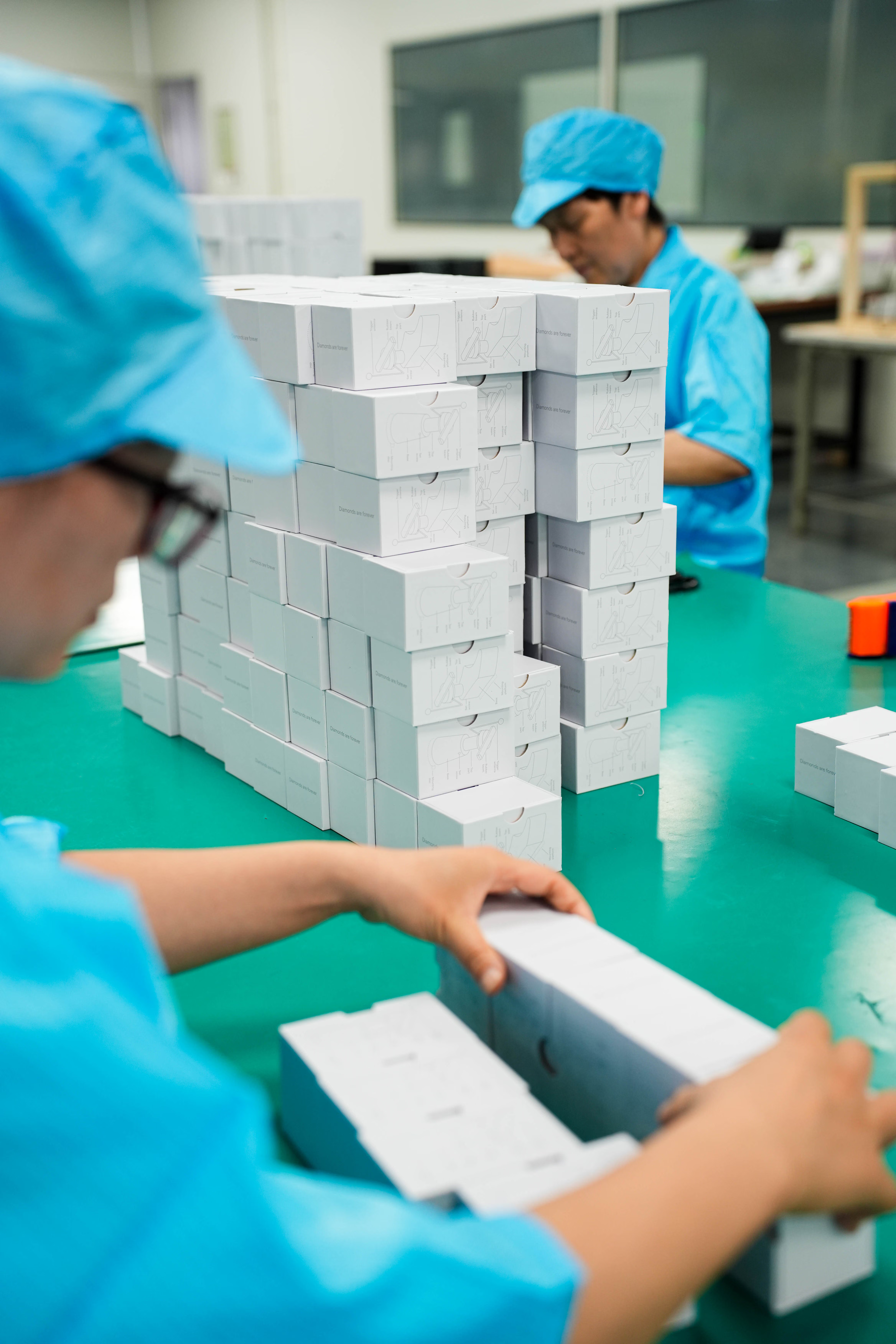
When purchasing rigid boxes, international shipping costs are often a major expense. Due to the sturdy materials and larger, heavier structure of rigid boxes, shipping costs—especially in international transport—can be significant. However, by optimizing packaging design, choosing suitable shipping methods and providers, and arranging logistics flexibly, companies can effectively reduce these shipping expenses. Here are some suggestions on how to save on international shipping costs for rigid boxes.
Optimize Packaging Design to Save Space
Since rigid boxes are large and relatively heavy, volume and weight are key factors that influence shipping costs. By optimizing the design of rigid boxes, you can effectively reduce the shipping space required, thereby lowering costs.
Minimize Empty Space: Try to reduce unnecessary space inside or outside the rigid box to shrink overall packaging dimensions. For example, adopt compact designs or use thinner materials.
Design Detachable Packaging: If possible, choose rigid boxes that can be disassembled or folded during transport. This can significantly reduce package volume and overall shipping space costs. Although rigid boxes are generally not collapsible, certain parts, such as bases and lids, can be transported separately, leading to significant space savings.
Modular Packaging: Design rigid boxes in uniform sizes to facilitate neat stacking and packing during transport. This allows for optimal use of shipping boxes or containers.

Choose Cost-Effective Shipping Methods
International shipping primarily includes air, sea, and land transport. These options vary greatly in cost, and choosing the appropriate mode can significantly reduce expenses.
Sea Freight: For large-volume rigid box orders, sea freight is typically the most economical choice. Although it takes longer than air freight, the cost is usually much lower, making it suitable for non-urgent orders.
Less than Container Load (LCL): If the order quantity isn’t enough to fill an entire container, consider less than container load (LCL) shipping. This option allows multiple customers to share one container, with costs split based on actual space occupied or weight.
Air Freight: For urgent orders, air freight is the fastest option, though more expensive. If the order is small, the products are light, and timing is critical, air freight may be worth considering.

Choose Appropriate Packaging Materials
Using lighter packaging materials can effectively reduce shipping costs, especially for air freight, where weight significantly impacts expenses.
Use Lightweight Materials: Choose lightweight packaging materials, such as high-strength, low-weight eco-friendly cardboard or new composite materials. These materials can maintain the rigid box’s strength while reducing shipping weight.
Weight-Reducing Design: When designing rigid boxes, minimize unnecessary bulk where possible while still maintaining structural integrity. For instance, consider reducing interior linings or using thinner laminates.

Pay Attention to Tariffs and Duties
In international shipping, apart from freight charges, it's also important to consider customs duties and taxes in the destination country. Proper planning can help reduce these additional expenses.
Understand the Destination Country's Tariff Policies: Different countries may have varying import tariffs for rigid boxes and their raw materials. Selecting low-tariff production materials or adjusting according to regional policies may help you save on customs duties.
Accurate Declaration and Classification: Ensure that product declarations comply with the destination country's regulations and choose appropriate product classifications to avoid extra tariff costs due to misdeclarations or incorrect classifications.

Conclusion
By optimizing the design of rigid boxes, choosing the appropriate shipping methods and providers, and arranging logistics efficiently, businesses can significantly reduce international shipping costs. Strategies like bulk purchasing, using overseas warehouses, and arranging transport times effectively can also help control costs while improving logistics efficiency.
Recommended for you
.avif)
.avif)


.avif)
.avif)

.avif)
.avif)
.avif)


You Might Enjoy



Are we right for each other?
We work best with brands that treat packaging as part of the product, not as the last thing on the list. To save us both time, here is who we work with best.
We're probably not the right fit if:
- Orders under $1,000.
- A few boxes, one time.
- Lowest quote wins.
- No conversation, just add-to-cart.
- Brand direction still up in the air. Our FAQ covers the basics first: process, scale, sampling, finishing, production. Worth reading before submitting anything.
We're a strong fit if:
- Projects starting around $1,000 and up.
- Sampling before production makes sense to you. It runs from $300, though complete artwork and locked specs can sometimes skip straight to the line.
- There's real budget behind the packaging, and an expectation that production standards get defined properly.
- What's needed is a manufacturing partner across structure, material, process and delivery. Not a print shop taking a file.
- The box has a job: retail shelf, gifting, unboxing. It has to carry the brand.
- Getting it right matters more than getting it cheapest.
Sound like your project? Let's talk

What happens after you submit
1. A specialist reviews your project, usually within 1 business day.
2. We follow up with questions, options, and indicative pricing.
3. Once the spec is confirmed, we move to sampling.