Frequently Asked Questions | FAQ
Find answers to your questions here.
Custom branded packaging with logo is a personalized solution tailored to your brand. Whether it's box type, size, material, or surface finishes (such as foil stamping, UV, lamination), everything is customized to your product and brand identity, with your logo and brand elements printed on it. Such packaging enhances brand recognition, professional image, and improves consumer unboxing experience, helping you stand out in the market. Our minimum order quantity is 500 pcs, suitable for most brands' custom needs.
To efficiently carry out custom packaging, we suggest you provide as much of the following information as possible:
- Product info: type and purpose, for structure/protection needs
- Product size: exact L×W×H or diameter (mm/cm)
- Packaging structure: folding carton, drawer box, magnetic closure, etc.
- Packaging type: rigid box, corrugated carton, folding carton, etc.
- Material preference: paperboard, corrugated board, specialty paper, etc.
- Surface finishes: foil stamping, UV, embossing, lamination, etc.
- Order quantity: MOQ 500 for rigid boxes, usually 1000+ for others
- Design requirement: whether you have a design file or need our support
- Special needs: inserts, ribbons, labels, eco certifications, etc.
- Delivery time: project timeline or target deadline
- Shipping: courier, air freight, sea freight
If the above information is incomplete, we will confirm with you step by step. The more details you provide, the more efficient the process will be, helping us control cost, ensure lead time, and achieve better packaging results.
If sizes are close, we can sometimes adjust one structure to fit multiple products with inserts. If the sizes vary greatly, each size requires a new die and setup, increasing costs. To save cost, we suggest unifying sizes where possible, or designing modular inserts.
Yes. Options include:
- FSC-certified paper and greyboard.
- Recycled kraft paper.
- Soy-based or water-based inks.
- Biodegradable films instead of plastic lamination.
- Paper pulp trays instead of plastic inserts.
We can tailor eco solutions depending on your market and brand requirements.
A professional design file is more than just an image. While an image helps us initially understand your design direction, a proper professional file should include:
- Graphic design file (AI, PDF, or other vector formats)
- Structural dieline
- Finishing instructions (such as foil stamping, embossing, UV, etc.)
- Material details (such as type of paper and GSM)
- Accessories information (such as magnets, ribbons, EVA, blister, etc.)
- Physical property notes (such as rigidity, moisture resistance, etc.)
This information helps us accurately evaluate quotations, sampling, and production feasibility, ensuring the final product meets your expectations.
A full-package design is a paid service led by professional designers, covering:
- Graphic design
- Structural design and dieline
- Finishing specifications (foil stamping, UV, embossing, etc.)
- Material selection and notes
- Accessories configuration (such as magnets, ribbons, EVA, etc.)
- All content consolidated into a complete file ready for quotation, sampling, and production
Basic design, on the other hand, is our free support service, suitable for clients who already have a general direction but lack details. We will repeatedly confirm key parameters with you and assist with basic layout, finishing, and material recommendations.
We recommend that you first work with a graphic designer you are already familiar with, as this improves brand consistency and communication efficiency. We can provide free dielines for any structure and offer professional advice on finishes and materials to assist your designer in completing the packaging artwork. If you don't have a designer, we can recommend partner designers or provide basic design support.
Don't worry. Many of our clients also don't have ready-made files at the beginning. If you have your product's dimensions, photos, or even just a concept, we can provide free structural dielines. Our engineers can recommend suitable box types, materials, and finishes. For the graphic artwork, you can either find a designer you trust or let us assist with a basic design. The key is to clearly communicate your target budget, brand positioning, and design direction. We will help you complete the file step by step.
Consider:
- Brand positioning: High-end vs. cost-effective.
- Target market: EU/US vs. Middle East vs. Asia, different preferences.
- Functionality: Protection, transport, retail display.
- Unboxing experience: Luxury feel, opening ritual.
- Eco requirements: FSC, recycled, biodegradable.
- Cost vs. effect balance: Selective finishes to fit budget.
Our engineers can provide advice to make sure your design is both beautiful and manufacturable.
Common reasons:
- Designers unfamiliar with printing/structural restrictions.
- Ignoring glue flaps, folding tolerances, or die-cutting limitations.
- Using colors or finishes that are not achievable in mass production.
- Not considering material feasibility or cost.
That's why we recommend close collaboration between designers and factory engineers—we provide free dielines and technical advice to ensure designs can be smoothly executed.
Because screen display ≠ real printing.
- RGB on screens is brighter than CMYK printing.
- Pantone colors must be specified to ensure accuracy.
- Specialty papers (pearl, textured) affect final color.
- Different lighting (D50 vs. indoor warm light) shows colors differently.
We always recommend confirming with printed samples to avoid surprises.
Stunning packaging seen in the market is usually the result of close collaboration and refinement between designers and factories. It's not just about looks—the effort lies in structural creativity, material choice, finishing details, and color control. If you want to create impressive packaging, you need sufficient resources in design, development time, and budget. We suggest working with a professional design team in collaboration with a highly cooperative factory like us, to achieve full control from concept to high-quality production.
Absolutely. Based on your product attributes, brand positioning, budget range, and shipping needs, we can provide professional advice on material combinations (such as greyboard thickness, surface paper type, insert materials) and finishing recommendations (such as foil stamping, UV, embossing, lamination, printing method, etc.). We also consider your target market and product features to balance cost and effect, formulating the most suitable packaging execution plan. As long as you provide sufficient reference information or target direction, we will assist you throughout the process.
Our engineers may suggest adjustments because:
- Certain structures are not suitable for your product (fit or protection issues).
- Some designs are too costly and can be optimized.
- Some structures are difficult to assemble or ship.
By making professional recommendations, we aim to balance appearance, functionality, cost, and feasibility, ensuring the packaging truly fits your needs.
Having the actual product allows us to:
- Measure exact dimensions and weight.
- Design inserts for perfect fit.
- Test protective performance.
- Reduce tolerance risks.
Without the real product, we rely on measurements you provide, which increases error risk. Sending us samples ensures accuracy, better protection, and smoother production.
Inserts ensure products are protected and presented well.
- EVA/EPE foam: Strong protection, premium feel.
- Paper pulp tray: Eco-friendly, cost-effective.
- Blister (PET/PS): Transparent display.
- Cardboard dividers: Economical separation.
Inserts are necessary for fragile, irregular, or luxury products.
Because structural samples confirm size, fit, and protection before going into printing. A white sample ensures:
- The product fits correctly.
- Inserts protect fragile parts.
- Tolerance is within limits.
- You approve structure before investing in expensive printing.
White samples are free because they only involve structural setup. But printed samples require real printing, finishing, and hand assembly, which incur costs. We charge a reasonable sample fee to cover materials and labor, but we also refund or deduct this cost once you place a bulk order. In this way, the sample cost is only a deposit for confirming quality.
Yes, we can provide free white samples (no printing, blank surface) to confirm structure and size. You only need to cover shipping. However, printed samples require cost because they involve printing, finishing, and materials. But as mentioned, once the bulk order is placed, we will refund or deduct the sample fee.
Normally 3–5 days. White samples are faster, usually within 3 days. Printed samples take about 5 days, depending on complexity. For urgent projects, we can prioritize and provide faster turnaround upon request.
We fully understand your concern about quotation timeliness. However, in order to provide an accurate quotation, we usually need you to provide the following details: box type, dimensions, finishing requirements, materials, accessories, artwork status, order quantity, and preferred shipping method. If you cannot provide all the information immediately, we will confirm with you item by item, or we can only provide a rough quotation range based on our experience.
Because packaging pricing depends on multiple factors, such as box size, structure, materials, finishes, quantity, and shipping. Without these details, the price can vary significantly. For example:
- A drawer box in 2.5mm greyboard vs. 3.0mm greyboard can differ by 10–20%.
- With or without foil stamping can differ by 15–30%.
- 500 pcs vs. 1000 pcs can differ by 30–40% in unit price.
That's why only with complete details can we give you a reliable and comparable quotation.
Because packaging is a customized product, and every small detail affects cost, lead time, and feasibility. By confirming all parameters—such as dimensions, structure, materials, finishes, inserts, and shipping—we avoid errors, delays, or disputes later. Asking more upfront questions ensures we provide you with the most accurate quotation and the best solution.
Because packaging involves multiple cost factors—material, structure, finishing, quantity, and shipping. Without details, we can only give a rough range. Exact pricing requires full information. Providing details early ensures we save time, avoid mistakes, and give you a fair, accurate, and transparent quotation.
Knowing your target budget helps us create a suitable solution. For example:
- High-end budget → premium finishes (foil + emboss + specialty paper).
- Mid-range → balanced structure and finishes.
- Cost-sensitive → simplified structure and materials.
Without a budget reference, we may design solutions beyond your expectation, wasting time. Providing a target price allows us to align quality, design, and cost more efficiently.
We are a real manufacturing factory, only charging a 10–15% base profit margin. We never inflate or arbitrarily increase prices—all quotations are based on real production costs. If you find a major price difference compared with others, it's usually because the information collected is inconsistent (unclear structure, materials not aligned, missing finishing details, or misinterpretation). We recommend comparing prices only when you have a complete design file (with size, material, finishing, and structure specified). This truly reflects the cost level of each factory and also helps us optimize structure or materials to control costs from the source.
Price differences between suppliers are usually caused by:
- Different paper quality (recycled vs. virgin)
- Greyboard thickness (2.0mm vs. 3.0mm)
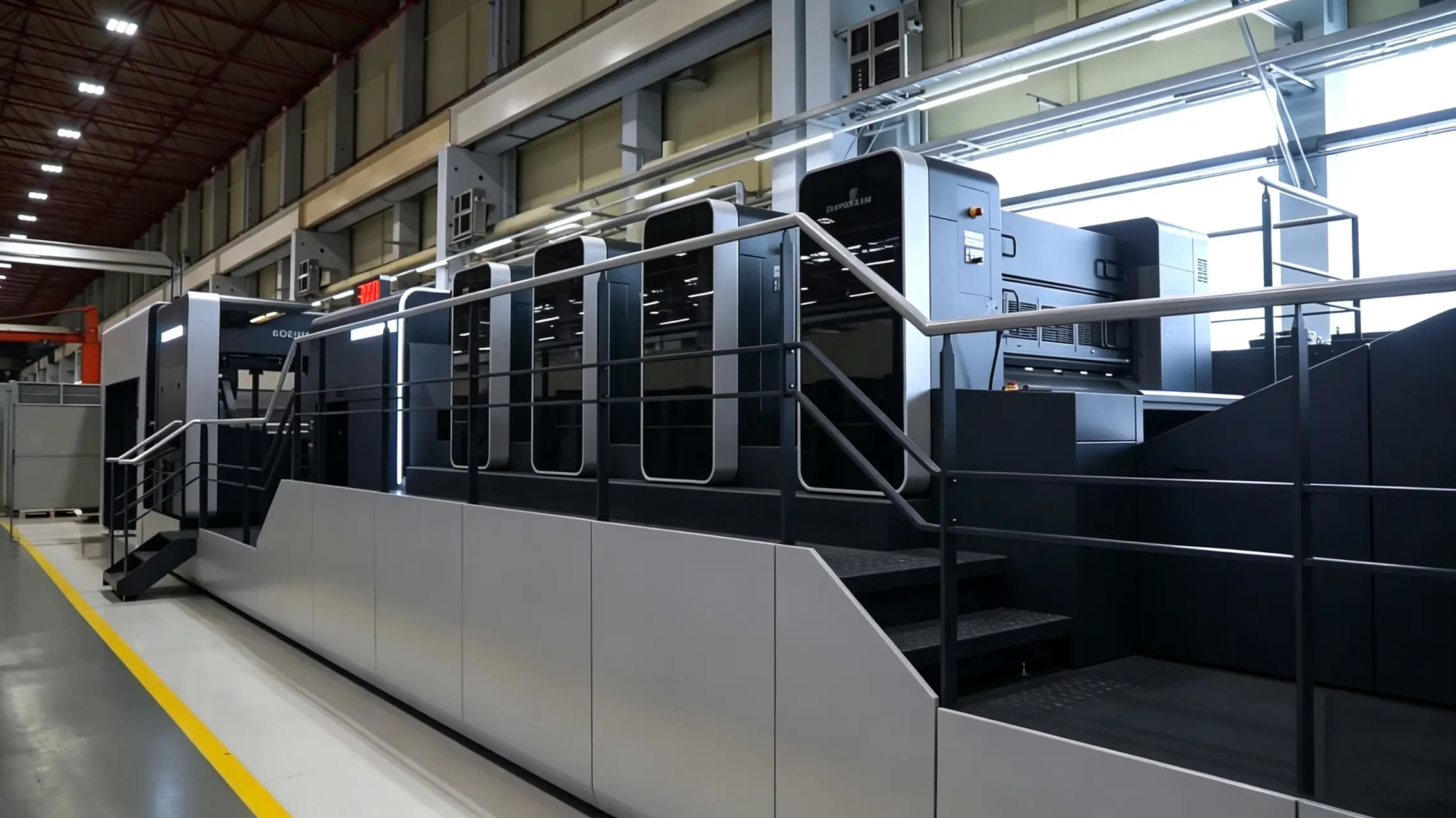
- Printing equipment (Heidelberg/KBA UV presses vs. low-end machines)
- Finish precision (professional tooling vs. low-cost shortcuts)
- QC standards (strict AQL vs. loose checks)
- Labor skill levels
- After-sales guarantees (rework/compensation vs. no guarantee)
Our quotation includes stable quality, consistent color, strict QC, and professional after-sales service. This ensures your brand avoids hidden risks and delays.
This mainly happens when there is an information gap in the early stage. If the parameters provided during the quotation process change later (such as box size, material, finishing, or order quantity), the unit price must be adjusted accordingly. We are a responsible supplier: quotations given based on fixed specifications will not change. Only when client requirements are modified do we need to update the cost. The root cause is often incomplete or inaccurate early communication.
Because rigid boxes have high setup costs, such as printing plate setup, die-cutting, mold adjustment, and labor training. Even if you only produce 100 boxes, these fixed costs must be covered, resulting in a much higher unit price. By setting the MOQ at 500, costs can be averaged out and more reasonable.
Our production MOQ is 500 units. Below that volume the unit economics shift sharply, so we focus our capacity on runs of 500 and above.
We can provide multiple solutions, typically:
- Standard version (balanced structure, cost-efficient).
- Cost-optimized version (simpler structure, fewer finishes).
- Premium version (luxury materials, complex finishes).
This way, you can choose the most suitable option for your budget and positioning.
The packaging communication process usually takes 3–10 business days, depending on:
- Whether the information you provide is complete and clear
- Whether design files are available
- The speed of communication and feedback
- Whether complex structures or multiple finishes are involved
If you have a clear vision and spend time communicating details, we can develop solutions more efficiently and speed up progress. Preparing and describing your requirements in advance will significantly save communication time and improve efficiency.
Normally 15–20 days after receiving final file confirmation and deposit. If special finishes or accessories are involved, lead time may be slightly longer. For rush orders, we can compress to 10–12 days depending on production schedule and material availability.
Yes. If you need urgent delivery, we can arrange priority scheduling and work overtime to shorten the cycle. But this requires you to quickly confirm design files and pay deposits in time, so materials can be prepared immediately. Rush production may involve slightly higher costs, but ensures you meet launch deadlines.
This is an industry-wide issue. Samples are made in small quantities, sometimes semi-manually, while bulk production involves large-scale machinery and labor. Color, cutting, or finishing may vary slightly. However, we minimize differences through:
- Using Heidelberg/KBA UV presses with stable color systems
- Locking Pantone drawdowns and reference proofs
- Strict QC in every stage
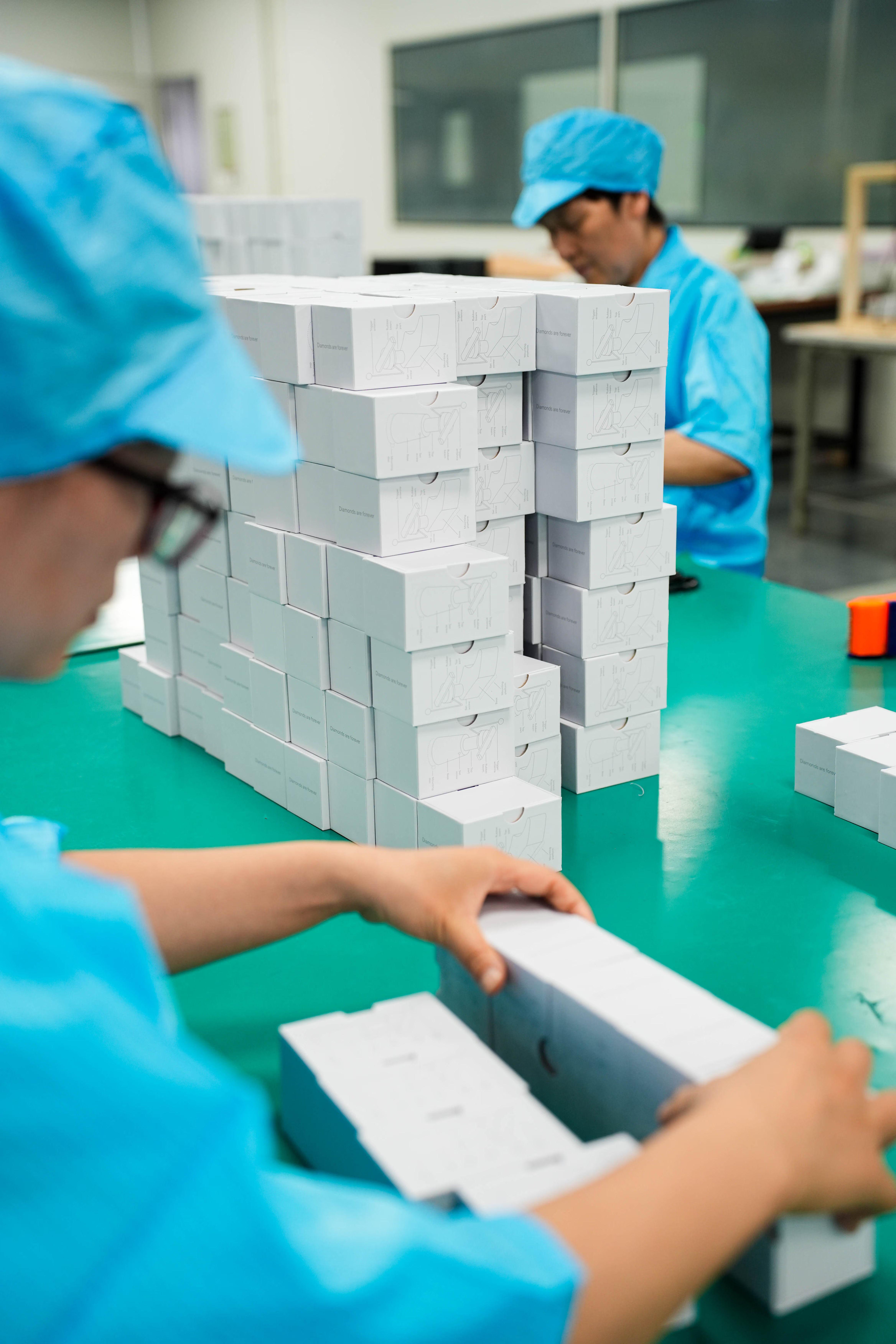
- Skilled hand assembly for consistency
Thus, while tiny tolerances exist, GUKA ensures mass production closely matches approved samples within international standards.
Standard export packing:
- Polybag to protect from moisture.
- Protective corners (for rigid boxes).
- Strong outer cartons.
- Pallets with stretch wrap for container loading.
Shipping options:
- Express (DHL, FedEx, UPS) for samples or small orders.
- Air freight for urgent bulk.
- Sea freight for cost-effective bulk.
- DDP door-to-door service available on request.
- Samples: 100% payment upfront (via PayPal/TT).
- Bulk orders: 30–50% deposit, balance before shipment.
- Payment methods: T/T bank transfer, PayPal for small amounts.
- Trade terms: FOB, CIF, DDP available.
- If there is any defect or mismatch against approved samples, we provide solutions such as rework, discount, or compensation.
- We keep detailed production records (lot numbers, QC reports) to trace issues.
- Our principle: long-term cooperation over short-term profit.
Because packaging is the first impression.
- It communicates brand identity and professionalism.
- It enhances consumer unboxing experience.
- It protects the product in transport.
- It influences purchase decisions on shelves.
Good packaging increases brand recognition, consumer trust, and repeat purchases.
- We are a real factory, not a trading company, with two production bases and 120–180 staff.
- We have advanced equipment: Heidelberg/KBA UV offset presses, 5 automatic paper bag lines, and full finishing capabilities.
- We have 27+ years of experience serving global clients (P&G, L'Oréal, Sephora, Home Depot, etc.).
- Our production MOQ starts at 500 units, with flexible customization for brand projects.
- We guarantee quality with multi-stage QC and provide after-sales solutions if needed.
In short: GUKA offers professionalism, speed, flexibility, and reliability.
Because packaging is a fully customized product. Every factor—dimensions, structure, paper GSM, greyboard thickness, finishes, inserts—affects quotation, lead time, and feasibility. If information is incomplete, quotations are inaccurate, samples may need to be redone, and costs or schedules may change later. That's why we keep reminding you: the more complete the information you provide at the beginning, the smoother and more efficient the whole project will be.
Because we are responsible and professional. Some suppliers may quickly quote a low price without details, but later raise costs or fail to meet expectations. We prefer to ask detailed questions at the start to ensure:
- Accurate quotation
- Suitable structure and material choices
- Realistic lead time
- Stable mass production quality
This professional communication protects you from hidden risks and unexpected costs.
Because packaging projects involve many details. If communication is slow or unclear, it causes:
- Delayed quotations.
- Wrong samples.
- Missed deadlines.
Efficient communication = faster progress, fewer mistakes, better results. That's why we always encourage clear, complete, and timely responses.

Still have a question?
Design the perfect eco-friendly luxury box to showcase your brand’s commitment to sustainability and style
Packaging Basics
Every brand shows up differently. We build the structure that fits yours, then refine the material, finish, and detail until it's right.