Fragile Ornament Packaging for Glass and Collectible Gifts
Custom partitions and fitted inserts help protect fragile glass ornaments during handling and shipping. Find the right protective packaging for your collection.
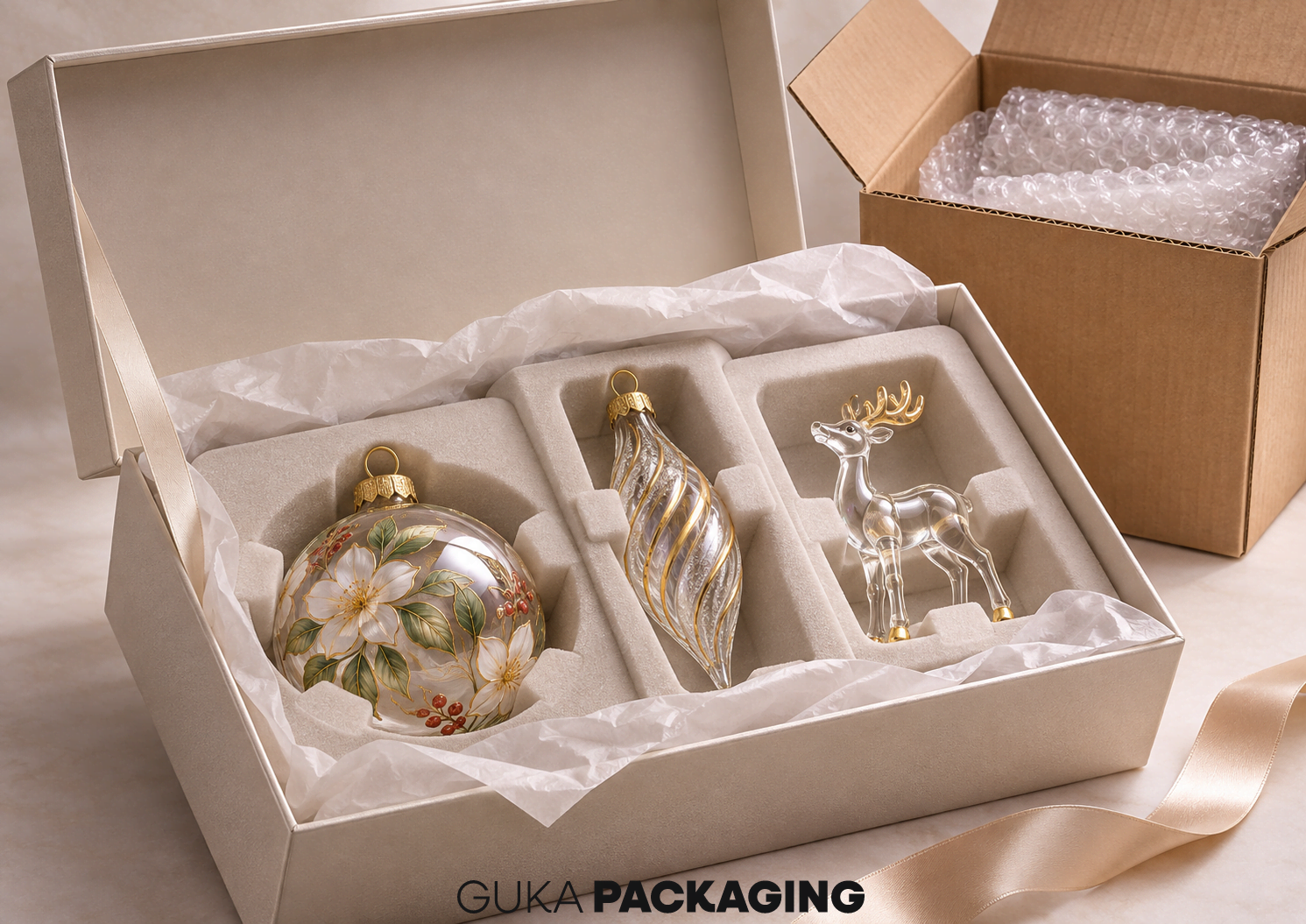
Table of content
A glass ornament can arrive completely intact and still fail a brand's quality standards. Scratched paint, loose embellishments, and damaged metallic finishes can make an expensive collectible unsuitable for sale, even when the glass itself has survived shipping.
Fragile ornament packaging needs to protect both the structure and appearance of the product. This involves controlling how the ornament rests inside the box, which materials touch its surface, and how the finished package responds to handling and transportation.
At GUKA Packaging, we develop custom packaging around the physical requirements of each product. Glass ornaments present a particular challenge because their most decorative features are often their most vulnerable. The box, protective insert, and shipping carton need to work together to support the product without placing unnecessary pressure on those details.
Key Takeaways
- Ornament shape determines the support points. Round baubles, glass figurines, and elongated decorations require different cavities and clearance around fragile features.
- Surface protection begins with material compatibility. Soft wrapping reduces direct contact, while fitted inserts control the ornament's position.
- Premium rigid boxes can accommodate protective interiors. The final structure should suit the product's dimensions, presentation needs, and distribution method.
- Collectible packaging can support seasonal storage. Reusable inserts give customers a dedicated place to return ornaments after display.
- Physical sampling is essential for fragile collections. Test fit, surface contact, product removal, and shipping performance before approving production.
Packaging Requirements Change With the Ornament's Shape
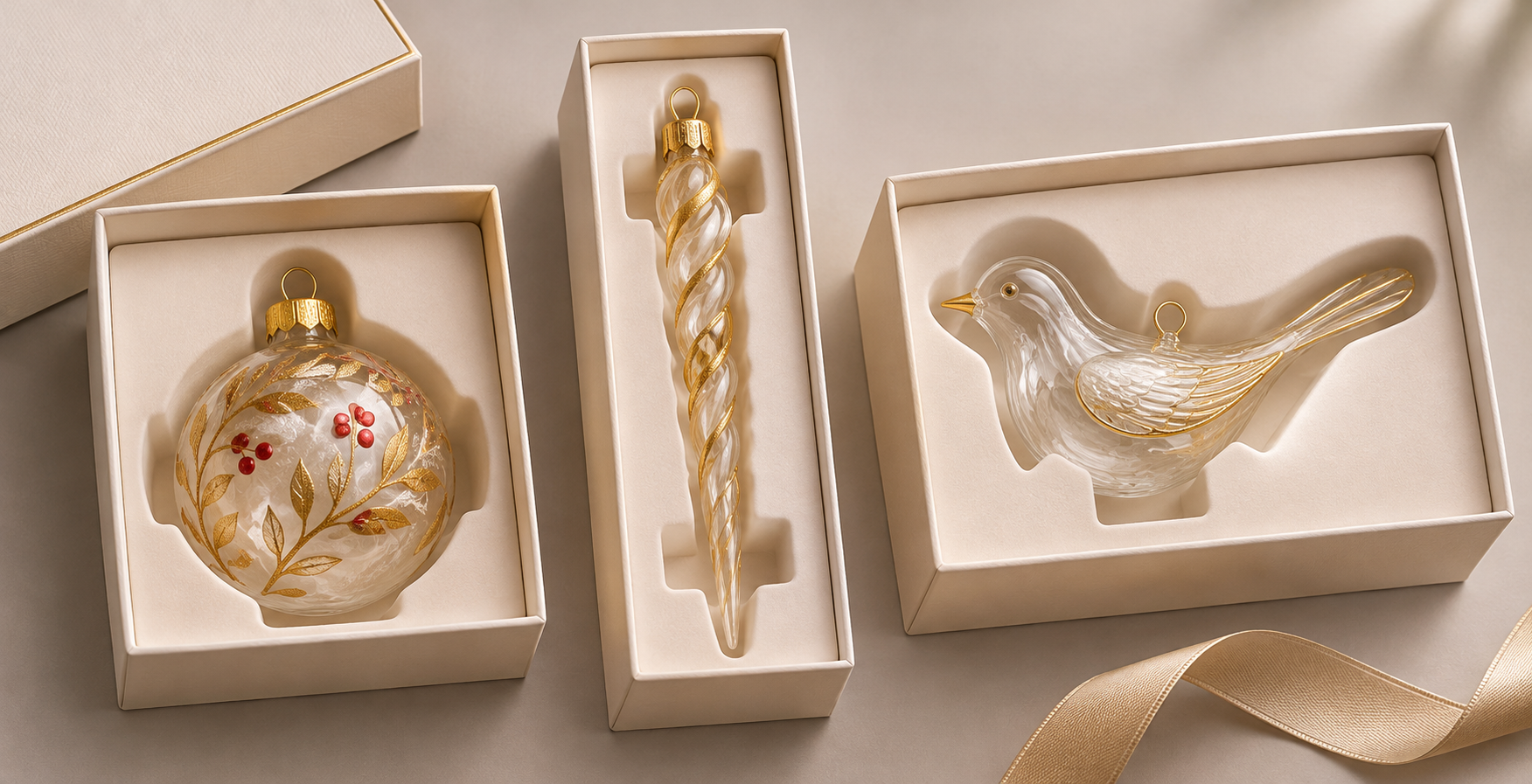
A round Christmas bauble can be supported around suitable areas of its curved body. A hand-blown glass bird may need clearance around its wings, beak, and tail, with support positioned beneath stronger sections of the ornament.
An elongated glass icicle presents another challenge. Its length and narrow construction require carefully distributed support to reduce bending forces or pressure around fragile ends. These differences affect the insert geometry long before exterior finishes or branding are selected.
Supporting the Glass at Suitable Contact Points
We identify the areas that can safely support an ornament before developing its internal packaging.
The Canadian Conservation Institute's guidance on caring for glass objects recommends supporting fragile objects around their main structure and protecting vulnerable attachments. We apply the same principle when developing ornament inserts, placing support around suitable areas of the glass while allowing clearance for hanging loops, narrow necks, and decorative details.
The cavity also needs to accommodate the product's actual weight. A heavier glass ornament may require a wider support area, while a lightweight piece with fragile extensions may need carefully positioned supports that keep those extensions clear of the surrounding material.
For irregular designs, physical product samples help us establish contact points that are difficult to evaluate through photographs or basic dimensions.
Protecting Hand-Painted Glass From Scratches and Surface Damage
Hand-painted details, metallic coatings, glitter, and applied embellishments can be damaged through direct contact with wrapping materials.
Even slight friction from abrasive packing materials can damage delicate finishes during handling and shipping. We assess the material directly touching the ornament, especially around hand-painted details and raised decorations that are sensitive to rubbing.
We assess the ornament's finish before specifying the contact material, especially for collectible products with delicate decoration.
Tissue Paper, Bubble Wrap, and Foam Serve Different Purposes
A protective wrapping system can use several materials, each selected for a specific function.
The finished arrangement should support the ornament without compressing fragile features. Excessive wrapping can make a product difficult to remove and may create concentrated pressure when the box closes. Adhesive tape should also be kept away from decorated surfaces, especially where paint, glitter, or applied details could be affected.
Glass Ornaments With Sensitive Decorative Finishes
Limited-edition ornaments may feature hand-applied paint, gilding, metallic coatings, or attached decorative elements. Their finishes can have different sensitivities to friction, adhesives, and packaging materials. A paper or foam material selected for ordinary glass may need further assessment before being used against these surfaces.
We recommend inspecting the actual ornament after contact and handling trials. Surface marking, transferred pigment, loose decoration, and changes in appearance should be evaluated alongside the condition of the glass.
For collectible products intended for extended storage, contact materials should also be reviewed for long-term compatibility. Acid-free labeling alone does not establish suitability for every paint, coating, or decorative material.
Fitted Inserts and Partitions for Fragile Ornament Boxes
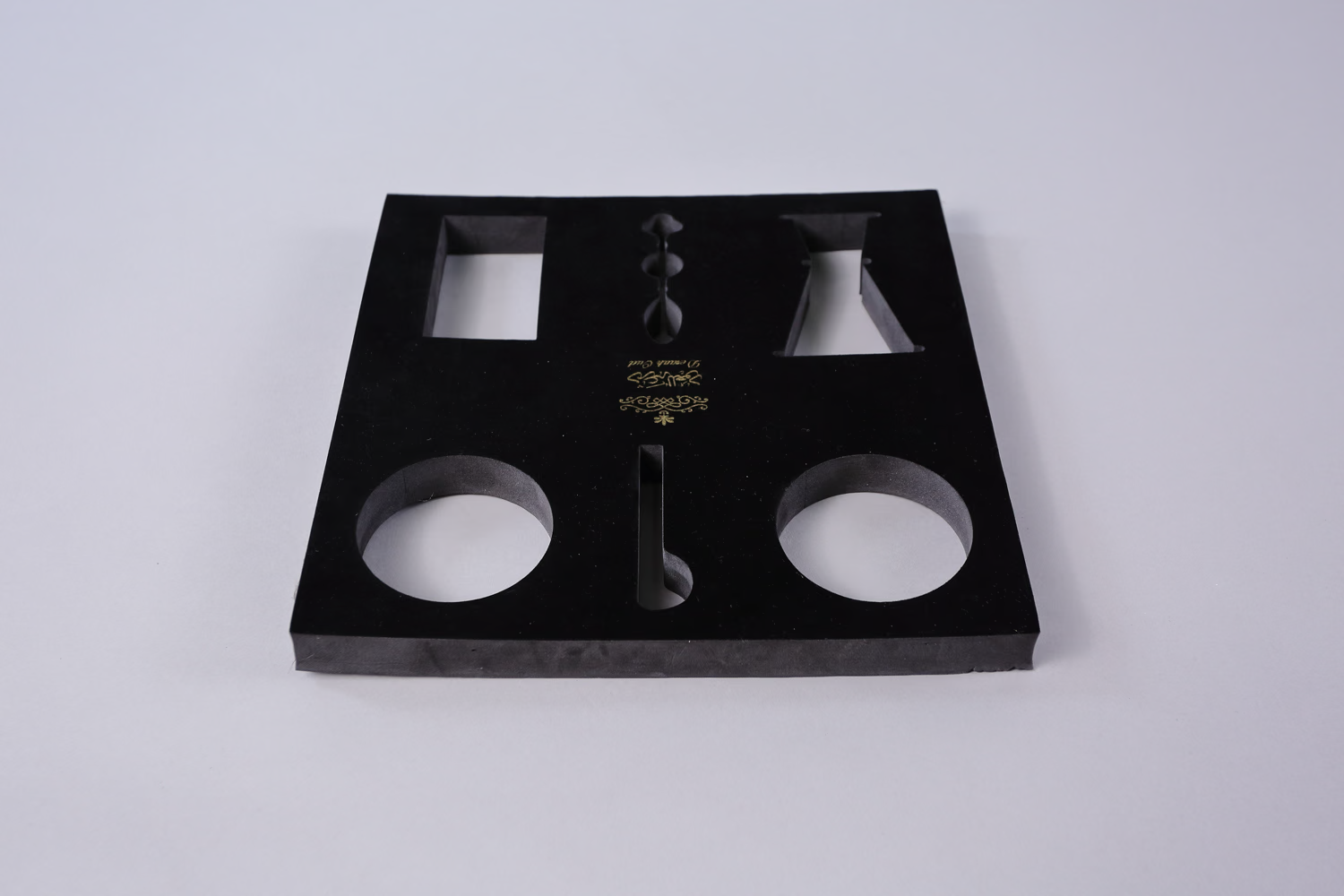
A fitted insert holds the ornament in its intended position and helps limit contact with the surrounding box. The quality of the fit depends on the cavity's shape, support points, and available clearance.
An insert that is too loose can allow unnecessary movement. Excessive contact pressure may damage thin glass or delicate surface features.
Custom foam supports and corrugated-board enclosures are also used to protect fragile collection objects during storage and handling. We apply similar construction principles to ornament packaging, developing fitted cavities around the product's dimensions and support points before reviewing the fit with physical samples.
Comparing Insert Materials for Glass Ornaments
Die-cut paperboard is useful for creating compartments, folded supports, and internal dividers. It can be suitable for lightweight ornaments when the structure provides adequate support.
Molded pulp can form shaped cavities, although its surface texture should be assessed before use against sensitive finishes.
Our custom box inserts include EVA, EPE foam, and corrugated options for different protective requirements. The appropriate material and cavity design depend on the ornament's weight, fragility, surface finish, and presentation needs.
We also consider how the product will be removed from its compartment. Finger-access openings or suitable clearance can reduce the need to pull on narrow hanging loops or decorative attachments.
Packing Several Ornaments in One Gift Box
A collection containing several glass ornaments requires an interior arrangement that keeps the pieces separated.
Paperboard partitions can divide the space into individual compartments. Fragile products may also require additional cushioning or shaped supports within those compartments.
The distribution of weight deserves attention when an assortment contains ornaments of different sizes. Heavier pieces should have suitable support so their weight does not transfer to neighboring products.
We would also assess the order in which the ornaments are removed. Each piece should be accessible without disturbing the rest of the collection or creating unnecessary contact between fragile surfaces.
Rigid Gift Boxes for Premium Ornaments and Collectible Sets
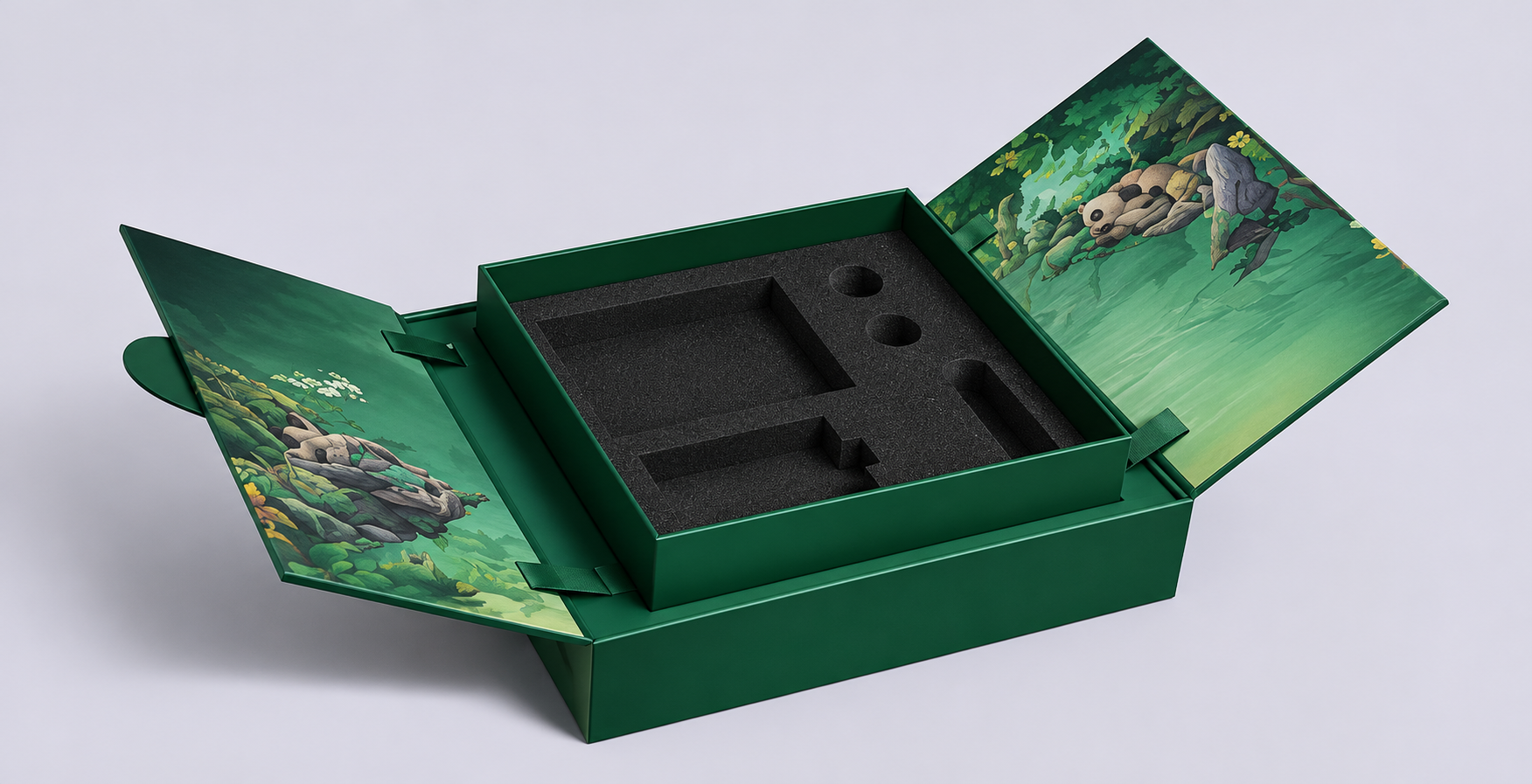
Custom rigid boxes can accommodate fitted inserts, protective compartments, and decorative finishes in one presentation package. Their construction is suitable for collectible ornaments that require both structural support and premium presentation.
Their construction makes them suitable for limited-edition Christmas ornaments, commemorative glass gifts, hand-blown decorations, and premium collectible sets. We can develop different rigid box structures based on the ornament's shape and the intended presentation.
Two-Piece and Magnetic Closure Boxes
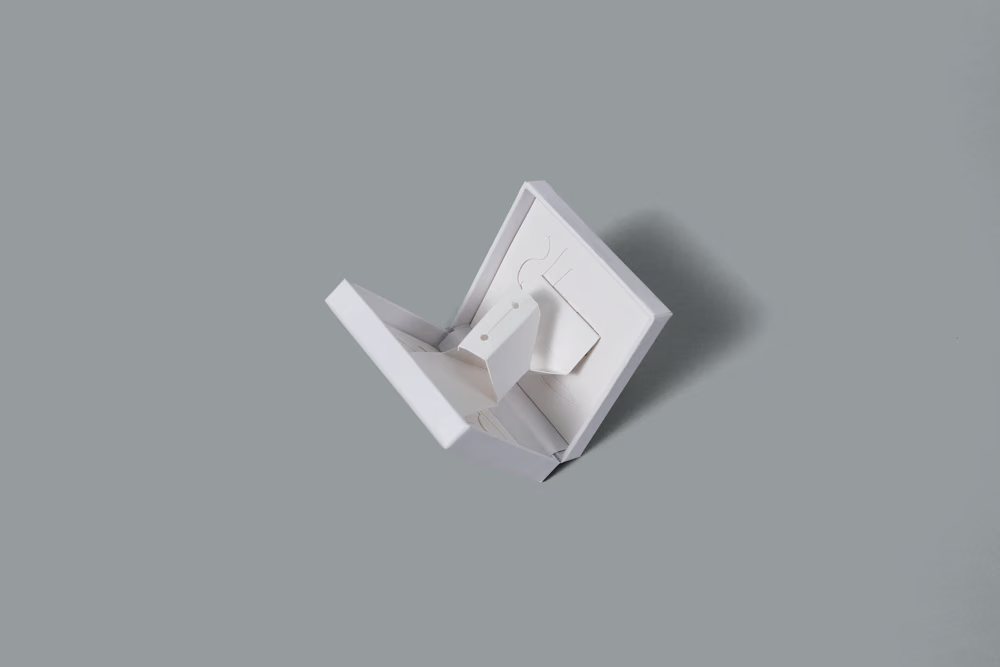
Custom two-piece lid and base rigid boxes feature a removable lid that provides full access to the ornament and its protective insert. This structure can accommodate delicate glass figurines that require careful handling during removal.
This structure can be suitable for larger glass figurines or collectible sets that need an unobstructed opening. Magnetic closure boxes offer an attached lid and can accommodate protective compartments, certificates, or printed presentation materials. For a premium individual ornament, we could develop a magnetic box with a shaped insert and a dedicated space for its authenticity card. The selected structure should accommodate the full ornament height, including its decorative attachments, while maintaining sufficient clearance when closed.
Display Windows and Decorative Finishes
Premium ornament boxes can incorporate textured wrapping papers, foil stamping, embossing, and printed interiors. These finishes can support a brand's seasonal identity or distinguish different collectible collections.
Display windows may also be appropriate for selected retail ornaments, especially when visibility is important to the purchasing experience. The window material, size, and placement need to be assessed alongside the structural requirements.
We establish the protective construction before confirming decorative details. Changes to the box opening, window position, or insert arrangement can affect the available support and internal clearance.
Retail Ornament Packaging and Shipping Packaging
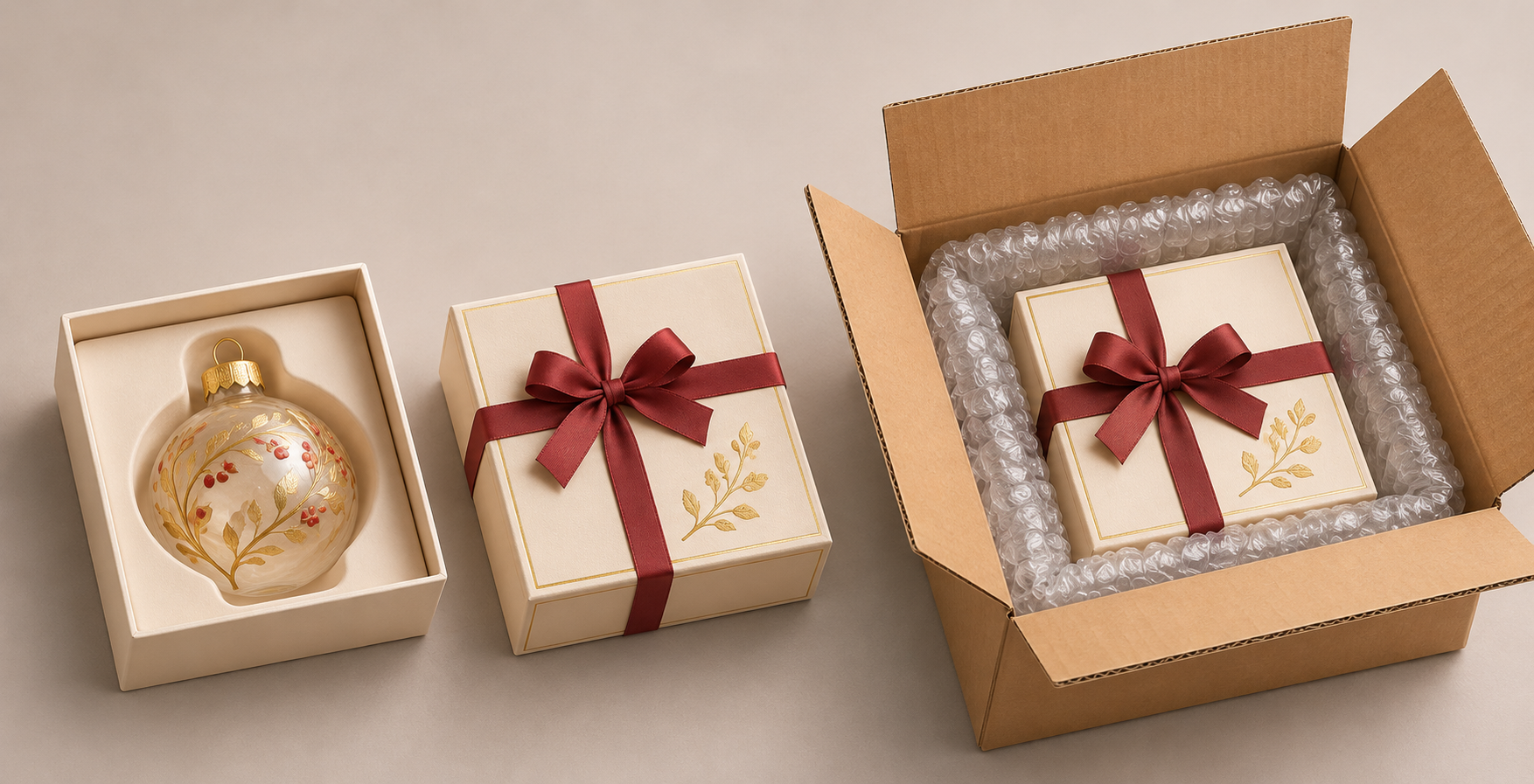
Lightweight retail ornaments can use custom folding cartons with suitable internal supports, while collectible sets may require rigid presentation boxes. Glass ornaments shipped directly to customers may also need additional cushioning and an outer shipping carton.
A collectible ornament displayed in a boutique may remain inside its presentation box until purchased. An online order may pass through automated sorting, repeated handling, and transportation alongside other packages.
A gift box intended for presentation can be protected further with custom corrugated boxes designed around the packed product's weight, cushioning requirements, and shipping conditions.
Double-Boxing Glass Ornaments for Delivery
Double-boxing fragile products places the ornament's presentation box inside a larger shipping carton with cushioning around it. FedEx recommends approximately three inches of cushioning around the inner box, providing a practical reference for parcel packaging designs.
The glass ornament should first be supported inside its fitted insert or protective wrapping. The completed presentation box can then be placed inside a corrugated carton with suitable cushioning around it. The cushioning needs to separate the inner package from the outer carton walls and restrict excessive movement.
The required configuration depends on the product's weight, fragility, and distribution method. We recommend assessing the complete package before establishing the final shipping specification.
Cushioning and Carton Strength
Corrugated shipping cartons provide structural support during transportation, while internal cushioning helps protect the contents from handling shocks. Carton dimensions should provide adequate space for cushioning without creating unnecessary empty volume. USPS recommends sturdy boxes, suitable padding, and secure packaging that restricts items from shifting during transportation.
Carton sizing, cushioning, and product separation are central to shipping fragile and sharp items safely. For glass ornaments, we also account for the selected carrier's requirements before finalizing the shipping configuration.
Fragile labels can help communicate the product's handling requirements. The cushioning, carton construction, and internal supports provide the primary physical protection.
Shipping Multiple Ornament Boxes Together
Wholesale orders may contain several individually packaged ornaments inside one master carton. The combined package weight, arrangement of individual boxes, and carton strength all influence the packing configuration. We would assess how the individual packages are supported inside the master carton, including the need for additional dividers or cushioning.
A compact master-carton arrangement may reduce freight volume, but the packed boxes still need sufficient support to withstand expected handling conditions.
Packaging That Customers Can Reuse for Seasonal Storage
Premium Christmas ornaments are often displayed for a limited period and stored for the rest of the year. A fitted presentation box can provide a dedicated storage space when the customer puts the ornament away after the holiday season.
This gives collectible ornament brands another reason to consider the internal packaging beyond its initial retail presentation.
Designing Inserts for Repeated Use
A reusable insert should allow the ornament to be removed and returned without placing pressure on delicate features. We would consider the accessibility of the cavity, the durability of its supporting components, and the ease of positioning the product correctly. For a multi-ornament collection, individual compartments can help customers return each piece to its intended position. Printed care instructions or a small storage card may also be incorporated into the box.
Collectible ornaments may remain boxed for months between display seasons, making the long-term stability of storage materials an important consideration. We assess how tissue paper, inserts, and cushioning materials interact with sensitive finishes when developing packaging intended for repeated seasonal storage.
Making Collectible Packaging Part of the Product
Limited-edition ornaments may include certificates of authenticity, numbered cards, or information about the collection. A rigid box can accommodate these materials alongside the ornament without interfering with its protective insert. For example, a collectible glass decoration may be presented in a two-piece rigid box with a fitted cavity and a separate recess for its certificate. The packaging can then be retained with the ornament, allowing the product and its accompanying documentation to remain together during storage.
This approach is particularly relevant to brands producing annual collections or decorative products intended to be kept for many years.
Using One Box Design Across Different Ornament Collections
Seasonal ornament brands may release several product designs within the same collection. A shared exterior box can give the range consistent branding while allowing each ornament to have a suitable protective insert.
The decision depends on how closely the product dimensions align.
Example of a Three-Design Ornament Collection
A hypothetical ornament brand plans an initial production run of 1,800 collectible glass ornaments.
The range includes three designs.
- 600 round hand-painted baubles
- 600 hand-blown glass birds
- 600 elongated glass ornaments
The brand wants one exterior packaging design, with each ornament receiving a fitted insert. We would begin by assessing the largest dimensions and most vulnerable features across the three designs. A shared rigid box size may be practical if the ornaments have compatible overall dimensions. Each design could then use an insert developed around its individual shape.
However, a substantially taller or longer ornament may require a larger exterior box. Using that same box for smaller products could increase material consumption and freight volume. We would compare the manufacturing requirements of a shared exterior against separate box sizes before recommending the final arrangement.
A shared exterior may reduce the number of different box structures required, but separate insert designs can introduce additional tooling and setup costs. The combined order quantity also needs to be reviewed against the requirements of each manufacturing variation.
This is an illustrative production scenario, not a documented GUKA client project.
Preparing Specifications for Custom Ornament Packaging
We develop packaging proposals using the ornament's physical specifications, intended presentation, and distribution requirements. Accurate measurements allow us to assess suitable box structures and insert materials before sampling begins. Brands requesting custom packaging should prepare the following information.
What Affects Custom Ornament Packaging Costs?
Box dimensions, materials, finishing, and order quantity are among the key factors affecting the price of custom packaging boxes. Fragile ornament collections may also require separate insert tooling and additional assembly, depending on the complexity of each design.
A fitted foam cavity for an irregular glass figurine may require different tooling and assembly work from a paperboard partition used for a collection of round baubles. Decorative finishes, printed variations, and packaging components also influence the quotation. Our rigid box production generally starts at 500 units per qualified project, subject to the final specifications and manufacturing requirements.
Brands planning several ornament designs should provide the quantity required for each version. Shared components may offer production advantages, but individual inserts or different box sizes can introduce separate costs. We recommend finalizing the ornament assortment and packaging requirements before comparing quotations.
Approving a Sample Before Mass Production
A physical packaging sample allows us to assess the ornament and its proposed protective structure together.
The review should include the actual product, fitted insert, wrapping materials, and final box construction. A sample approved solely on exterior appearance provides limited information about the protection of the ornament. We recommend checking the following points before confirming production.
Testing for Parcel Distribution
Shock and vibration during transportation can affect fragile objects even when the exterior packaging shows little visible damage. We consider these transport conditions when assessing the complete ornament package, including its fitted insert, presentation box, and outer shipping carton.
Fragile ornament packaging can be evaluated through ISTA 3A transport testing, which simulates shipping conditions through tests involving drops, vibration, and compression. The procedure applies to eligible individual packages shipped through parcel delivery networks, helping brands assess how their packaging protects glass ornaments during transportation.
The applicable test procedure depends on the package type and distribution method. We would review the intended shipping configuration before recommending a testing approach. After testing, the ornament should be inspected for glass breakage, loose attachments, surface damage, and other changes in condition.
The presentation box and shipping carton should also be examined for deformation or damage that could affect their protective function.
Sample approval establishes the agreed construction and material specifications for production. Changes to the product, insert, or box dimensions may require further review before manufacturing continues.
Conclusion
Fragile ornament packaging needs to accommodate the glass ornament's shape, surface finish, and intended distribution method.
Protective wrapping helps reduce surface contact, while fitted inserts and partitions keep ornaments supported and separated. Rigid boxes provide premium presentation, and corrugated shipping cartons can provide additional protection during distribution.
For collectible ornament brands, the packaging can also serve as a dedicated storage solution after the display season.
We manufacture custom rigid boxes and paper-based packaging for brands with specific product and presentation requirements. Fragile products deserve packaging designed around their specific requirements. If you're developing a new collection or improving an existing packaging design, share your project with our team. We can help you assess suitable box structures, protective inserts, and finishing options for your products.
Frequently Asked Questions
What is the best packaging for fragile glass ornaments?
A combination of suitable protective wrapping, a fitted insert, and a structurally appropriate box is generally recommended. The final materials should reflect the ornament's shape, weight, surface finish, and handling requirements. Parcel shipments may also require a corrugated outer carton with additional cushioning.
How should hand-painted glass ornaments be wrapped?
Hand-painted ornaments should be wrapped using a soft material that is compatible with their decorative finish. Delicate painted areas and embellishments may require additional clearance or a specialized contact material. Adhesive tape should be kept away from the ornament's surface.
Are rigid gift boxes suitable for shipping glass ornaments?
Rigid gift boxes can accommodate protective inserts and provide a substantial presentation structure. Parcel delivery may require additional protection through an outer corrugated carton and cushioning. The complete packaging assembly should be assessed against the intended distribution conditions.
Which insert material is best for glass ornament packaging?
Paperboard, molded pulp, EVA foam, EPE foam, and protective partitions can all be suitable depending on the product. We select inserts based on ornament dimensions, weight, vulnerable features, and surface compatibility. Physical samples help confirm the final fit and contact points.
How do you package multiple fragile ornaments in one box?
Individual compartments or fitted cavities can keep ornaments separated and reduce contact between pieces. Additional cushioning may be required for thin glass walls, irregular shapes, or delicate decorative features. Each ornament should also be accessible without disturbing neighboring products.
Can one rigid box design be used for several ornament sizes?
A shared exterior can accommodate different ornaments when their overall dimensions and support requirements are compatible. Separate fitted inserts may be developed for individual designs. Significantly different product sizes can require separate box structures to maintain suitable protection and material efficiency.
Can collectible glass ornaments be stored in their original packaging?
A presentation box can serve as a storage container when its construction and internal materials are suitable for the intended duration and conditions. Reusable inserts help keep ornaments in their designated positions. Sensitive or valuable collectibles may require specialist conservation guidance for long-term storage.
Recommended for you


You Might Enjoy


Are we right for each other?
We work best with brands that treat packaging as part of the product, not as the last thing on the list. To save us both time, here is who we work with best.
We're probably not the right fit if:
- Orders under $1,000.
- A few boxes, one time.
- Lowest quote wins.
- No conversation, just add-to-cart.
- Brand direction still up in the air. Our FAQ covers the basics first: process, scale, sampling, finishing, production. Worth reading before submitting anything.
We're a strong fit if:
- Projects starting around $1,000 and up.
- Sampling before production makes sense to you. It runs from $300, though complete artwork and locked specs can sometimes skip straight to the line.
- There's real budget behind the packaging, and an expectation that production standards get defined properly.
- What's needed is a manufacturing partner across structure, material, process and delivery. Not a print shop taking a file.
- The box has a job: retail shelf, gifting, unboxing. It has to carry the brand.
- Getting it right matters more than getting it cheapest.
Sound like your project? Let's talk
What happens after you submit
1. A specialist reviews your project, usually within 1 business day.
2. We follow up with questions, options, and indicative pricing.
3. Once the spec is confirmed, we move to sampling.