How to Put Gift Box Together + Ultimate Guide to Custom Gift Boxes
Learn how to put a gift box together and design custom gift boxes that delight — step-by-step guidance, design tips, materials, manufacturing options.
Table of content
Knowing how to put a gift box together—from structural assembly to finishing touches and logistics—lets you control that first impression. For ecommerce brands, luxury goods, and corporate gifting, the right box can increase perceived value, improve unboxing experiences, and even drive repeat purchases.
This guide combines practical, hands-on instruction for folding and assembling boxes with strategic advice for designing custom gift boxes: materials and finishes, size and structure selection, branding, sustainability, and mass production. It’s grounded in practical packaging manufacturing experience and tailored to the needs of clients in the U.S., Europe, and Australia who buy custom rigid boxes, folding cartons, or corrugated shipping solutions.

Research & Preparation: keywords, market fit, and design brief
Before you design or assemble any gift box, do three things: (1) clarify the box’s purpose, (2) set performance and aesthetic goals, and (3) prepare a materials and sizing checklist.
Start by asking: Is this a product shipper, a presentation box for retail, or a corporate mailer? Is the gift fragile? Will it be returned or reused? Answers affect material (rigid board, folding carton, corrugated), interior cushioning, printing method, and production volume.
When targeting international markets like the U.S., Europe, and Australia, confirm regulatory needs and courier sizing. Prepare a short design brief that includes: target audience, brand tone, required dimensions, items to be included, budget per unit, and desired finishes (e.g., matte lamination, hot-stamp, window cutout).
How to Put a Gift Box Together: step-by-step assembly (folding gift box & rigid box basics)
Putting a gift box together is a simple skill, but doing it well—neat folds, secure seams, and consistent finishes—makes a huge difference. Below are two common box types and step-by-step assembly instructions.
Folding Gift Box (pre-glued folding carton / foldable gift box template)
Folding gift boxes are cost-effective and fast to assemble. Many arrive pre-printed and pre-cut with score lines. To assemble:
- Identify panels and score lines. Place the sheet printed side down so crease directions are visible.
- Fold along all scored lines to pre-crease panels for crisp edges. Use a bone folder or the back of a ruler to sharpen creases.
- Start with the base: fold in the small flaps, then the larger panels until a rectangular or square base forms. If there’s a tuck flap, insert it into the slot.
- Secure tabs by pressing pre-applied adhesive together, or apply double-sided tape where recommended. For higher strength, a small dab of PVA glue on the tab works well.
- For boxes with separate lids, fold and crease the lid panels similarly and test fit before adding finishing touches.
- Inspect seams for gaps and realign if necessary. Add internal cushioning (tissue, crinkle paper, custom die-cut foam) and place the product.

Rigid Set-Up Box (two-piece rigid box, magnetic closure)
Rigid boxes require more attention and are typically pre-manufactured and delivered assembled or semi-assembled:
- If delivered flat, open the box carefully and press along internal joints to form the structure. Use gloved hands to avoid fingerprints on finished surfaces.
- For magnetic closures, ensure magnets engage correctly—trim internal liners that obstruct closure.
- Insert internal components such as trays, dividers, or foam inserts. Test the fit of the product and adjust internal tolerances if necessary.
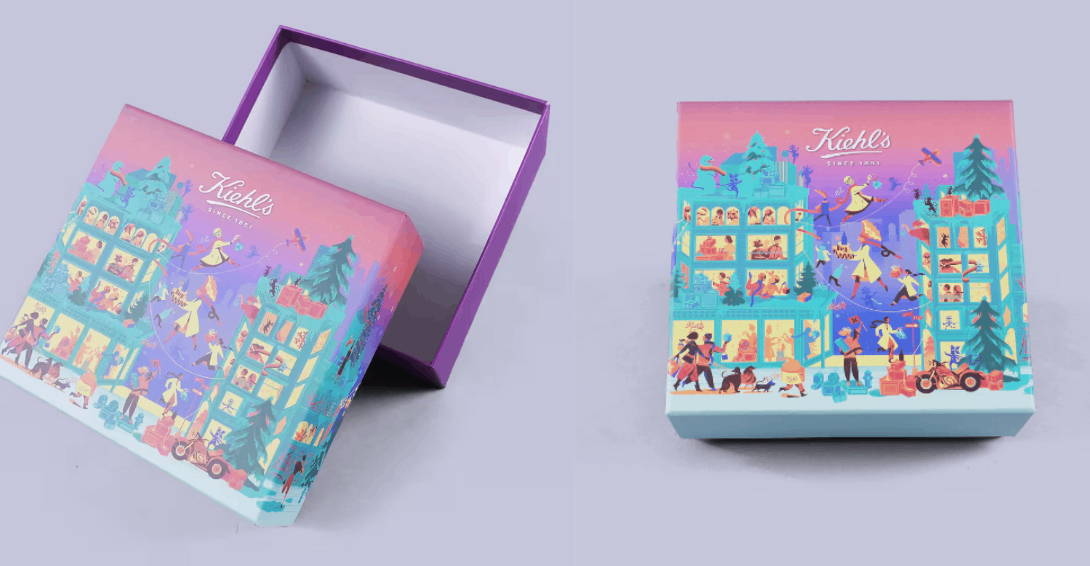
- Close and inspect for flush edges, alignment of graphics between lid and base, and consistent laminate adhesion.
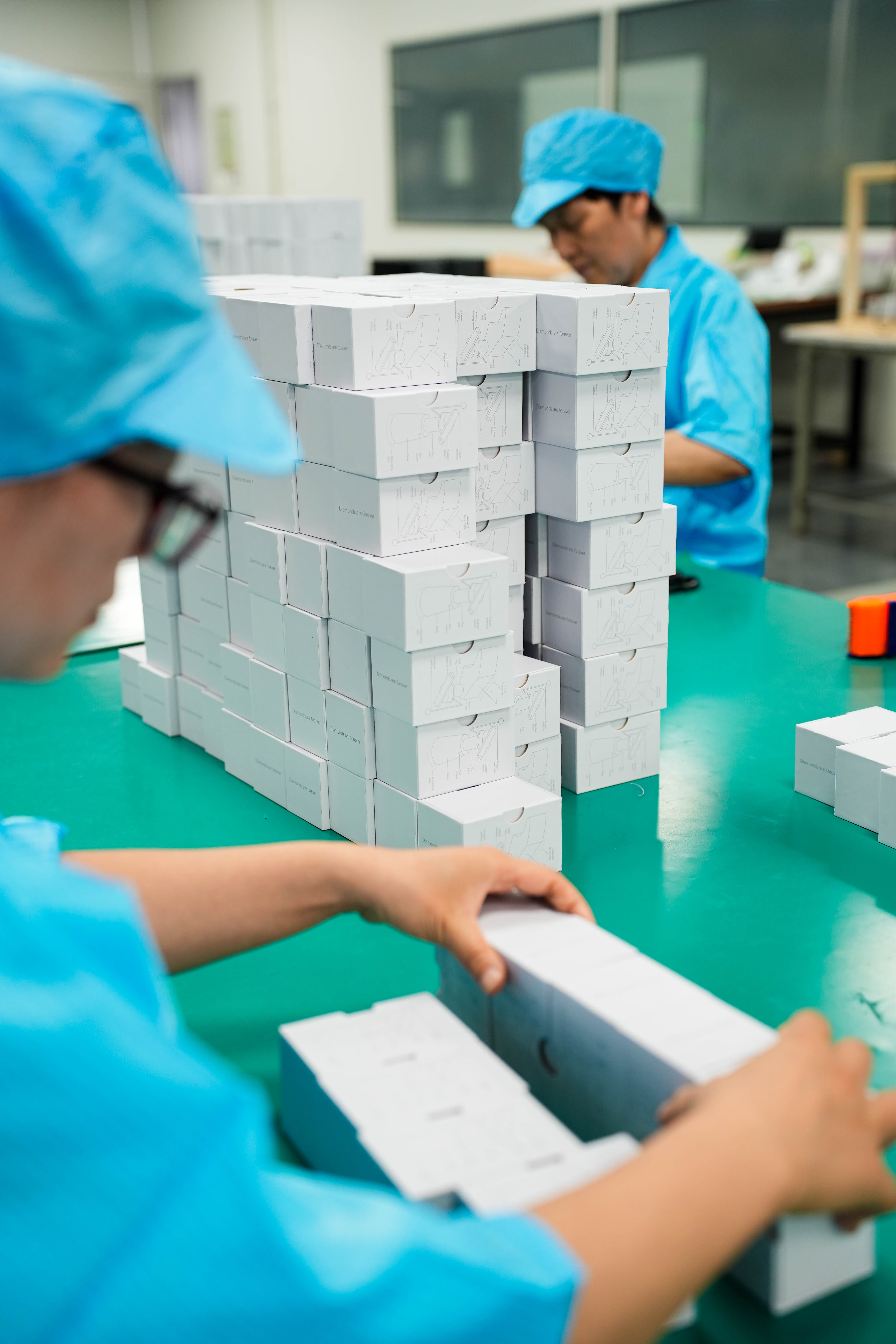
Tip: Always assemble one prototype before approving a full production run—this saves costly fixes.
Gift Box Design: structure, materials, and finishes
Design considerations fall into three buckets: structure (how the box functions), materials (what it’s made of), and print/finish (how it looks and feels).
1. Structure & Function
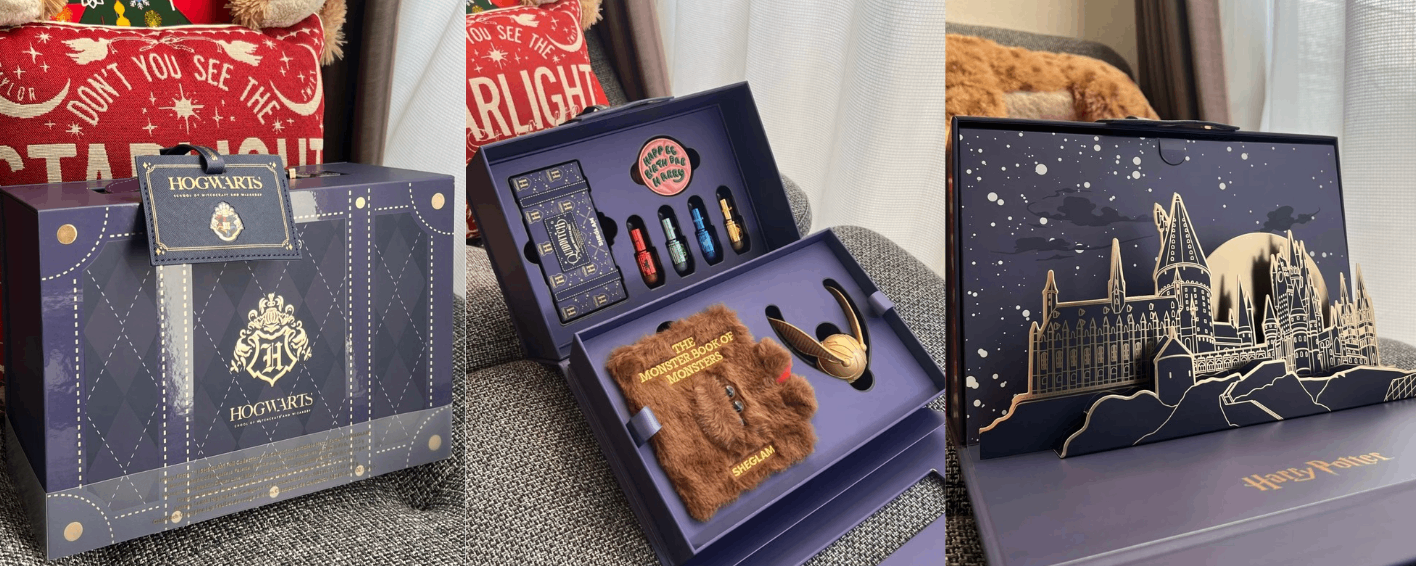
- Two-piece rigid boxes (lid + base): premium feel, excellent for luxury perfumes, jewelry, and cosmetics. Good for repeat use.
- Folding cartons: economical, easy to ship flat, good for single-unit retail presentation.
- Corrugated gift shippers: ideal when you need both presentation and shipping protection—for subscription boxes or fragile items.
- Display boxes: include windows or die-cuts to show the product while preserving brand presence.
Choose a structure that balances aesthetics and logistical realities like cartonization and courier size limits.
2. Materials
- SBS (Solid Bleached Sulfate) / SBS paperboard: bright white, excellent print quality—great for luxury and cosmetics.
- CCNB (Clay Coated News Back): cost effective with good printability for mid-range packaging.
- Rigid paperboard: thicker, used for set-up boxes.
- Corrugated board: for shipping strength (single wall, double wall per need).
- Recycled and kraft papers: for eco positioning.
Thicknesses (250–1200 gsm) and board composition affect durability, foldability, and print results.
3. Print, Finishing & Embellishments
- Offset & flexo printing for larger runs, CMYK/PMS spot colors for brand accuracy.
- Digital printing for short runs or variable data.
- Lamination (matte, gloss) protects prints and modifies tactile feel.
- Varnishes (spot UV, aqueous) add sheen selectively.
- Hot-foil stamping, embossing/debossing: premium luxury markers.
- Window cutouts and ribbon closures add unboxing drama.
Strategically combine finishes—e.g., matte lamination for the body with selective gloss varnish or foil stamping on the logo—to create contrast and elevate perceived value. Check out How to Make Your Own Box Packaging with Munufacturer or Supplier?
Branding & Personalization: creating a memorable unboxing experience
Brands using custom gift boxes with logo (choosing your logo fonts) should think beyond the exterior. The unboxing sequence is an experience: reveal layers, tactile finishes, and thoughtful inserts.
Start with a core message—what should the recipient feel? From there, design a tiered reveal: outer mailer, inner box, product nest, and a personal note or brochure. Personalization ranges from a printed name on the box to QR codes linking to a welcome video. For corporate gifting, custom corporate gift boxes with company colors, logo embossing, and personalized cards create high perceived value.
Consistency is vital. Maintain brand typography, color codes, and imagery across all packaging elements to strengthen recognition.
Sizing, Dielines, and Templates: planning your folding gift box template
A reliable template (dieline) ensures production accuracy.
- Measure product dimensions including protective buffer (usually 5–15 mm clearance).
- Create internal inserts or trays for multiple products to avoid shifting.
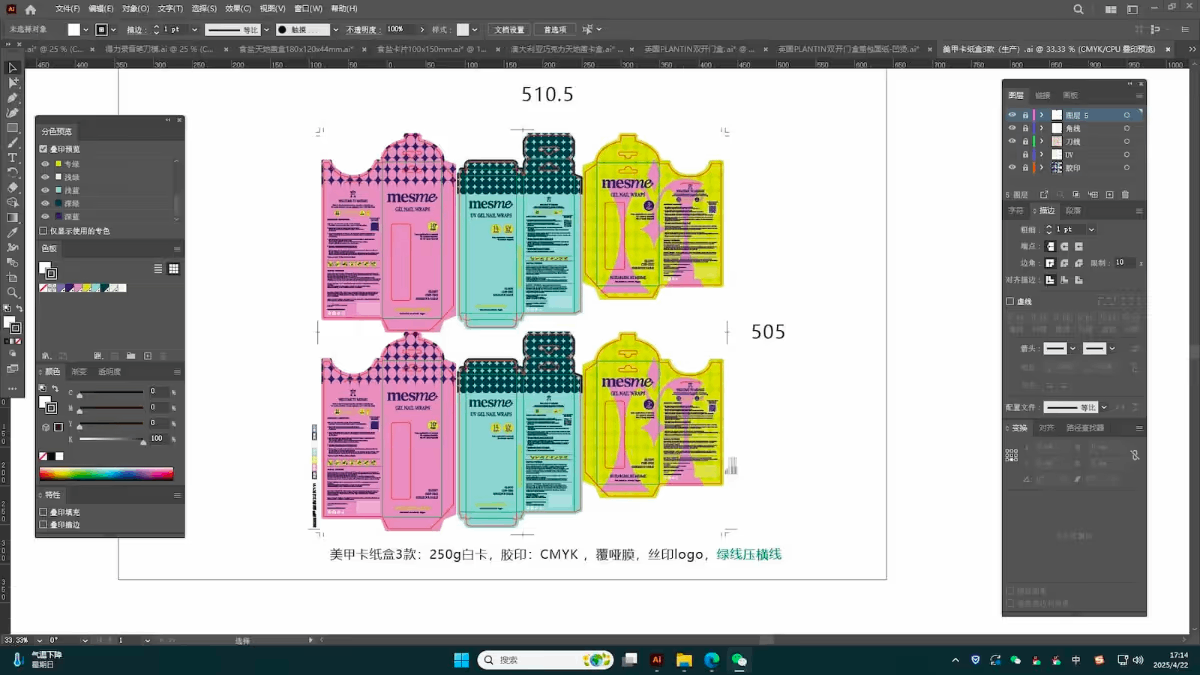
- Design dielines with clear score lines, glue tabs, and bleed margins for print (usually 3 mm bleed).
- If using foldable gift box templates, test the template on paper or low-cost board before committing to printed runs.
GUKA Packaging can provide dieline services and digital mockups to minimize fit issues and speed approvals (Rigid Boxes, Folding Cartons).
Selecting Manufacturing & Production Options (from prototype to bulk)
Choosing the right production route depends on volume, budget, and lead time:
- Short runs / prototypes: digital printing, small batch die-cutting.
- Medium to large runs: offset printing with conventional die-cutting for economies of scale.
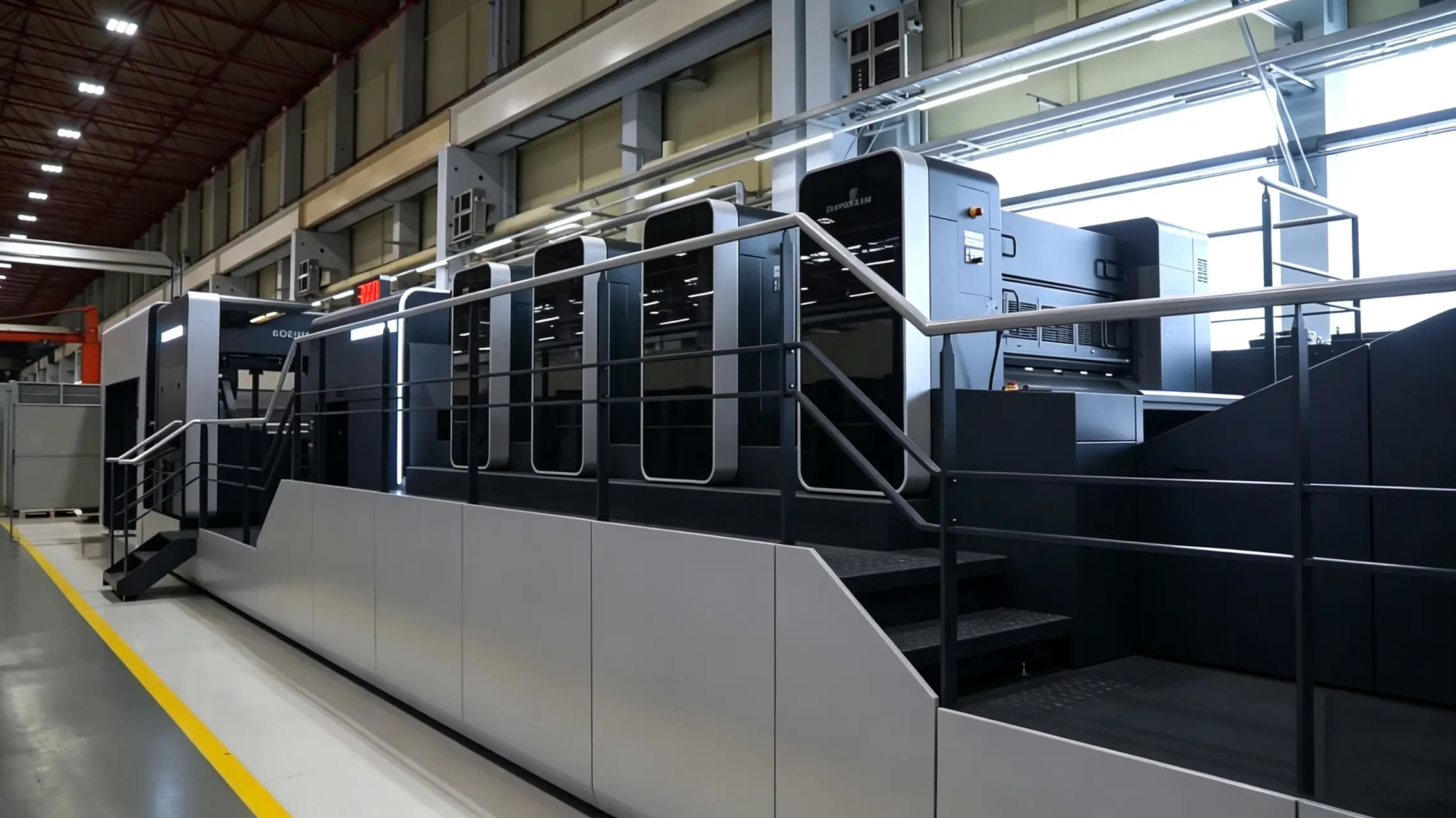
- Very large / branded campaigns: consider in-line finishing, custom inserts, and secondary packaging optimization to reduce fulfillment costs.
Work with the factory to finalize pre-production samples, approve color swatches (PMS chips), and obtain packaging test reports (e.g., drop test, compression). If you ship internationally, include palletizing and export packaging plans to protect boxes during transit.
Sustainability: materials, recyclability, and certifications
Sustainable packaging is not only good practice but a market differentiator in many western markets. Choose recyclable boards, water-based inks, and minimal plastic. Consider certifications like FSC for responsibly sourced paper and disclose recyclability instructions on the box.
Small design changes—reducing laminated layers, optimizing box nesting to improve cartonization, and using recycled fill—can reduce carbon footprint and shipping costs. Many customers prefer brands that are transparent about materials and end-of-life disposal.
For more on responsible sourcing see the Forest Stewardship Council (FSC) and general packaging sustainability guidance.
Logistics & Packaging for Shipping
If a gift box must travel, plan for secondary shipping protection. A beautiful folding carton rarely survives courier handling alone unless placed inside a corrugated master carton or mailer.
Consider:
- Master cartons sized to minimize void space.
- Protective inserts (molded pulp, custom foam) for fragile goods.
- Fulfillment optimization: standardize SKUs to reduce pick errors and packing time.
- International shipping: account for customs declarations and country-specific regulations for materials (e.g., treated wood, agricultural restrictions).
Work with your manufacturer to test full shipping cycles before launch to avoid unpleasant surprises.
Cost, MOQ, and Lead Times (what to expect)
Costs depend on size, materials, print, and finish. Rigid boxes and heavy embossing cost more than basic folding cartons. Minimum order quantities (MOQs) vary by process: digital short runs may allow hundreds, while conventional offset die-cut programs often require thousands to reach economical price points.
Lead times: prototypes 7–14 days, production runs 2–6 weeks depending on complexity and order size. Plan ahead for seasonal peaks (e.g., Q4 holidays) when factories and shipping lanes face capacity constraints.
GUKA offers flexible MOQ programs and clear lead-time estimates for U.S., Europe, and Australia clients — we recommend contacting our sales team early in the planning stage (Request a Quote).
Use Cases & Industry Examples
Custom gift boxes have broad applications. Examples:
- Perfume & cosmetics: two-piece rigid boxes with soft touch lamination and foil logos for premium positioning.
- Jewelry: nested inserts and magnetic closures for secure, elegant presentation.
- Food & confectionery: food-safe coatings, window cutouts for visibility, and tamper evidence.
- Electronics & accessories: sturdy corrugated or rigid boxes with die-cut foam.
- Corporate gifting: branded gift sets with personalized notes for high-value client outreach.
Case studies (anonymized) show brands improving repeat purchases and referral behavior by investing in premium unboxing.
Quality Control & Testing
Quality control is essential. Ask for:
- Pre-production samples and PSIs (pre-shipment inspections).
- Color approval proofs (PMS or digital proof).
- Mechanical tests: drop testing, compression testing for shipped products.
- Adhesion tests for lamination and varnish durability.
Implement a checklist for receiving inspections: print quality, corner sharpness, glue integrity, and correct inner inserts.
Frequently asked questions (FAQ)
Q1:What’s the difference between a folding gift box and a rigid gift box?
Folding boxes fold flat and are economical for high-volume packaging; rigid boxes offer a premium feel and structural strength but cost more and take more space.
Q2: Can I add my logo to any box type?
Yes. Logos can be printed, foiled, embossed, or applied as stickers. Choice of technique depends on budget and desired effect.
Q3: How do I make sure my box survives international shipping?
Use an outer corrugated master carton, add protective inserts, and test packing with the full shipping profile, including rough handling simulation.
Q4: What is a reasonable MOQ?
MOQs vary: digital printing can start from small runs (hundreds), while offset die-cut and rigid box manufacturing may require MOQs in the thousands. Talk to suppliers about staggered production or mixed SKU runs to reduce inventory burden.
Packaging That Sells: How GUKA Packaging Helps
Putting a gift box together is both craft and science. From choosing the right structure and material to designing a branded unboxing sequence and planning logistics, every decision affects cost, perception, and performance. For businesses selling to the U.S., Europe, and Australia, the right partner reduces risk: accurate dielines, material advice, quality control, sustainability options, and optimized production.
GUKA Packaging specializes in custom rigid boxes, folding carton packaging, and corrugated solutions across industries—perfume, cosmetics, food, electronics, and corporate gifting. We offer design support, prototyping, and end-to-end manufacturing with competitive MOQs and global shipping experience. If you’re ready to elevate your gift packaging, request a free dieline review or sample pack today.
Recommended for you


.avif)
.avif)
.avif)
.avif)
.avif)
.avif)
.avif)
.avif)
You Might Enjoy



Are we right for each other?
We work best with brands that treat packaging as part of the product, not as the last thing on the list. To save us both time, here is who we work with best.
We're probably not the right fit if:
- Orders under $1,000.
- A few boxes, one time.
- Lowest quote wins.
- No conversation, just add-to-cart.
- Brand direction still up in the air. Our FAQ covers the basics first: process, scale, sampling, finishing, production. Worth reading before submitting anything.
We're a strong fit if:
- Projects starting around $1,000 and up.
- Sampling before production makes sense to you. It runs from $300, though complete artwork and locked specs can sometimes skip straight to the line.
- There's real budget behind the packaging, and an expectation that production standards get defined properly.
- What's needed is a manufacturing partner across structure, material, process and delivery. Not a print shop taking a file.
- The box has a job: retail shelf, gifting, unboxing. It has to carry the brand.
- Getting it right matters more than getting it cheapest.
Sound like your project? Let's talk
What happens after you submit
1. A specialist reviews your project, usually within 1 business day.
2. We follow up with questions, options, and indicative pricing.
3. Once the spec is confirmed, we move to sampling.