Custom Rigid Box Case for Luxury Fashion Brand
See how GUKA developed a custom rigid box with 30+ components, 15 cutting dies and three prototype rounds after a luxury fashion brand rejected supplier samples.

Table of content
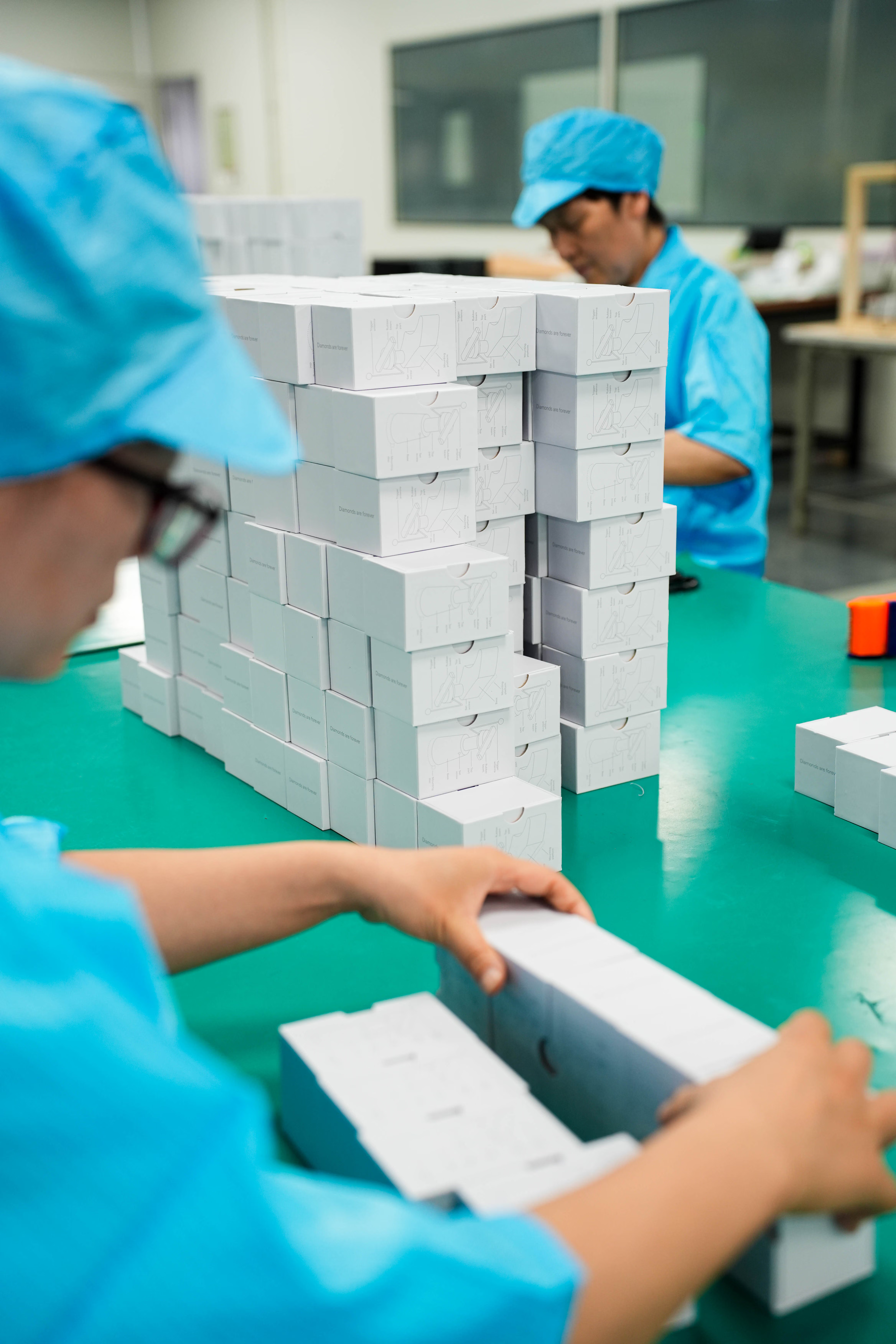
A Dubai-based luxury fashion brand approached GUKA Packaging after nearly eight suppliers failed to produce a custom rigid box that met its expectations. The founder, Saad, needed packaging for limited-edition golden bear collectibles, featuring a woodgrain-textured exterior, precise finishing, and an intricate interior containing more than 30 individual components.
Previous prototypes had suffered from visible adhesive, misaligned embossing, and inconsistent construction. GUKA approached the project through material testing, structural development, and physical sampling, eventually selecting a 2.5 mm rigid paperboard construction supported by 15 cutting dies. Three prototype rounds and an in-person review in Dubai led to the client's decision to place his first bulk production order by the end of 2024.
This case study examines the manufacturing challenges, technical decisions, and development process behind a packaging project that had repeatedly failed to meet the client's requirements.
Custom Rigid Box Project Overview
Why Nearly Eight Packaging Suppliers Failed to Meet the Client's Requirements
When Saad contacted GUKA in April 2024, he had already spent months searching for a suitable packaging manufacturer. He had worked with nearly eight suppliers across China, reportedly investing approximately ¥10,000 per prototype attempt without obtaining a sample he considered acceptable. The repeated failures were particularly frustrating because he had a clear vision of how the packaging should look and function.
His brand produced limited-edition golden bear collectibles, with an emphasis on exclusivity and presentation. The packaging needed to resemble a display case, combining a wood-like exterior with carefully arranged internal components. A conventional printed rigid box would not have satisfied these requirements because the design depended on the accuracy of several interconnecting parts.
The earlier prototypes had several recurring problems.
The difficulty came from the relationship between the different components. A box could have the correct exterior appearance but still contain poorly fitted inserts, while accurate internal dimensions could be undermined by visible wrapping defects. With more than 30 components involved, correcting one problem did not automatically resolve the others.
After several unsuccessful attempts, Saad considered reducing some of his original packaging expectations. GUKA's task was to develop a manufacturing approach that could accommodate the intended design while addressing the defects that had prevented earlier prototypes from receiving approval.
Selecting the Right Materials for a Woodgrain Rigid Box
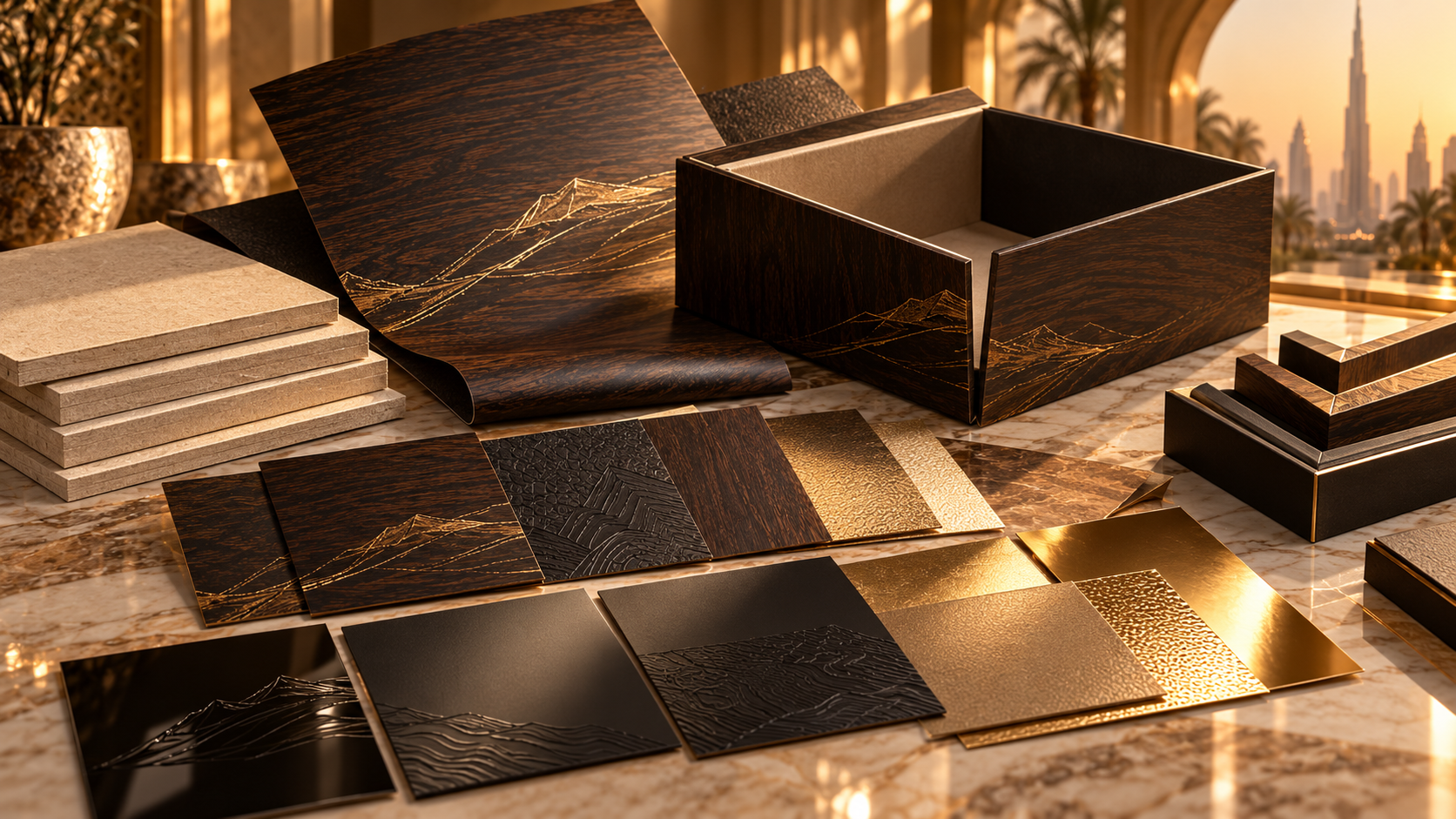
The first major challenge was achieving the appearance of a wooden display case using paperboard materials. The client wanted the texture and visual character of wood without changing the packaging into a timber enclosure, which meant the structural board and exterior wrapping material had to work together.
GUKA evaluated more than ten material samples and finishes before selecting a 2.5 mm rigid paperboard base paired with high-density wrapping paper featuring custom texture embossing. The combination was intended to reproduce the desired woodgrain appearance while accommodating the structural requirements of the multi-component design.
The material assessment covered several considerations.
These considerations were connected. Increasing board thickness affects the dimensions of assembled components, while the choice of wrapping paper can influence corner appearance and the accuracy of decorative alignment. A material combination that looks convincing on a flat sample may behave differently once it has been cut, wrapped, and assembled.
The selected 2.5 mm construction became the basis for subsequent structural development. It also reinforced an important principle in custom rigid box manufacturing, that materials should be evaluated as part of the completed packaging design, not approved solely on the appearance of individual samples.
Developing a Rigid Box with More Than 30 Components
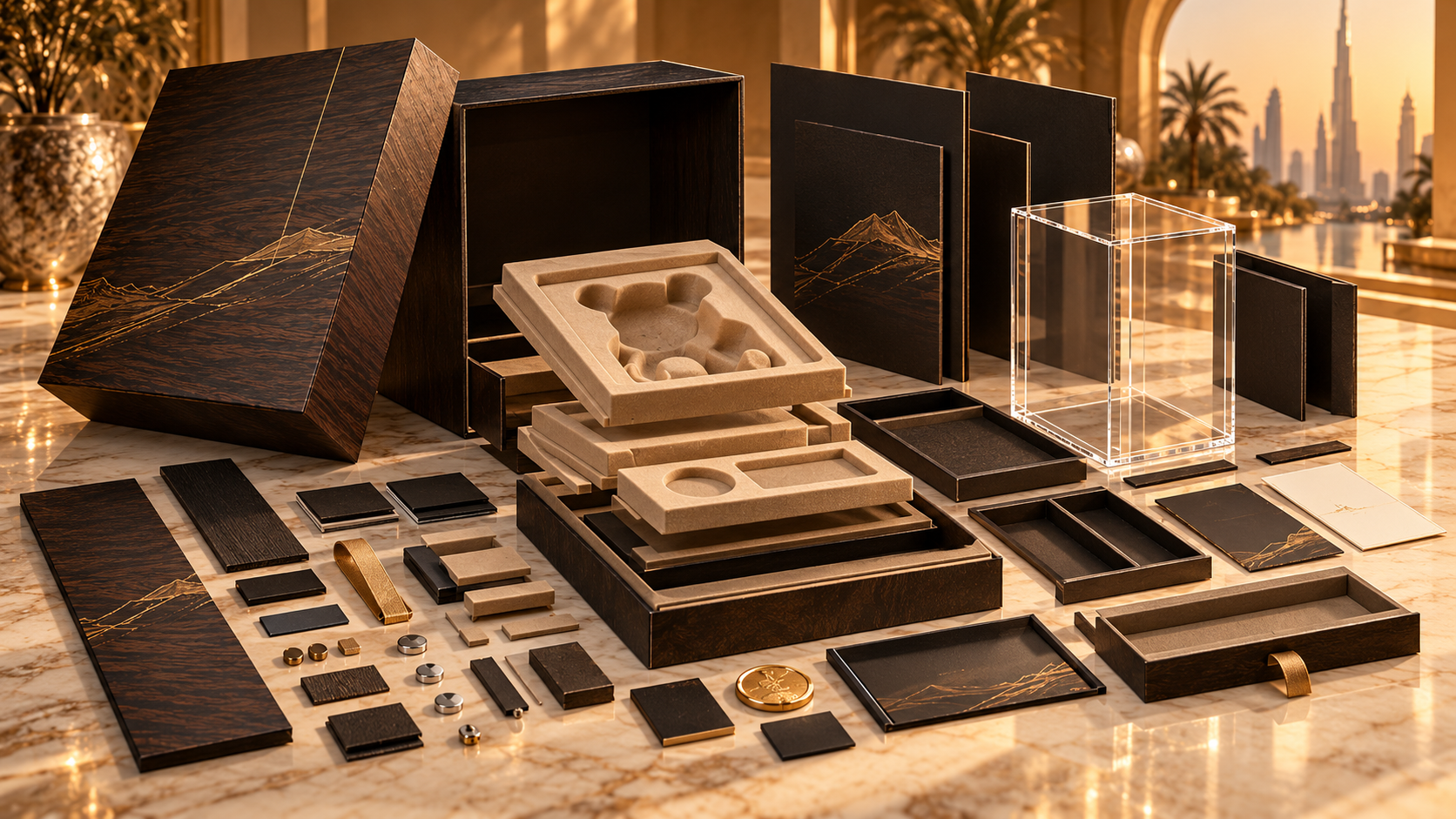
The interior construction introduced another layer of complexity. Unlike a conventional retail box with a single insert, this design incorporated multiple trays, fitted sections, decorative elements, and concealed compartments. The packaging needed to organize these components around the collectible while maintaining the intended presentation when opened.
GUKA developed the interior using the following elements.
- Dual-layer sponge inserts custom-dyed to match the different packaging themes.
- Laser-cut transparent acrylic window positioned within the upper tray.
- Hidden compartments for promotional materials and authentication cards.
- Magnetic closure components incorporated into the box construction.
- Foil-stamped branding plate for the interior presentation.
- Multiple rigid panels and trays forming the structural layers of the packaging.
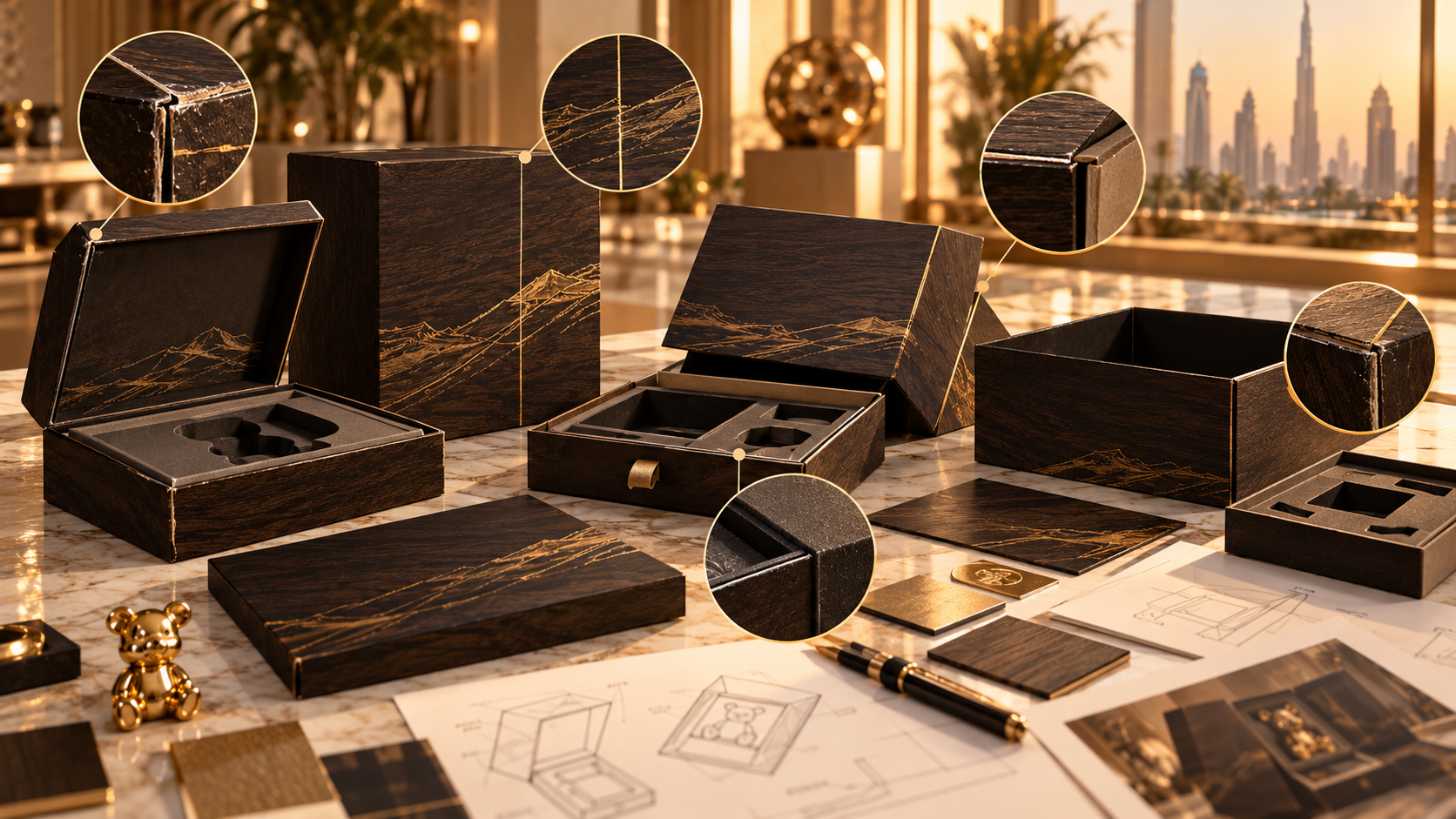
Altogether, the finished design contained more than 30 individual components and required 15 separate cutting dies. CAD drawings were used to define component dimensions, shapes, and positions before physical prototyping. The challenge was not limited to producing each piece accurately, since all components also needed to fit within the assembled structure.
Why Component Alignment Was a Manufacturing Challenge
Every additional layer introduced another potential source of dimensional variation. An insert could be cut accurately but still fit poorly if its surrounding tray differed from the intended dimensions after wrapping. Similarly, the position of the acrylic window depended on the alignment of the upper tray and adjoining components.
The magnetic elements and decorative panels added further assembly requirements. Changes to one component could affect the fit or appearance of another, making the relationship between parts an important consideration during prototyping. This was one reason the development could not rely entirely on drawings or material specifications.
GUKA completed three physical prototype rounds to refine the construction. The process allowed the team and client to assess the packaging as a complete assembly, identifying concerns that would have been difficult to judge from individual components alone.
Resolving the Rigid Box Finishing Requirements
Surface finishing was particularly important because several previous suppliers had delivered prototypes with unacceptable adhesive marks, uneven corners, and decorative misalignment. The packaging combined textured wrapping paper with multiple finishing treatments, which introduced additional considerations during material selection and assembly.
GUKA incorporated five finishing methods into the design.
The finishing methods had to remain compatible with the materials and construction. For example, foil stamping on textured surfaces requires appropriate tooling and material compatibility, while spot UV placement needs to account for the surrounding surface treatments. The appearance of these finishes can also differ between a flat sample sheet and a completed wrapped structure.
Corner construction required particular attention because it had been a recurring problem in earlier prototypes. Customized V-cutting techniques were used to support the intended geometry and wrapped-edge appearance. Combined with the selected decorative paper, these methods formed part of the approach to achieving the client's required exterior finish.
The project demonstrated that specifying expensive finishing methods does not automatically produce an acceptable result. The final appearance depends on how those treatments interact with the base material, component geometry, and assembly process.
Three Prototype Rounds and the Final Client Review in Dubai
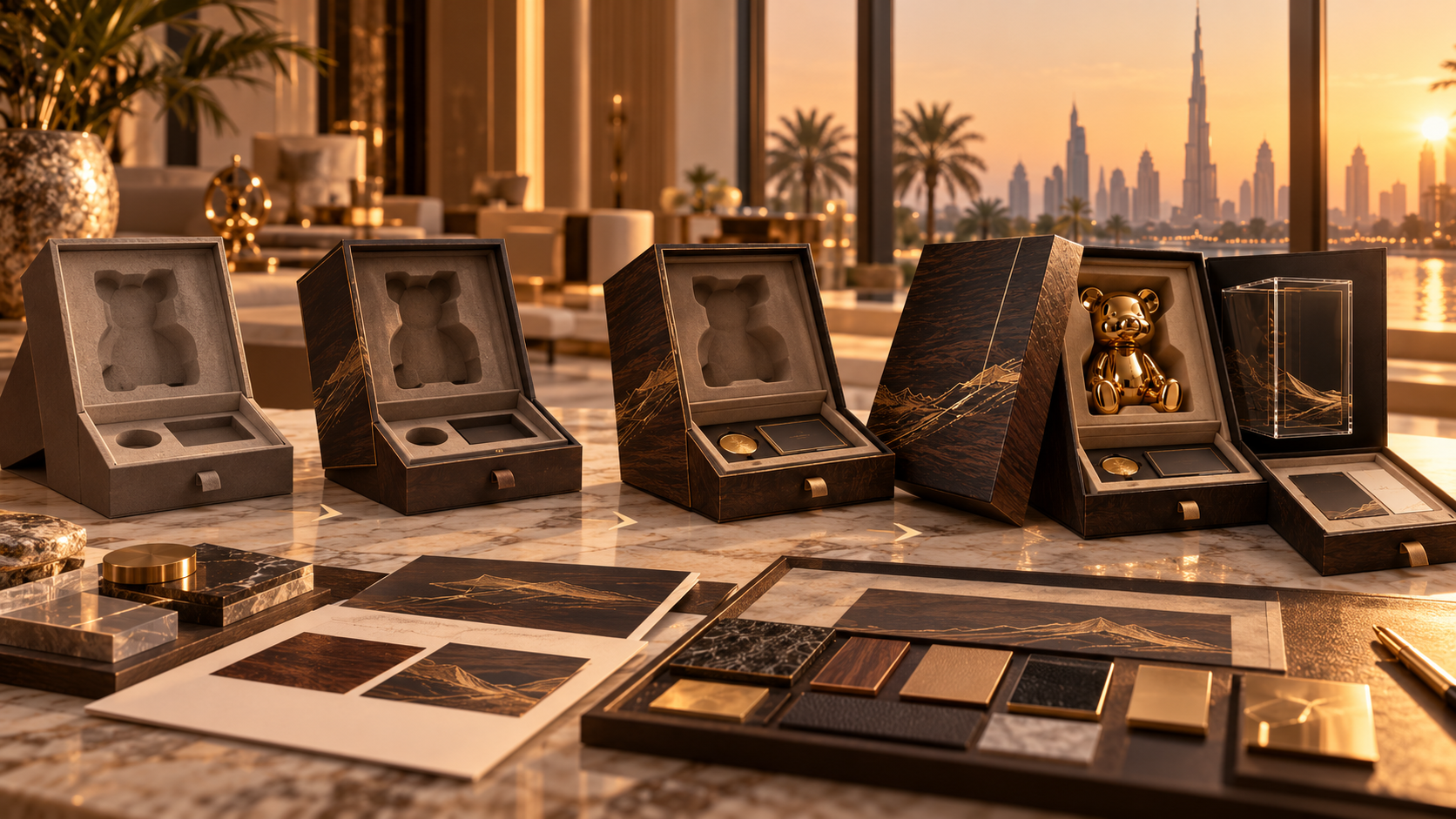
Throughout development, GUKA and the client exchanged design renders, photographs, and physical samples. Three prototype rounds were completed, with the third version approaching the client's expectations but still requiring final adjustments.
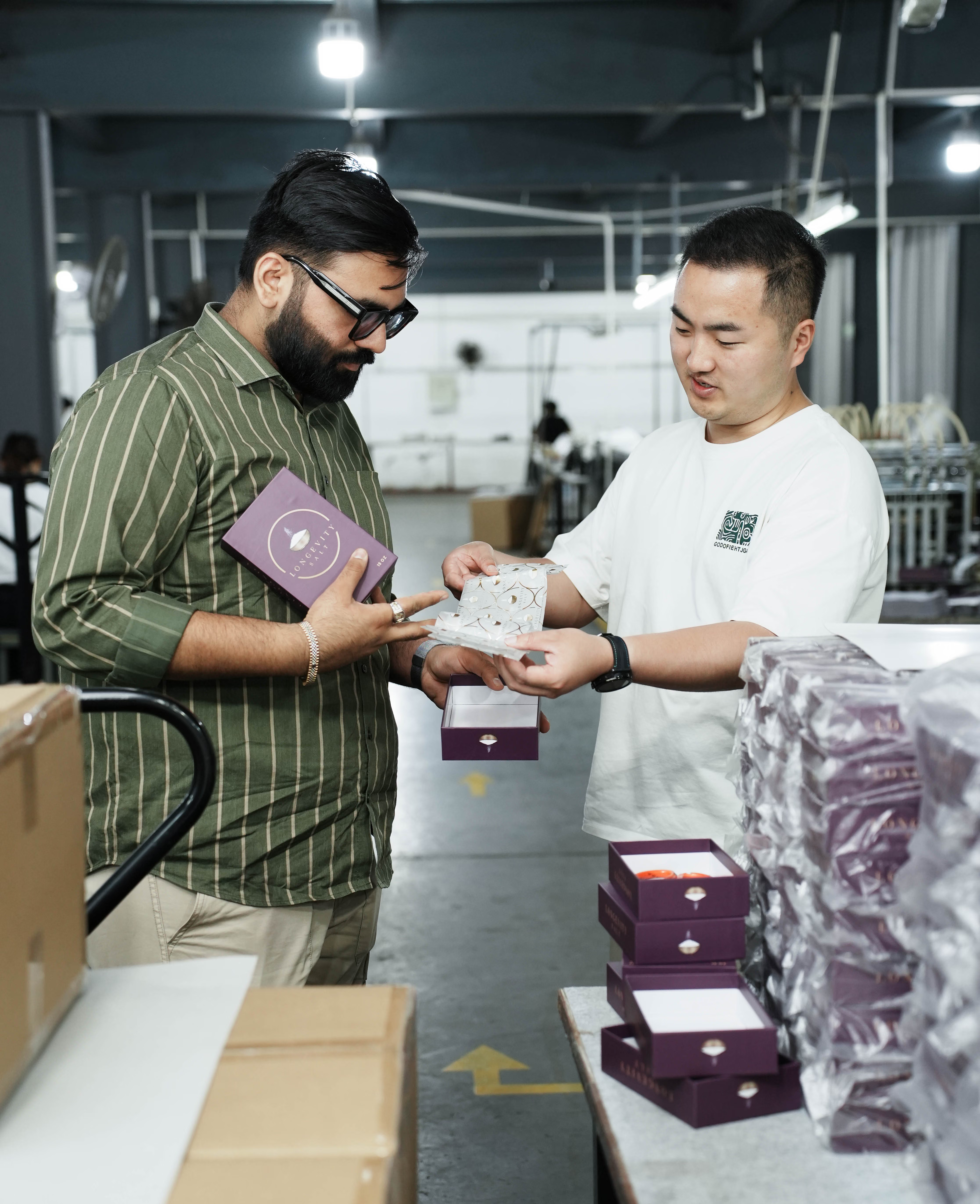
Rather than relying exclusively on remote communication, Saad invited GUKA's team to examine the packaging in person. In June 2024, GUKA's sales director and project lead, Lisa, visited his workshop in Dubai to review the physical sample and discuss the remaining concerns.
The review focused on several details that required direct examination.
- Sponge density and the feel of the interior inserts.
- Alignment of the embossed patterns and decorative components.
- Overall construction and appearance of the assembled box.
- Remaining adjustments required before final approval.
These details were difficult to communicate entirely through photographs. Sponge density, for example, affects the physical feel and support provided by an insert, while decorative alignment may be easier to evaluate when viewing the assembled packaging from different angles. Examining the sample together allowed the client and project team to reach a shared understanding of the remaining adjustments.
Saad later described the significance of the visit.
"That meeting is why I made the decision. I felt I finally had a supplier who cared as much about the details as I do."
The meeting played an important role in the client's decision to continue with GUKA. It followed months of material evaluation, prototype development, and communication, providing a final opportunity to address concerns before proceeding with commercial production.
The Results of the Custom Rigid Box Project
By the end of 2024, Saad confirmed his first bulk production order with GUKA. After repeated unsuccessful attempts with other suppliers, the client had reached the point where he was prepared to proceed with the developed packaging specification.
The project produced several documented outcomes.
- A finalized material specification combining 2.5 mm rigid paperboard with woodgrain-textured wrapping paper.
- A complex packaging construction involving more than 30 components and 15 cutting dies.
- Three completed prototype rounds to refine the structure and presentation.
- An in-person client review to address outstanding technical and finishing concerns.
- A confirmed first bulk order by the end of 2024.
The original project account also describes customers retaining their boxes for storage and display, sharing unboxing content, and interest from boutique retailers in the Middle East. These observations suggest that the packaging contributed to the brand's intended presentation, although published numerical evidence for customer retention, additional sales, and retailer conversions is unavailable.
The confirmed outcome is therefore the successful progression from repeated prototype rejection to a commercial production order. Claims about increased sales, stronger customer loyalty, or measurable market expansion would require additional data before they could be attributed to the packaging.
The original account further states that GUKA continued working with the brand on a second-generation packaging design. This indicates that the relationship extended beyond the first project, although the development status and commercial outcomes of that subsequent work have not been independently documented here.
What Brands Can Learn from This Rigid Box Manufacturing Project
The project highlights several considerations for businesses developing complex custom packaging. These are particularly relevant when a design includes multiple structural components, specialty materials, or decorative finishes that must work together.
1. An Attractive Prototype Does Not Automatically Meet Manufacturing Requirements
The client's previous suppliers had produced physical samples, yet those samples contained defects significant enough to prevent approval. Visible adhesive, poorly aligned patterns, and inconsistent assembly affected the finished packaging even when individual design elements were visually acceptable.
Brands evaluating prototypes should inspect wrapped corners, component fit, closure alignment, and internal inserts alongside the exterior appearance. The approval standard should cover the assembled package, not simply photographs of its most attractive features.
2. More Complex Designs Require Greater Attention to Component Relationships
With more than 30 components, this project involved many points where dimensional variations could affect the final assembly. Each tray, panel, insert, and decorative element had to work within the same construction, making isolated component approval insufficient.
For similar projects, structural drawings and physical prototypes should be assessed together. Design changes also need to account for their effects on adjoining components, particularly when different materials are combined.
3. Material Selection Should Account for Manufacturing Conditions
The desired woodgrain appearance could not be evaluated independently of the supporting board. The final material combination needed to accommodate the box structure, wrapped edges, and decorative embossing.
Brands should therefore assess materials in their intended application. A sample sheet provides useful information about texture and appearance, but a completed prototype reveals how those materials behave after cutting, wrapping, and assembly.
4. Physical Reviews Can Resolve Problems That Photographs Cannot
The Dubai review gave the client and GUKA's team an opportunity to examine sponge density, decorative alignment, and the overall construction directly. These characteristics were part of the client's approval criteria and required more than an attractive digital rendering.
Not every packaging project needs an in-person meeting. However, when the client's decision depends on tactile qualities, complex component fit, or small visual details, physical sample evaluation can provide information that photographs alone cannot capture.
Conclusion
This custom rigid box case study illustrates the manufacturing challenges behind a highly detailed presentation package. The project required more than ten material evaluations, 15 cutting dies, three prototype rounds, and an in-person review before the client proceeded with his first bulk order.
Its defining feature was not the use of decorative finishes or thick paperboard alone. It was the development of a complex structure that addressed the client's concerns about material appearance, component alignment, and finishing quality after several unsuccessful supplier experiences.
For brands considering custom rigid box packaging, the project highlights the importance of evaluating materials, structure, finishing, and physical samples as connected parts of the manufacturing process.
If your packaging concept involves unusual structures, multiple inserts, acrylic components, or specialty finishes, contact GUKA Packaging to discuss your product dimensions, design requirements, target quantity, and sampling needs.
Frequently Asked Questions
Why did this custom rigid box require 15 cutting dies?
The packaging contained more than 30 individual components, including trays, rigid panels, and other structural sections. GUKA used 15 cutting dies to produce the required shapes and components, although another project may need fewer or more depending on its design.
What board thickness was selected for the luxury rigid box?
GUKA selected 2.5 mm rigid paperboard after evaluating more than ten material samples and finishes. The board was combined with high-density wrapping paper featuring custom woodgrain embossing to create the desired presentation.
How many prototype rounds were required?
The project involved three physical prototype rounds before the final client review in Dubai. The client and GUKA examined the remaining details in person, and the first bulk production order was confirmed by the end of 2024.
What was the measurable result of this packaging project?
The documented commercial result was the client's decision to place his first bulk order after several unsuccessful supplier attempts. The original account also mentions positive customer reactions and retailer interest, but verified figures for sales growth, customer retention, or return on investment are not available.
Recommended for you


You Might Enjoy


Are we right for each other?
We work best with brands that treat packaging as part of the product, not as the last thing on the list. To save us both time, here is who we work with best.
We're probably not the right fit if:
- Orders under $1,000.
- A few boxes, one time.
- Lowest quote wins.
- No conversation, just add-to-cart.
- Brand direction still up in the air. Our FAQ covers the basics first: process, scale, sampling, finishing, production. Worth reading before submitting anything.
We're a strong fit if:
- Projects starting around $1,000 and up.
- Sampling before production makes sense to you. It runs from $300, though complete artwork and locked specs can sometimes skip straight to the line.
- There's real budget behind the packaging, and an expectation that production standards get defined properly.
- What's needed is a manufacturing partner across structure, material, process and delivery. Not a print shop taking a file.
- The box has a job: retail shelf, gifting, unboxing. It has to carry the brand.
- Getting it right matters more than getting it cheapest.
Sound like your project? Let's talk
What happens after you submit
1. A specialist reviews your project, usually within 1 business day.
2. We follow up with questions, options, and indicative pricing.
3. Once the spec is confirmed, we move to sampling.