Heart-Shaped Chocolate Box Case Study That Led to Three Repeat Orders
Why did a European chocolatier return for three more orders? Inside the heart-shaped chocolate box project, from custom dividers and gold foil to sample approval.

Table of content
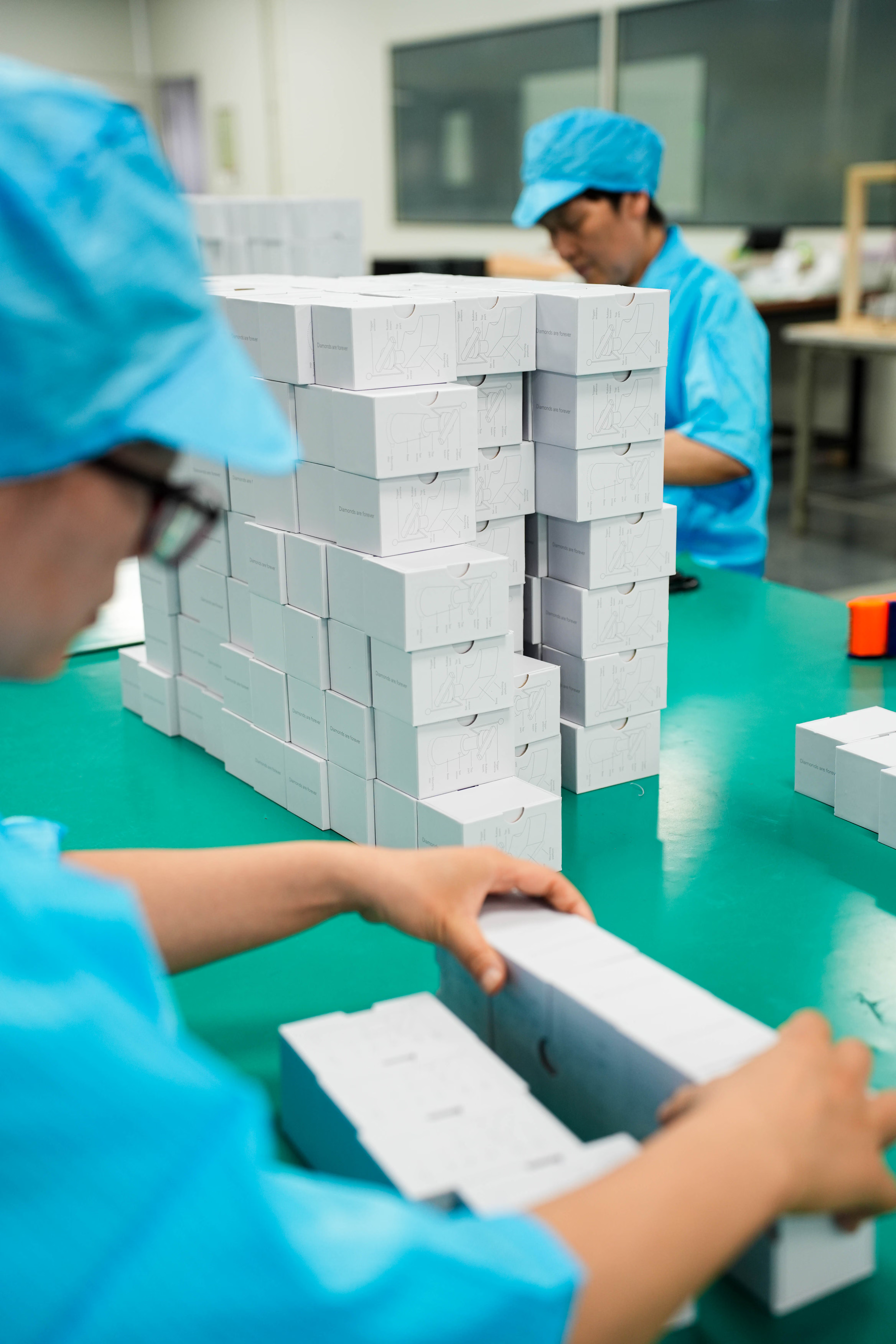
A European boutique chocolatier approached GUKA Packaging with a specific requirement for its premium chocolate gift boxes. The company wanted a heart-shaped rigid box that could accommodate delicate chocolates, support retail and online sales, and remain within its packaging budget.
We developed a custom die-cut structure using rigid paperboard, matte laminated specialty paper, gold foil stamping, and individual chocolate dividers. After reviewing our quotation, the client paid for a physical sample and subsequently proceeded with the first production order.
The relationship continued beyond the initial project. The chocolatier returned with three additional orders for seasonal packaging designs, providing a documented example of how a successful custom packaging project can lead to repeat business.
Custom Chocolate Box Project Overview
Why the Chocolatier Needed a New Heart-Shaped Gift Box
The client was a European boutique chocolatier known for its heart-shaped chocolate gift sets. Although the products were positioned as premium gifts, the existing packaging did not provide the distinctive presentation the company wanted for its retail displays and online listings.
The new design needed to retain the recognizable heart shape while improving the box's construction and exterior appearance. Because the chocolates were delicate, the interior also needed individual compartments to organize the products and limit unnecessary movement during handling.
The project had four main requirements.
The budget requirement influenced the project from the beginning. A custom box could satisfy the visual brief but still be unsuitable if its manufacturing cost exceeded what the client could afford.
We therefore needed to develop a packaging design that met the client's presentation and construction requirements while remaining commercially practical for production.
Engineering a Custom Heart-Shaped Rigid Box
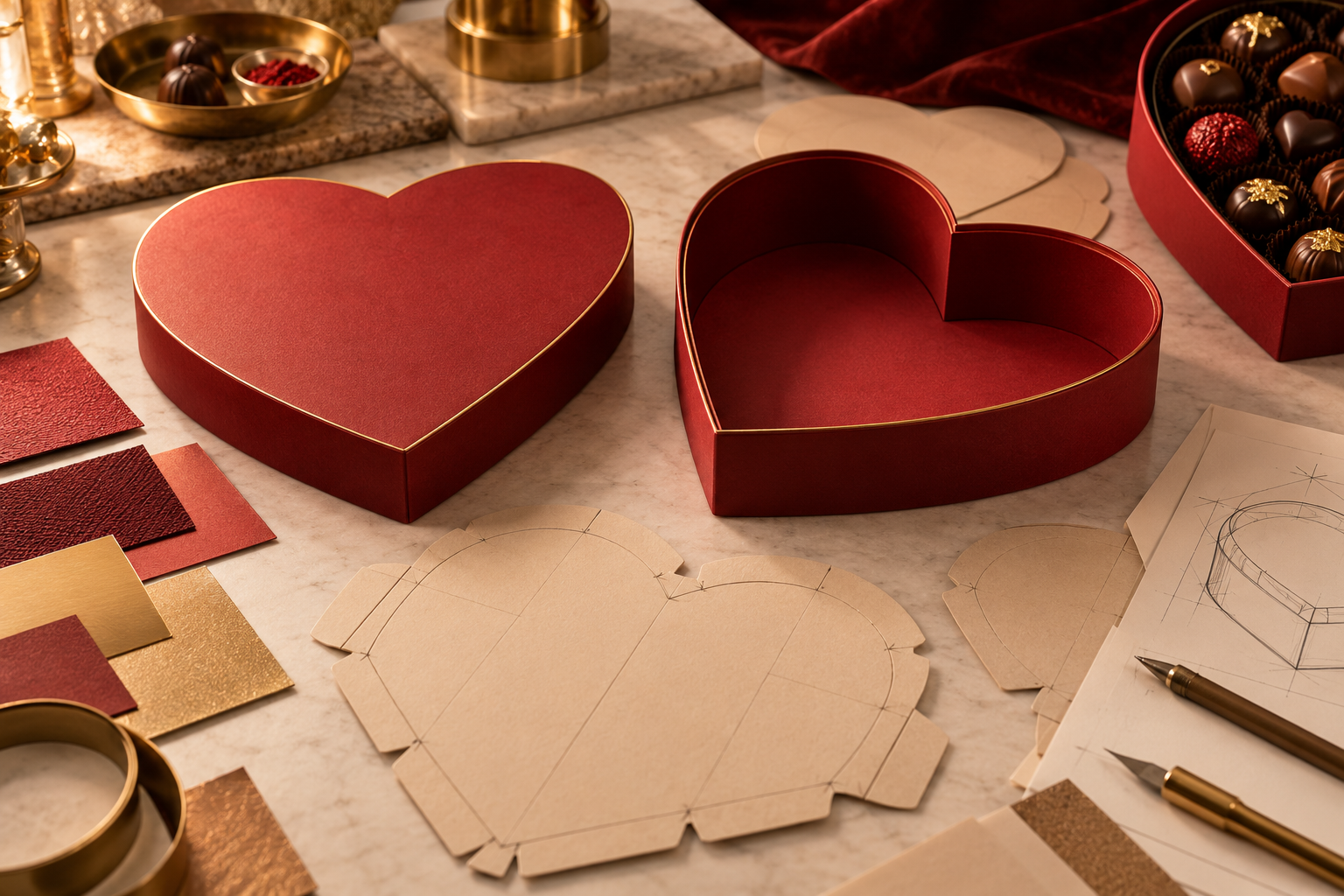
We developed a custom rigid paperboard box using a heart-shaped die-cut structure. The design followed a two-piece format with a removable lid and an interior arranged to accommodate individual chocolates.
Unlike a conventional rectangular box, the heart-shaped construction introduced curved sides and a pointed lower section. These features required attention to the shape of the lid, the base, and the wrapped exterior.
Why the Heart Shape Required Custom Tooling
The heart-shaped structure could not be produced using the same cutting pattern as a standard rectangular box. Custom tooling was required to create the intended outline and accommodate the relationship between the lid and base. Our heart-shaped two-piece rigid box with divider inserts (WC133) shows how this construction accommodates individual chocolate compartments within a custom-shaped package.
Several manufacturing considerations influenced this type of construction.
These considerations help explain why custom-shaped packaging needs physical development beyond an initial design drawing. A heart-shaped outline may appear straightforward on paper, but the assembled structure also needs to accommodate wrapping materials and fitted interior components.
The original project confirms the use of custom die-cut tooling and physical sampling. However, the published specifications do not include the board thickness, final dimensions, or manufacturing tolerances, so those details cannot be established from the available records.
Creating Individual Compartments for Delicate Chocolates
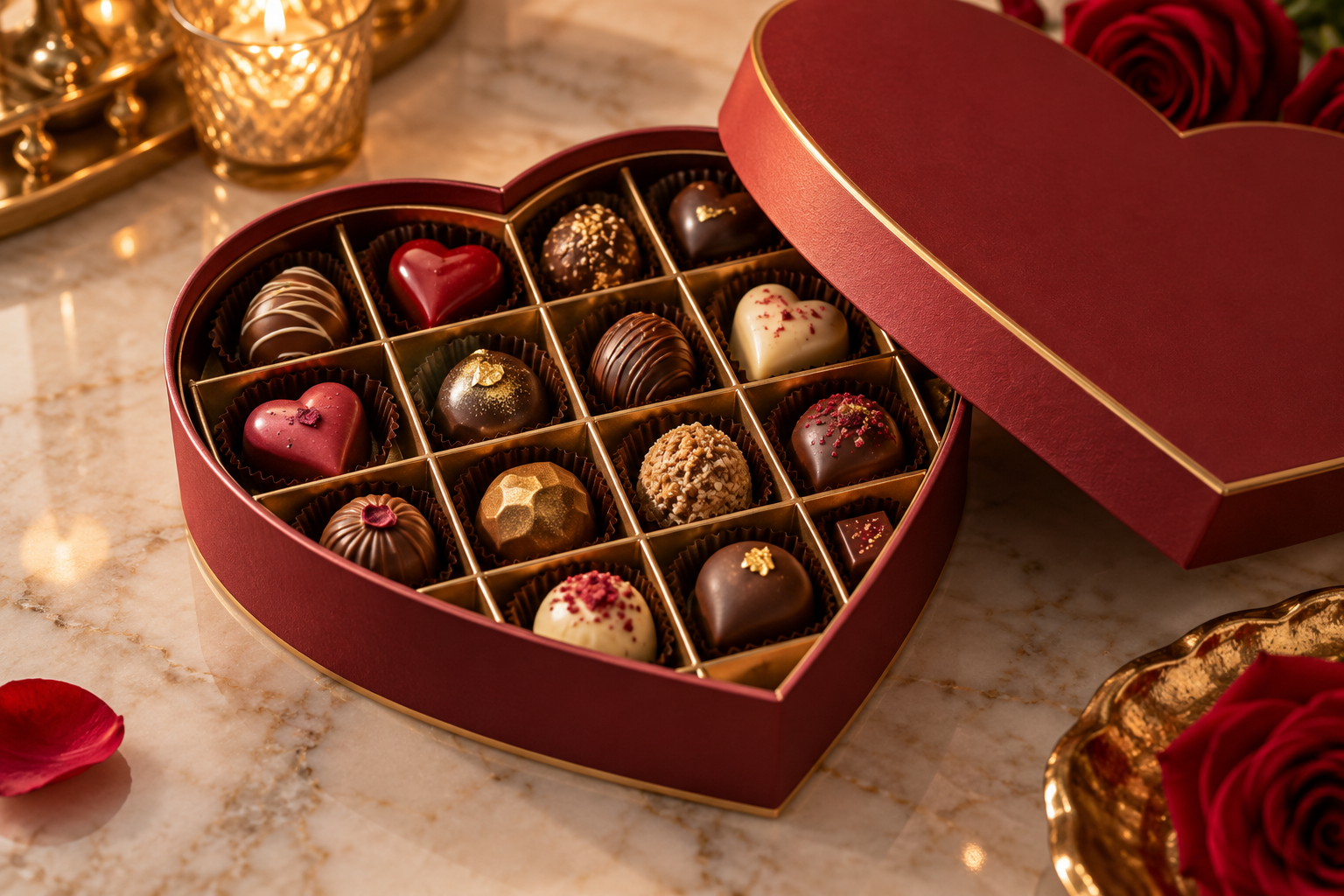
The chocolatier needed packaging suitable for both gift presentation and product handling. The chocolates had to remain organized within the box, particularly when products were packed, transported, and prepared for delivery.
We incorporated custom printed divider inserts to provide separate spaces for the chocolates. These inserts helped maintain the intended arrangement and reduced direct contact between adjacent products.
The interior served two purposes. It organized the chocolates in a visually consistent arrangement while providing separation between individual pieces.
Why the Interior Design Was Important
A heart-shaped box does not provide the same internal geometry as a rectangular package. The available space changes along the curved sides and narrows near the pointed section, which can influence how the chocolates are arranged.
The design therefore needed to account for the relationship between the product layout and the available interior space.
For similar packaging projects, relevant considerations include the dimensions of the chocolates, the number of pieces, the spacing between compartments, and the fit between the inserts and surrounding box walls.
However, the presence of dividers alone does not establish that a box will prevent shipping damage. Product protection also depends on handling conditions, outer shipping packaging, temperature exposure, and the physical characteristics of the chocolates.
The original case study reports improved protection during transit but does not provide comparative damage rates or documented shipping tests. The confirmed design solution is the use of individual compartments within the custom rigid box, not a measured reduction in product damage.
Selecting Premium Materials and Finishes Within the Client's Budget
The client wanted a premium appearance without exceeding its packaging budget. We developed the exterior using rigid paperboard wrapped in matte laminated specialty paper, with selected decorative treatments applied to the lid and branding.
The design combined five main elements.
- Rigid paperboard formed the main heart-shaped box structure.
- Matte laminated specialty paper provided the smooth exterior finish.
- Gold hot foil stamping highlighted the client's branding.
- Lid embossing added a tactile detail to the packaging surface.
- Custom printed dividers organized the chocolates inside the box.
Each component served a different purpose. The rigid paperboard defined the construction, while the wrapping material and finishes influenced the exterior appearance. The printed dividers completed the interior layout.
The Relationship Between Packaging Finishes and Production Cost
Decorative finishes can improve the appearance of a gift box, but they also add manufacturing requirements.
Foil stamping involves specialized tooling and application processes, while embossing requires consideration of the substrate, design, and desired relief. A custom heart-shaped box also introduces structural tooling and assembly requirements that can differ from those of a standard box.
For this project, the client needed our quotation to accommodate its preferred structure and finishes within the available budget.
The final unit price, tooling charges, and order quantity were not disclosed in the original account. It would therefore be inaccurate to identify a particular finish as a documented cost-saving measure.
What the project demonstrates is that the client reviewed our proposed quotation and found it suitable enough to proceed with paid sampling. Commercial feasibility remained part of the decision, even though the packaging concept was designed around premium presentation.
The Paid Prototype That Led to the First Production Order
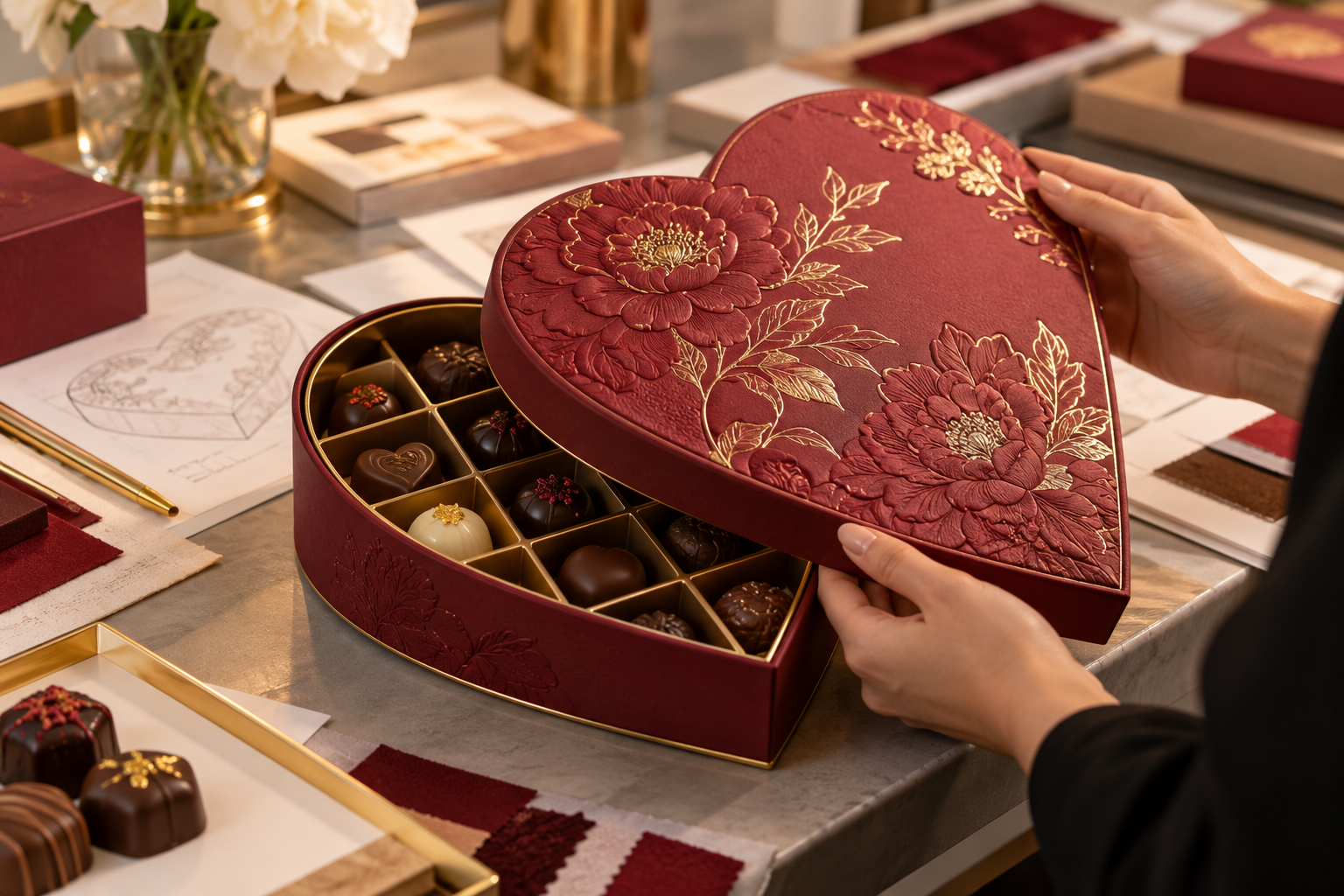
After receiving our quotation, the chocolatier promptly paid for a physical sample. This allowed the client to evaluate the packaging before committing to a larger production quantity.
We prepared a prototype that brought the main design elements together in one finished package, allowing the client to examine the heart-shaped construction, exterior wrapping, decorative finishes, and interior arrangement.
For a custom-shaped gift box, this stage was particularly useful because the finished appearance depends on how the materials and components work together after assembly.
The physical sample provided an opportunity to review several features.
- The overall appearance and proportions of the heart-shaped box.
- The fit and presentation of the lid and base.
- The matte exterior finish, foil stamping, and embossing.
- The arrangement of the printed chocolate dividers.
- The suitability of the completed package for the intended product presentation.
According to our original project account, the client responded positively to the sample and described it as meeting expectations.
The client feedback included the following statement.
"The sample was perfect. We could see the level of detail and care GUKA put into the design. It felt like an extension of our brand."
The statement reflects the feedback published in the original case study. Permission and attribution should be confirmed before retaining it in the final article.
Following sampling, the client proceeded with the initial production order. Although the original account describes the prototype as having been developed quickly, it does not disclose a precise sampling timeframe or the number of revisions completed.
The meaningful outcome was the progression from quotation to paid sample and then to commercial production.
How the First Chocolate Box Order Led to Three Repeat Orders
The relationship did not end after the first production run. The chocolatier returned to us with three additional orders involving different seasonal packaging designs.
These purchases are the strongest documented commercial evidence in the case study. They demonstrate that the client continued working with us after the initial packaging project instead of treating the first order as a one-time engagement.
Throughout the first production run, we maintained communication with the client through photo updates, progress discussions, and responses to packaging questions.
The original project account describes several outcomes.
The gift of chocolates was a personal expression of appreciation, but the repeat orders provide stronger evidence of the ongoing business relationship.
What the Results Actually Demonstrate
The original article also mentions positive consumer reactions, unboxing content, and retail presentation. However, it does not provide supporting figures for increased sales, lower product damage, or improved customer retention.
The results should therefore be interpreted as evidence of a completed packaging project and continued purchasing activity.
The three additional orders show that the client chose to work with us again, although the available records do not establish which individual factors had the greatest influence on those decisions.
What Other Chocolate Brands Can Learn from This Project
The project provides several practical lessons for confectionery brands developing custom gift packaging, particularly those planning seasonal products or distinctive box structures.
Custom Packaging Shapes Need Physical Testing
The heart-shaped box required custom tooling and an interior that suited its unusual geometry. Its curved sides and pointed section introduced construction considerations different from those of a standard rectangular box.
Brands considering similar structures should evaluate the finished sample before approving commercial production. Structural fit, wrapping quality, and interior arrangement are more useful approval criteria than appearance alone. Our custom chocolate boxes include examples of heart-shaped rigid boxes, compartmentalized gift boxes, and alternative structures for different chocolate products.
Product Presentation and Shipping Protection Are Different Requirements
The custom dividers organized individual chocolates and helped support the intended gift presentation. However, the published project details do not establish that the box alone provided sufficient protection for every delivery condition.
For eCommerce orders, brands should assess the presentation box alongside any necessary protective packaging, shipping cartons, and temperature-control measures. When applicable, food-contact material suitability also needs to be verified.
Budget Should Be Considered Before Finalizing the Design
The client wanted a premium heart-shaped box but still had a defined spending limit. We developed the packaging with selected materials and finishes, and the client proceeded after reviewing our quotation.
For other brands, it is useful to establish the preferred box structure, finishing requirements, expected quantity, and target budget before sampling. These details help manufacturers identify commercial constraints early in the project.
Repeat Orders Provide More Meaningful Evidence Than General Satisfaction Claims
The project's most significant result was the client's decision to return for three additional seasonal orders.
A positive testimonial can indicate satisfaction with a sample, but repeat purchases demonstrate continued commercial activity. In this case, the client maintained contact with us for subsequent packaging requirements, subject to acceptable pricing.
The outcome supports the value of an ongoing manufacturing relationship without establishing unsupported claims about consumer loyalty or sales growth.
Conclusion
This heart-shaped chocolate box project began with a European chocolatier seeking packaging that combined a distinctive gift presentation, individual chocolate compartments, decorative finishes, and a commercially acceptable price.
We developed a custom rigid box with matte laminated wrapping paper, gold foil stamping, lid embossing, and printed divider inserts. After the client approved a paid physical sample, the design progressed into the first production order.
The relationship subsequently produced three additional seasonal packaging orders, making repeat business the project's clearest documented outcome.
For confectionery brands considering similar packaging, the case demonstrates the importance of balancing structure, appearance, product arrangement, sampling, and commercial feasibility. Brands can contact GUKA Packaging to discuss custom chocolate box requirements, materials, sampling, and production quantities.
Frequently Asked Questions
What type of chocolate box did GUKA manufacture?
We developed a custom heart-shaped rigid box using paperboard construction, matte laminated specialty paper, gold foil stamping, and lid embossing. The interior included custom printed dividers to organize individual chocolates.
Why did the chocolatier choose a heart-shaped rigid box?
The client was known for heart-shaped chocolate gift sets and wanted packaging that reflected the product's gifting purpose. The design also needed to accommodate delicate chocolates and remain suitable for the client's commercial budget.
Did the client approve a physical sample before production?
Yes. After receiving our quotation, the client paid for a physical prototype. The original account reports positive feedback on the sample before the project proceeded into production, although the exact development timeframe was not disclosed.
How many additional orders did the client place?
The European chocolatier placed three additional orders involving different seasonal packaging designs after the first production run.
Does a rigid chocolate box prevent damage during shipping?
A rigid box with fitted dividers can help organize chocolates and limit contact between individual pieces. However, shipping performance also depends on the outer packaging, product characteristics, handling conditions, and temperature exposure. This project does not publish comparative damage data.
Can custom chocolate boxes use food-safe materials?
Chocolate packaging can incorporate materials selected for the relevant food-contact application, but suitability depends on the materials, product contact, and applicable requirements. The published project does not identify the exact food-contact specifications used for this client's order.
Recommended for you


You Might Enjoy



Are we right for each other?
We work best with brands that treat packaging as part of the product, not as the last thing on the list. To save us both time, here is who we work with best.
We're probably not the right fit if:
- Orders under $1,000.
- A few boxes, one time.
- Lowest quote wins.
- No conversation, just add-to-cart.
- Brand direction still up in the air. Our FAQ covers the basics first: process, scale, sampling, finishing, production. Worth reading before submitting anything.
We're a strong fit if:
- Projects starting around $1,000 and up.
- Sampling before production makes sense to you. It runs from $300, though complete artwork and locked specs can sometimes skip straight to the line.
- There's real budget behind the packaging, and an expectation that production standards get defined properly.
- What's needed is a manufacturing partner across structure, material, process and delivery. Not a print shop taking a file.
- The box has a job: retail shelf, gifting, unboxing. It has to carry the brand.
- Getting it right matters more than getting it cheapest.
Sound like your project? Let's talk
What happens after you submit
1. A specialist reviews your project, usually within 1 business day.
2. We follow up with questions, options, and indicative pricing.
3. Once the spec is confirmed, we move to sampling.