A Comparison and Selection of Packaging Materials: Driving the Future of Sustainable Packaging
Discover sustainable packaging materials, their pros and cons, and factors to consider when choosing eco-friendly solutions for your business needs.

Table of content
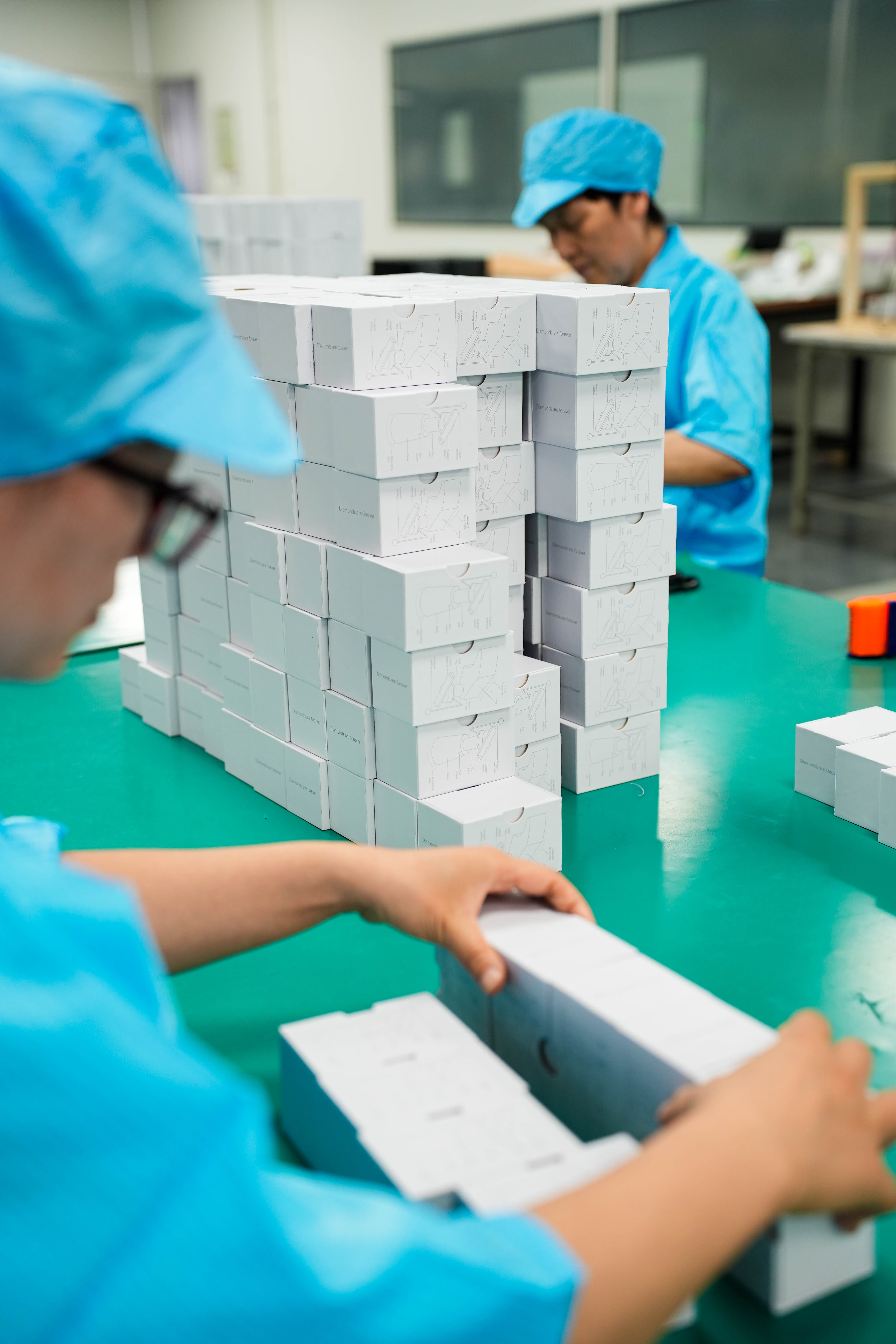
In today's world, packaging is more than just a protective layer for products; it significantly influences consumer experience, brand image, and environmental responsibility. As environmental consciousness rises, businesses need to consider not only the functionality and cost of packaging materials but also their environmental impact. In this blog, we will explore various sustainable packaging materials, their features, advantages, and disadvantages, and how businesses can choose the most suitable packaging solutions for sustainability.
1. Plastic Packaging: Versatility and Environmental Challenges
Plastic packaging is one of the most common materials in the packaging industry, used widely in food, beverages, home products, and pharmaceuticals. Its lightweight, low cost, and easy moldability make it a popular choice among businesses. However, as plastic waste pollution becomes a growing issue, the need for more sustainable alternatives has become apparent.

Advantages:
- Lightweight and Durable: Plastic packaging is strong and lightweight, making it easy to transport and store while effectively protecting products from environmental factors.
- Waterproof and Moisture-Resistant: Plastic has excellent waterproof properties, making it ideal for food, beverages, and moisture-sensitive products.
- Cost-Effective: Plastic is inexpensive to produce, making it suitable for large-scale production and distribution.
Disadvantages:
- Non-Biodegradable: Traditional plastics take a long time to decompose, contributing to environmental pollution.
- Microplastic Pollution: Plastics can break down into microplastics, which enter the ecosystem and pose risks to both wildlife and human health.
Solutions:
To address these environmental concerns, companies are now exploring alternatives like biodegradable plastics and plant-based plastics, alongside efforts to increase plastic recycling rates to reduce waste.
2. Paper Packaging: A Blend of Sustainability and Functionality
Paper packaging has become the go-to option for many brands looking to adopt sustainable packaging materials. Common types include kraft paper packaging, corrugated cardboard, and cardstock, which are frequently used in food delivery, shipping, and gift packaging.
.avif)
dvantages
- Biodegradable and Recyclable: Paper decomposes naturally and can be easily recycled, reducing its environmental footprint.
- Lightweight and Customizable: Paper is easy to design and print on, making it ideal for personalized branding and eco-friendly packaging, like what we offer with Custom Packaging Boxes.
- Renewable Resource: Paper is sourced from wood fibers, a renewable resource that, with proper management, can be produced sustainably.
Disadvantages
- Poor Water Resistance: Paper packaging has limited water resistance, requiring coatings or laminates to enhance its durability.
- Limited Load Capacity: Compared to plastic or metal, paper packaging is less durable and has a lower load-bearing capacity.
Solutions
Businesses are increasingly combining paper with other materials or adding protective coatings to improve its functionality without compromising its sustainability.
3. Metal Packaging: Durability and Recyclability
Metal packaging—including aluminum, steel, and tin—is commonly used for food cans, beverage containers, and aerosol products. Metal is known for its high recyclability and excellent protective qualities.

Advantages
- Excellent Barrier Properties: Metal effectively blocks oxygen, moisture, and light, making it ideal for extending the shelf life of products, particularly food and beverages.
- Durability and Corrosion Resistance: Metal is strong, impact-resistant, and corrosion-resistant, providing superior protection during transportation and storage.
- High Recycling Rate: Aluminum and steel can be recycled multiple times without losing quality, reducing the need for virgin materials.
Disadvantages
- Heavy: Metal is heavier than plastic and paper, leading to higher transportation costs and increased carbon emissions.
- High Production Costs: Manufacturing metal packaging is more expensive, making it a less viable option for low-value products.
Solutions
Advances in design and material technology have led to lighter-weight metals, reducing costs and improving sustainability.
4. Glass Packaging: Purity and Sustainability
Glass packaging is widely used in food, beverage, pharmaceutical, and cosmetic industries due to its chemical inertness and excellent protective qualities.

Advantages
- Non-Porous and Airtight: Glass offers complete protection from air and moisture, preserving the quality and freshness of the contents.
- Chemically Inert: Glass doesn’t react with its contents, making it ideal for food and beverage packaging where flavor and purity are paramount.
- Infinitely Recyclable: Glass can be recycled endlessly without any loss in quality, contributing to its status as a sustainable packaging material.
Disadvantages
- Fragile: Glass is prone to breaking, making it less practical for transport and storage.
- Heavy: Glass packaging is heavier than alternatives, increasing shipping costs and environmental impact.
Solutions
Recent advancements in glass technology have produced lighter, stronger glass, reducing its weight while maintaining durability.
5. Textile Packaging: Eco-Friendly and Reusable
Textile packaging made from cotton, jute, or other natural fibers is often used for reusable shopping bags and luxury gift packaging.

Advantages
- Reusable: Textile bags can be reused many times, reducing the need for disposable packaging.
- Biodegradable: Natural fibers like cotton and jute are biodegradable, making textile packaging a more eco-friendly choice.
- Aesthetic Appeal: Textile packaging offers a premium look and feel, often used for high-end products or environmentally conscious brands.
Disadvantages
- Water Absorbent: Most textiles lack water resistance, which can limit their use for products requiring moisture protection.
- Higher Cost: Textile packaging is more expensive to produce than disposable options like plastic or paper.
6. Composite Packaging: Multifunctional and Innovative
Innovative packaging designs combines multiple materials, such as plastic, paper, and aluminum, to leverage the benefits of each.

Advantages
- Enhanced Protection: Composite materials offer excellent protection against moisture, air, and light, making them ideal for perishable products.
- Wide Application: Used in sectors like food, cosmetics, and pharmaceuticals, composite packaging provides versatility and functionality.
Businesses also need to take into account various packaging techniques such as printing packaging material, which can enhance brand recognition and ensure consistency across products.
Disadvantages
- Recycling Challenges: The mix of materials makes it difficult to recycle, reducing its environmental benefits.
- Higher Production Costs: The manufacturing process for composite packaging is complex and more expensive.
7. Edible Packaging: The Future of Sustainability
Edible packaging is an innovative solution made from natural ingredients that consumers can eat after using the product, reducing packaging waste.

Advantages
- Fully Biodegradable: As a natural product, edible packaging decomposes quickly, leaving no waste behind.
- Perfect for Food Packaging: It’s especially suitable for the food industry, particularly in short-term or takeaway packaging.
Disadvantages
- Short Shelf Life: Edible packaging has a shorter lifespan and requires specific storage conditions, limiting its applications.
- High Production Cost: As a new technology, edible packaging is more expensive to produce and is not yet widely adopted.
How to Choose the Right Packaging Material?
When selecting packaging materials, businesses need to consider product characteristics, transportation needs, brand image, and environmental responsibility. For example, food companies may prioritize moisture resistance and barrier properties, while cosmetic companies may focus on aesthetics and sustainability.
Key Selection Factors
- Product characteristics: Choose materials based on storage needs such as moisture, oxidation, and shock protection.
- Environmental impact: Opt for recyclable or biodegradable packaging to meet consumer demand for eco-friendly solutions.
- Cost control: Balance the cost and functionality of packaging materials based on business size and budget.
- Brand image: Select packaging that aligns with the brand’s values and enhances the user experience.
Conclusion: Advancing Sustainable Innovation in Packaging
As consumers and governments push for more eco-friendly solutions, sustainable packaging materials are becoming the norm in the industry. Businesses like Custom Packaging Boxes must look beyond the immediate cost and functionality of packaging to consider its long-term impact on the environment. Through innovations in materials and technology, the packaging industry is moving towards a more sustainable and environmentally conscious future.
Recommended for you
.avif)
.avif)


.avif)
.avif)
.avif)
.avif)
.avif)
You Might Enjoy


Are we right for each other?
We work best with brands that treat packaging as part of the product, not as the last thing on the list. To save us both time, here is who we work with best.
We're probably not the right fit if:
- Orders under $1,000.
- A few boxes, one time.
- Lowest quote wins.
- No conversation, just add-to-cart.
- Brand direction still up in the air. Our FAQ covers the basics first: process, scale, sampling, finishing, production. Worth reading before submitting anything.
We're a strong fit if:
- Projects starting around $1,000 and up.
- Sampling before production makes sense to you. It runs from $300, though complete artwork and locked specs can sometimes skip straight to the line.
- There's real budget behind the packaging, and an expectation that production standards get defined properly.
- What's needed is a manufacturing partner across structure, material, process and delivery. Not a print shop taking a file.
- The box has a job: retail shelf, gifting, unboxing. It has to carry the brand.
- Getting it right matters more than getting it cheapest.
Sound like your project? Let's talk
What happens after you submit
1. A specialist reviews your project, usually within 1 business day.
2. We follow up with questions, options, and indicative pricing.
3. Once the spec is confirmed, we move to sampling.