13 Types of Rigid Boxes for Luxury Packaging
Magnetic lids, sliding drawers, and telescopic covers create different opening experiences. See how 13 rigid box styles work for jewelry, fragrances, and luxury gifts.
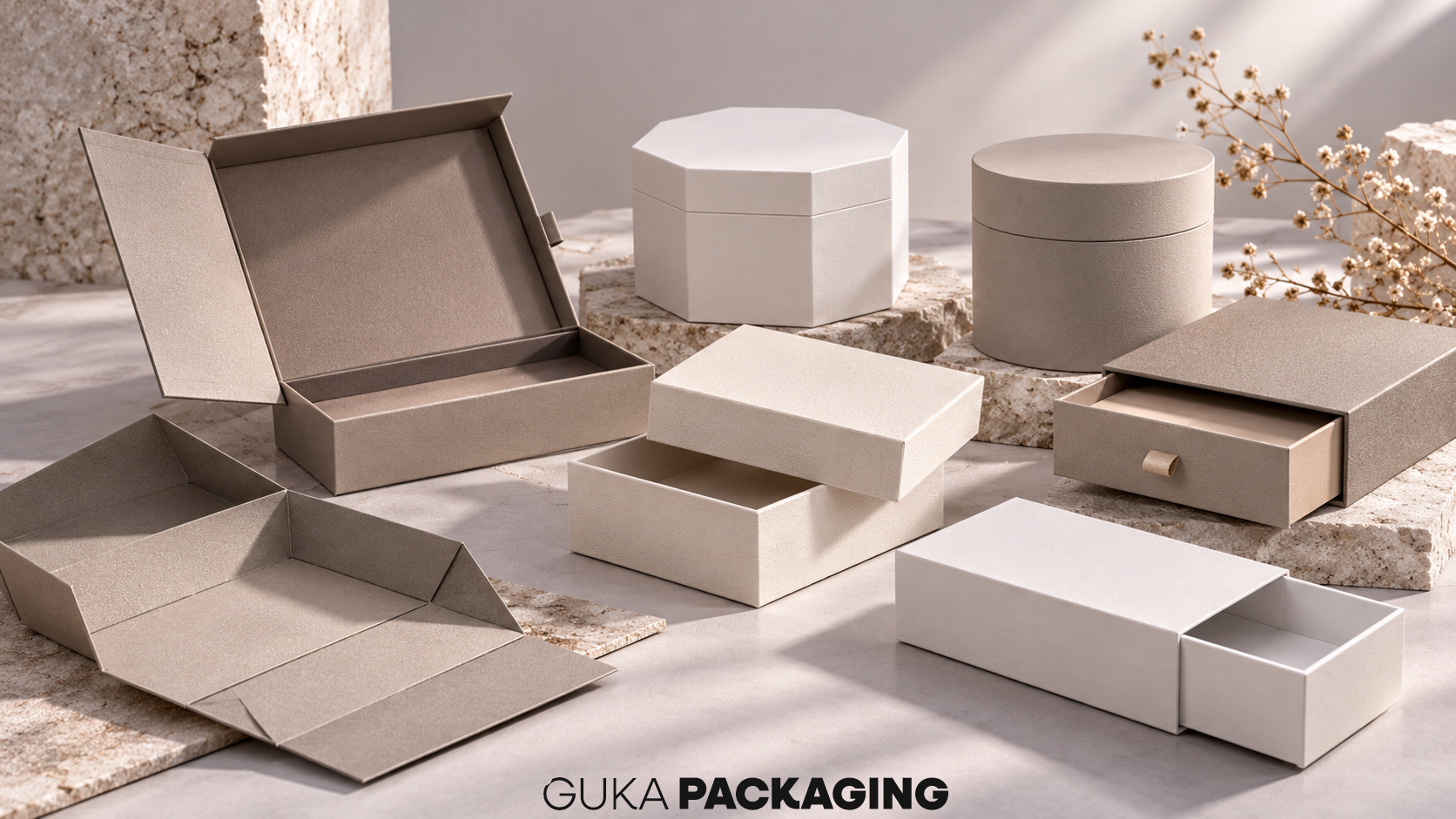
Table of content

The way a rigid box opens can change how a product is presented. A fragrance collection may need a wide interior that displays several bottles together, while fine jewelry could be arranged in a sliding drawer that reveals each piece gradually.
The exterior appearance is only part of the decision. Lid movement, interior space, and ease of access also influence which design works for a particular product. This article examines 13 types of rigid boxes, with their pros and cons and the differences worth considering when choosing packaging for a premium collection.
How Rigid Box Structures Differ
Rigid boxes, also known as set-up boxes, are typically made from thick greyboard or chipboard covered with decorative paper or specialty materials. Most retain their assembled shape, although foldable and collapsible versions can be stored flat before use.
Their designs can be distinguished by three characteristics.
- Construction determines how the lid, base, and connecting panels are assembled.
- Opening mechanism determines how the contents are accessed, using a removable lid, hinge, sliding component, or another arrangement.
- Shape defines the box's overall form, including rectangular, cylindrical, and geometric designs.
These characteristics can overlap. A book-style box may incorporate magnetic closures, while a cylindrical box can have a telescopic lid. Understanding these combinations helps distinguish the structure itself from additional design features.
13 Rigid Box Designs and Their Pros and Cons
The following designs cover traditional set-up boxes, foldable constructions, and specialty formats used for luxury products. Each has different advantages and limitations depending on the contents and intended presentation.
1. Two-Piece Rigid Boxes (Lid and Base)
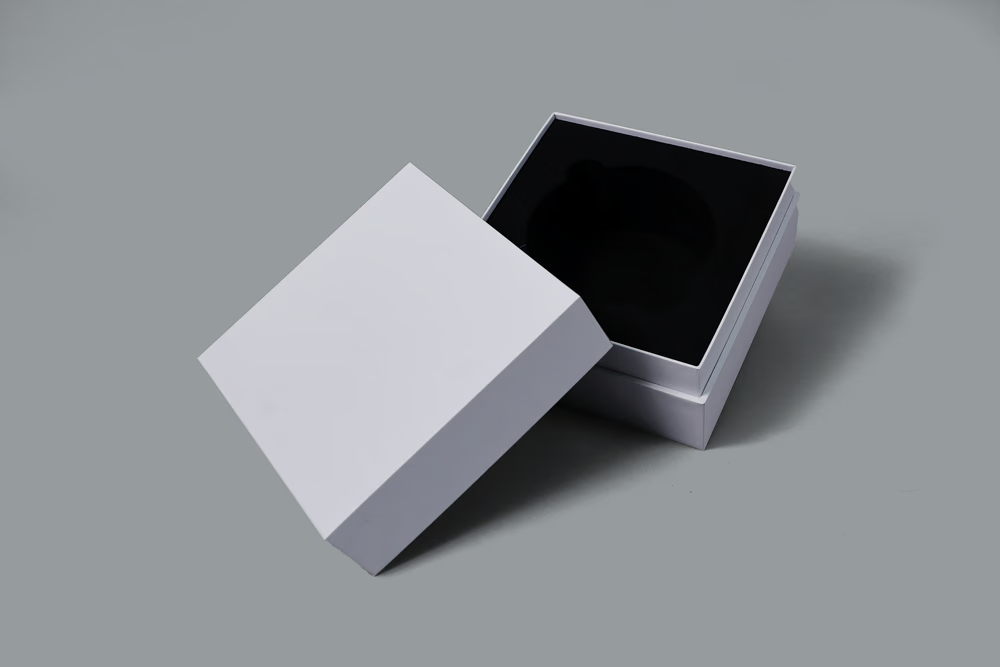
A two-piece rigid box consists of a separate lid and base. The lid is lifted completely away, revealing the product without an attached cover obstructing the opening.
This familiar construction appears in luxury candle collections, premium fragrances, fine jewelry, and designer accessories. A relatively shallow lid can expose the contents quickly, while a deeper lid provides greater coverage around the base.
Consider a perfume bottle positioned upright in a fitted insert. Removing the lid gives an uninterrupted view of the bottle, allowing the packaging to function as a presentation base.
The lid's depth makes a noticeable difference to the opening experience. A deep lid may provide the intended exterior appearance but can be inconvenient if the customer needs to grip the base firmly to remove it.
For products that will remain on display after opening, a shallower lid may be more practical.
2. One-Piece Foldable Rigid Boxes
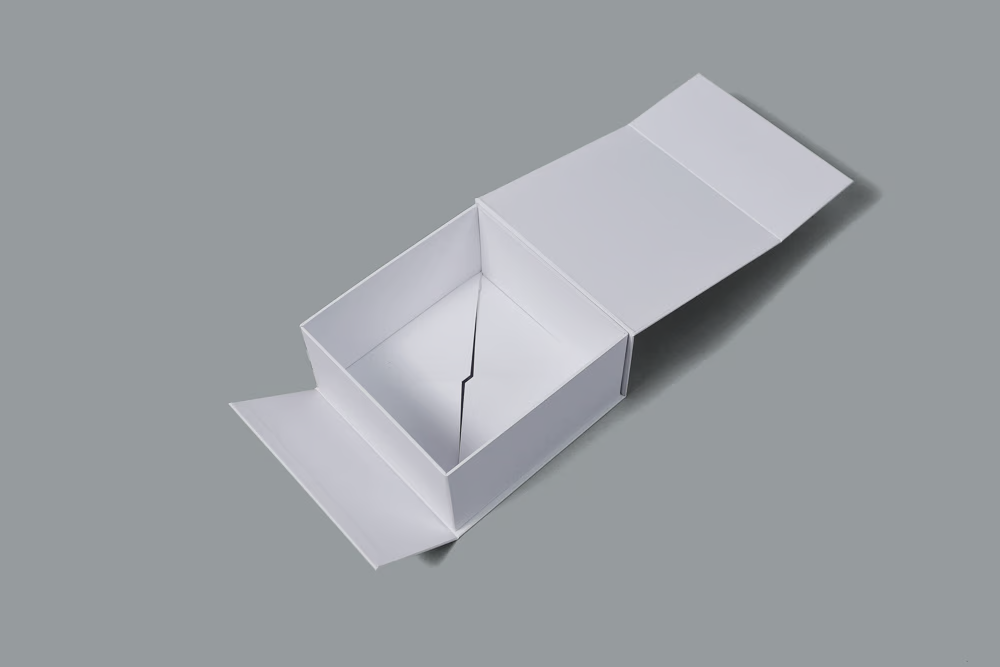
One-piece foldable rigid boxes use connected panels that fold into the finished box shape.
Rather than assembling a separate base from permanently fixed walls, the connected construction allows sections of the box to be folded into position. The exact folding arrangement depends on the design.
A premium apparel collection is one possible application. Folded scarves, leather accessories, or a coordinated gift set can be packed after the box has been assembled, without storing every empty box at its full finished height.
The appearance of the assembled corners deserves attention, particularly when the exterior has a simple design with little decoration.
One-piece foldable boxes also share characteristics with collapsible rigid boxes. The term one-piece refers to the connected-panel arrangement, whereas collapsible describes the ability of the packaging to flatten.
A specific one-piece design may therefore also qualify as a collapsible rigid box.
3. Magnetic Closure Rigid Boxes
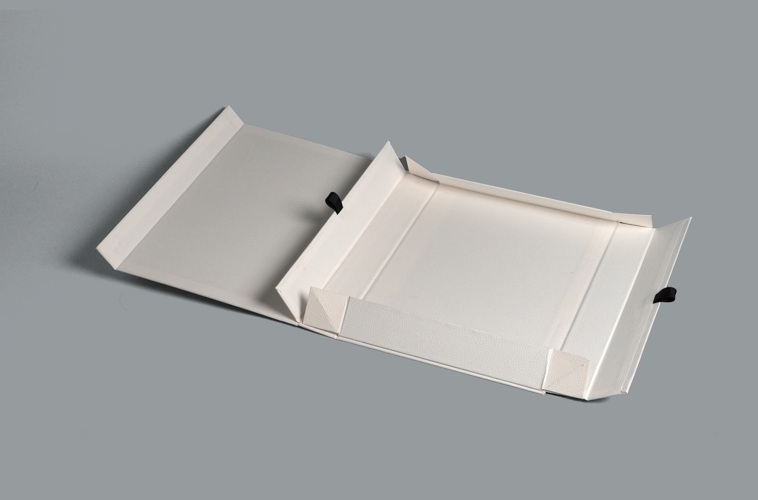
Magnetic closure rigid boxes contain concealed magnets that hold a cover or closing flap in position.
The magnets are usually embedded beneath the wrapping material, allowing the exterior to remain free of visible fasteners. This feature can be incorporated into book-style, flip-top, or certain foldable boxes.
Magnetic closures work particularly well for presentation collections that may be opened repeatedly. A premium skincare set containing several glass jars, for instance, can be arranged inside a compartmentalized magnetic box that closes without a separate lid.
Closure resistance is worth testing before production. Magnets must hold the cover securely without making the box awkward to open.
The distinction here is that magnetic closure is a feature rather than a standalone box structure. A magnetic book-style box, for example, belongs to both descriptions.
4. Foldable and Collapsible Rigid Boxes
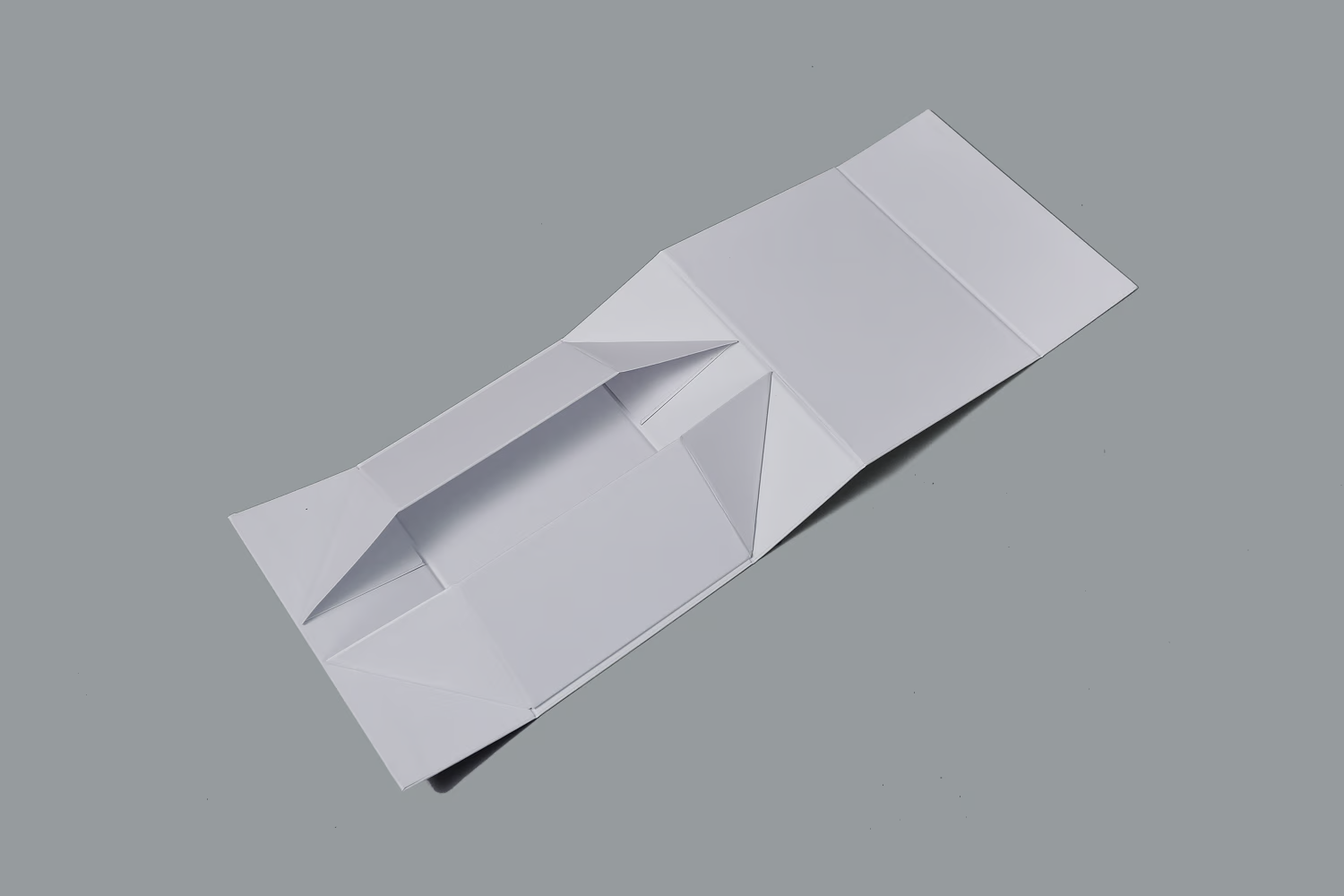
Collapsible rigid boxes are designed to fold into a flatter configuration for transportation and storage, then form a sturdy box when assembled.
Some use foldable sidewalls secured with adhesive strips. Others incorporate magnetic corners or interlocking components.
The format is particularly relevant for brands ordering large quantities of empty packaging. Consider a designer footwear collection with substantial presentation boxes. Storing conventional set-up boxes requires space for their full dimensions, even before any products have been packed.
A collapsible structure can reduce that empty-box storage requirement.
A collapsible box should be judged in its assembled form, particularly where the walls meet and where the closure panels overlap.
There is also a practical difference between a box that folds flat once before being secured and one intended for repeated folding. Brands expecting customers to collapse and reassemble the packaging should confirm that the joints and securing components are designed for repeated use.
5. Book-Style Rigid Boxes
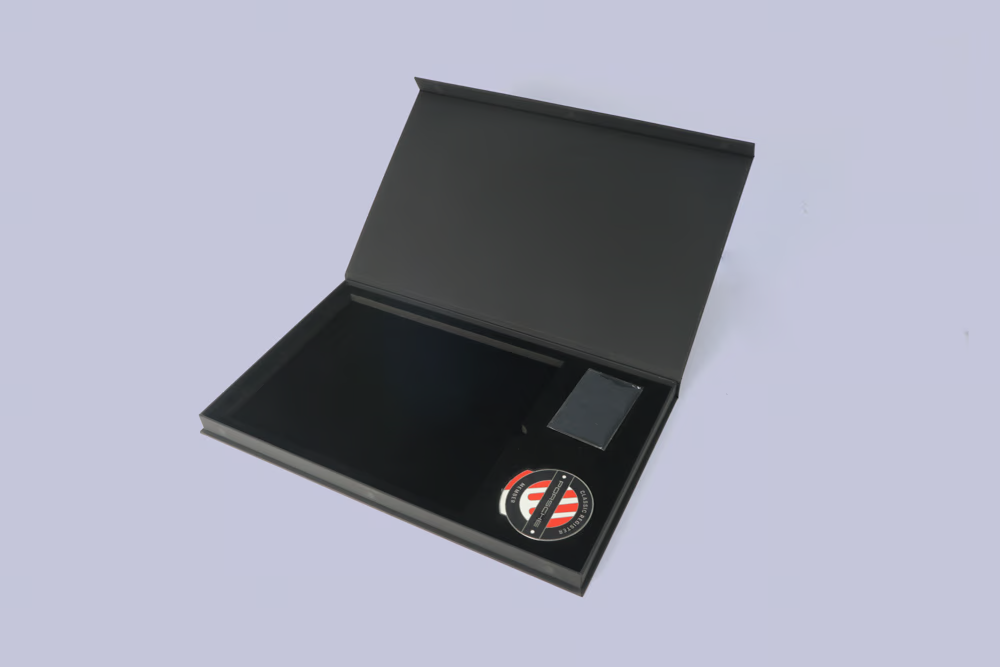
Book-style rigid boxes feature a cover that opens along a spine, resembling a hardcover book.
The spine connects the cover to the base, allowing the customer to open the packaging sideways. Magnetic closures are frequently incorporated, although they are not essential to the structure.
A collection of miniature fragrances provides a good illustration. Individual bottles can be positioned in a row within the base, and opening the cover reveals the complete set together. The inside cover can also accommodate printed collection details or brand artwork.
An important consideration is the direction in which the cover opens. A side-opening design can work beautifully on a presentation table but become awkward when displayed closely beside other products.
Book-style boxes are also closely related to hinged-lid packaging. What distinguishes the familiar book-style format is its spine-like arrangement and sideways opening, rather than the mere presence of a hinge.
6. Drawer-Style Rigid Boxes (Sliding Drawer)
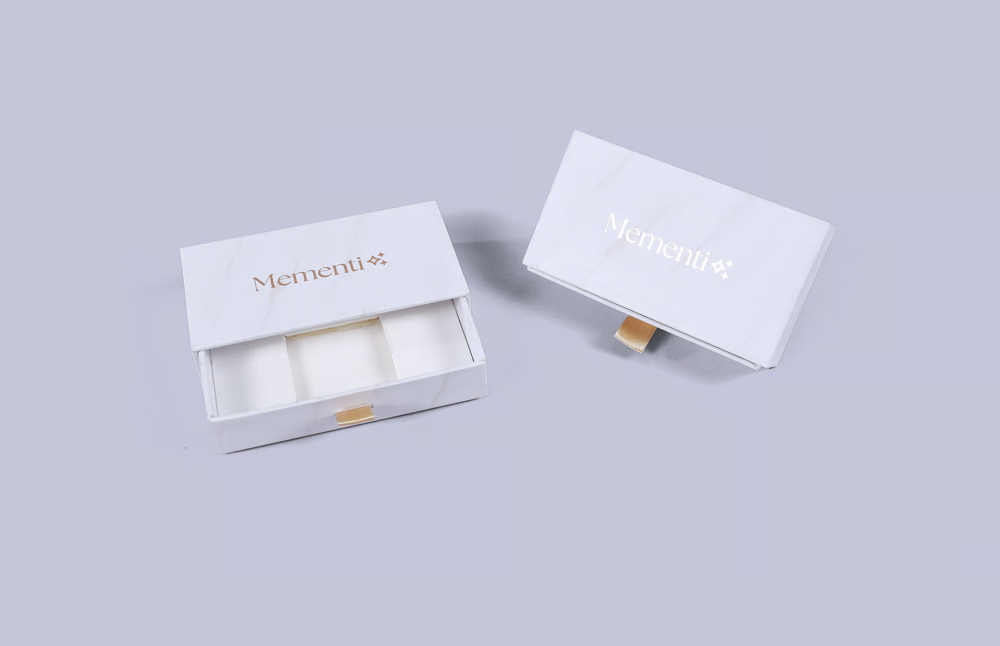
A drawer-style rigid box contains an inner tray that slides out from a surrounding sleeve.
The product travels with the tray, allowing it to emerge gradually as the customer opens the box. Some designs use a ribbon pull or finger notch, while others leave part of the tray exposed for gripping.
Fine jewelry and luxury writing instruments are natural candidates because their contents can remain supported within fitted compartments.
For a necklace presentation, the chain and pendant can be arranged on a shaped insert inside the drawer. Pulling the tray outward reveals the jewelry without requiring the customer to lift a cover over it.
A ribbon pull is useful when the drawer sits flush with the surrounding sleeve, leaving little room for the fingers.
Opening resistance is another detail that deserves attention. The finished wrapping material contributes to friction between the two components, so a drawer that moves smoothly in an unfinished prototype may behave differently once the final surfaces are applied.
7. Hinged-Lid Rigid Boxes (Flip-Top)
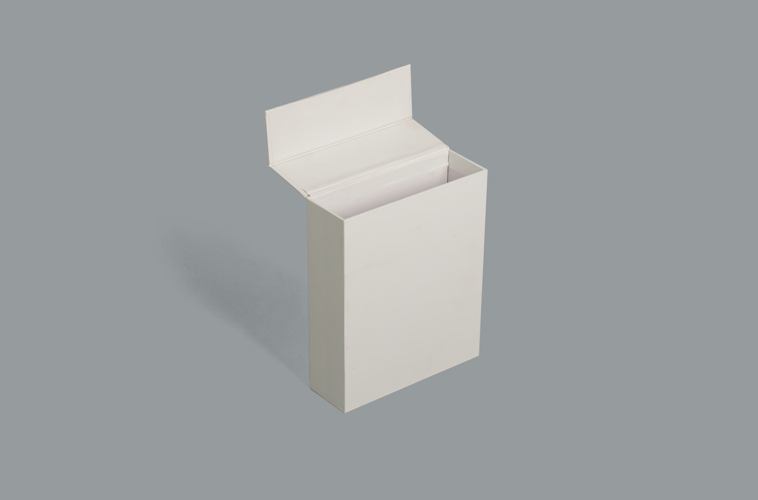
A hinged-lid rigid box has a lid permanently connected to the base, typically along the rear edge.
Lifting the lid exposes the contents while keeping both parts together. The hinge may be formed through a flexible paperboard connection or another construction suited to the box.
Luxury watch presentations are a familiar use. A watch can rest on a fitted cushion inside the base while the lid opens upward, leaving the item positioned for viewing or removal.
The opening angle is especially important for a display box.
A watch box with a lid that stops too early may partially obscure the product. A lid that opens too far, on the other hand, may require additional support or a different hinge arrangement.
Book-style boxes also use attached covers, but the conventional flip-top format is generally associated with an upward-opening lid rather than a side-opening book cover.
8. Shoulder and Neck Rigid Boxes
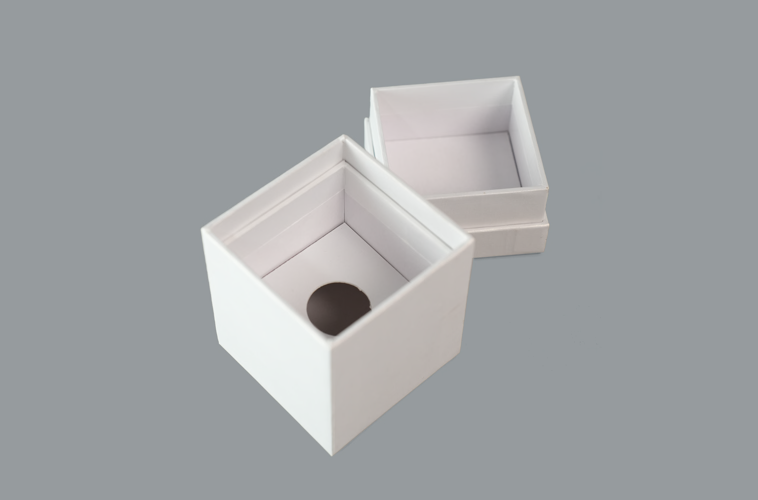
Shoulder and neck rigid boxes incorporate an internal collar that helps guide the lid into position.
The neck extends upward from the lower structure, creating a surface around which the lid fits. Depending on the design, the collar may be visible when the box is closed or concealed beneath the lid.
This construction appears in prestige fragrance packaging, fine jewelry presentations, and luxury cosmetic collections.
A contrasting neck can become part of the visual design. Picture a dark matte perfume box with a narrow champagne-colored band visible between the lid and base. The exposed collar introduces a second color without requiring an additional decorative element on the exterior.
The main variation concerns how much of the neck remains visible.
An exposed-neck box leaves part of the collar showing between the lid and base. A concealed-neck box hides the collar when closed, resulting in a more continuous exterior.
The visible gap should also be inspected around the entire box. An uneven gap can become noticeable on minimal designs, especially when the collar uses a contrasting color.
9. Clamshell Rigid Boxes
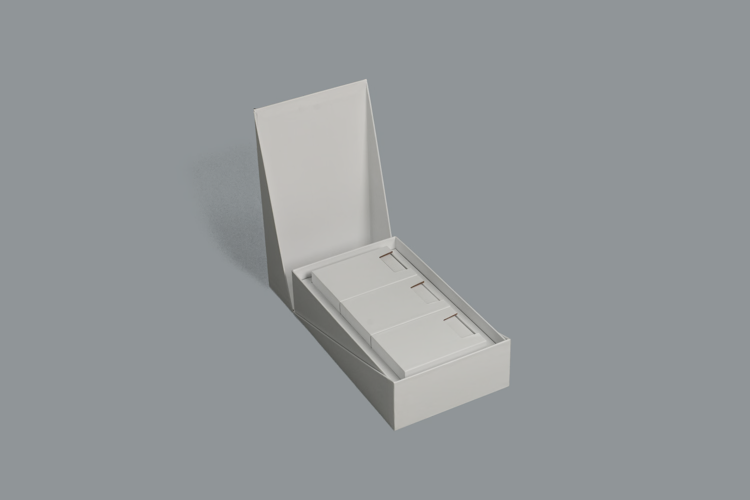
Clamshell rigid boxes are formed from two connected sections that close together like a case.
Unlike a conventional deep-base box with a separate cover, a clamshell may use two relatively shallow halves connected along a folding edge.
This arrangement suits flat or compact products presented within a fitted interior. Commemorative medals, collectible coins, limited-edition accessories, and presentation pieces can be positioned in shallow recesses that remain visible when the case is opened.
Clamshell and hinged-lid boxes are sometimes described using overlapping terminology.
A useful way to distinguish them is to examine the proportions. A conventional hinged-lid box often has a deeper base and a relatively shallow lid. A clamshell generally behaves more like two connected case sections that close around the contents.
The product should remain positioned securely as the case opens. Small collectibles, in particular, may require a fitted recess or retaining insert to prevent movement.
10. Octagonal Rigid Boxes
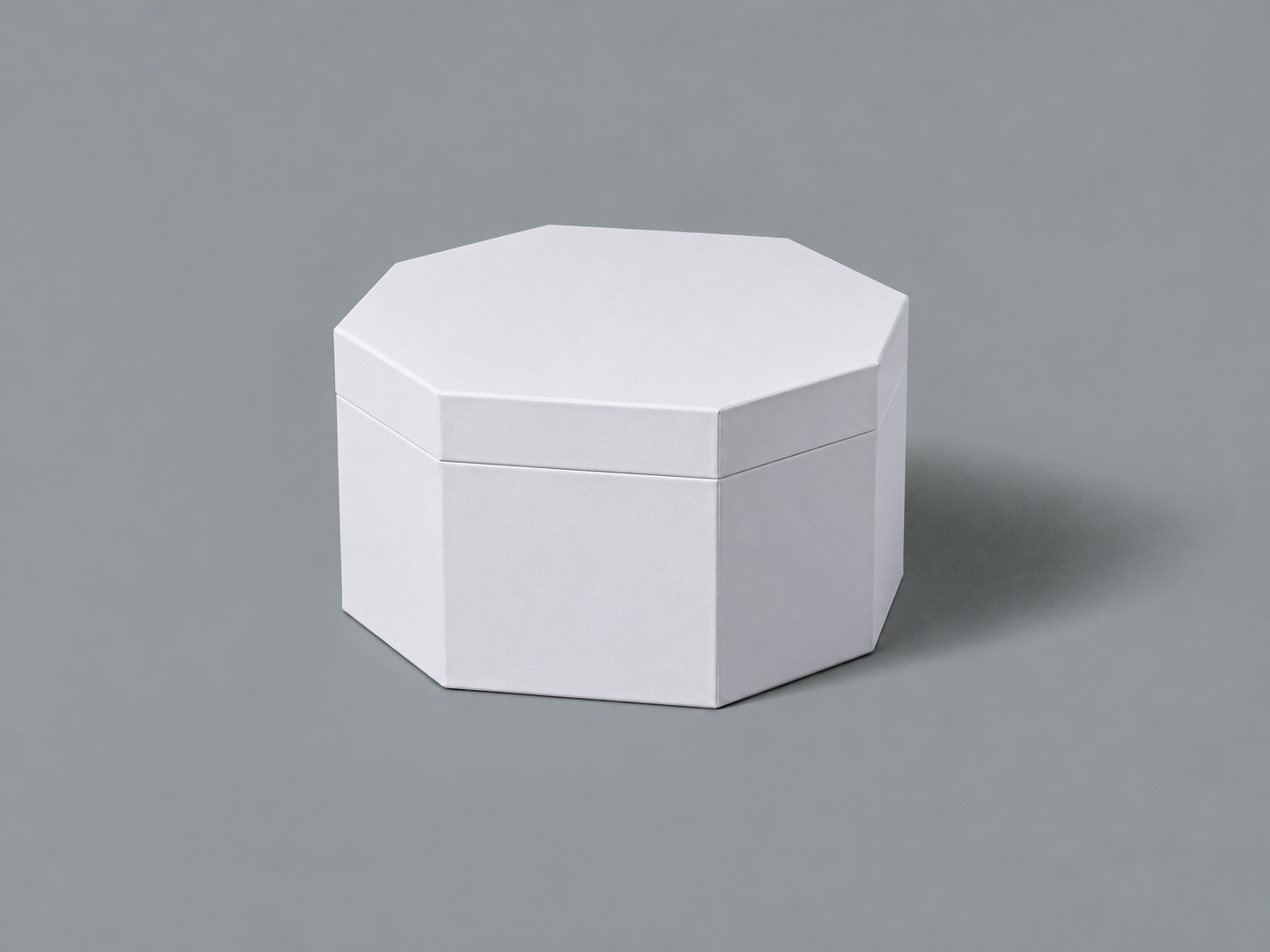
Octagonal rigid boxes have eight sides, creating a geometric alternative to square and rectangular packaging.
Their construction can incorporate removable lids, internal collars, or other suitable closure arrangements. The defining characteristic is the eight-sided perimeter rather than a particular opening mechanism.
An octagonal presentation box can be striking for a limited-edition confectionery assortment. Individual pieces might be arranged radially around a central compartment, making use of the geometry rather than simply placing a rectangular insert inside an unusual exterior.
If a rectangular product occupies only a small portion of the available space, the box may become unnecessarily large. A custom insert can resolve the presentation, but the overall dimensions still need to accommodate the unusual perimeter.
Octagonal boxes are one example of custom-shaped rigid packaging. Hexagonal and other polygonal designs follow similar principles, although their proportions and construction requirements differ.
11. Cylinder Rigid Boxes (Round Rigid Boxes)
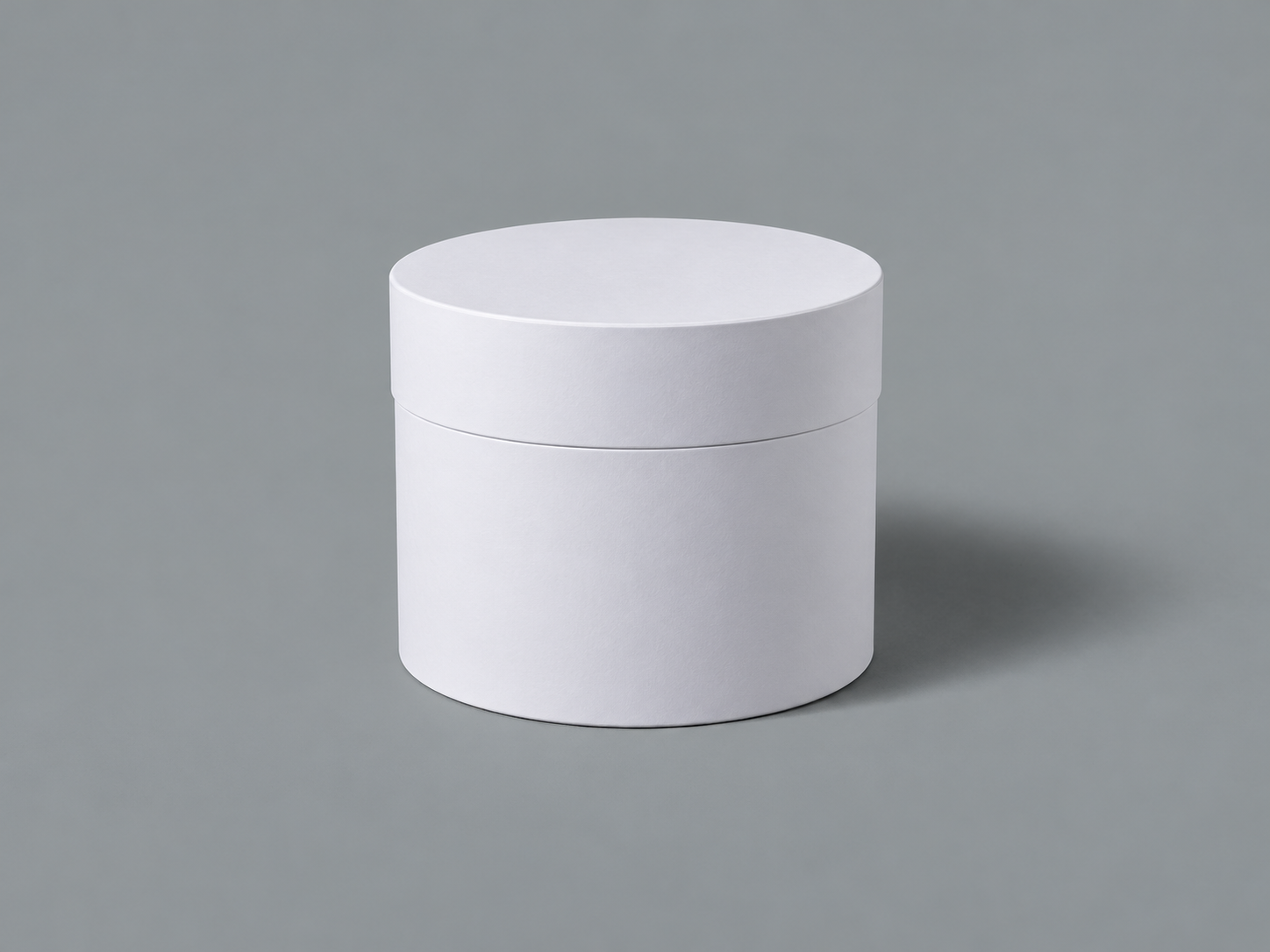
Cylinder rigid boxes have a circular base and curved sidewalls, usually finished with a removable lid.
The rounded construction offers a continuous exterior surface and a different silhouette from conventional rectangular packaging.
Premium candles, cylindrical fragrance bottles, and specialty gifts can fit naturally within this format.
A candle presented in a fitted round box, for instance, may need only a small amount of additional internal space. The circular walls follow the product's shape, while the lid can be designed with a contrasting finish.
A cylindrical box can appear compact when viewed individually, yet rows of round boxes may use shipping space less efficiently than rectangular packaging.
Artwork also behaves differently on curved surfaces. A design that crosses the wrapping seam should be reviewed carefully to avoid visible interruptions.
12. Sliding-Lid Rigid Boxes
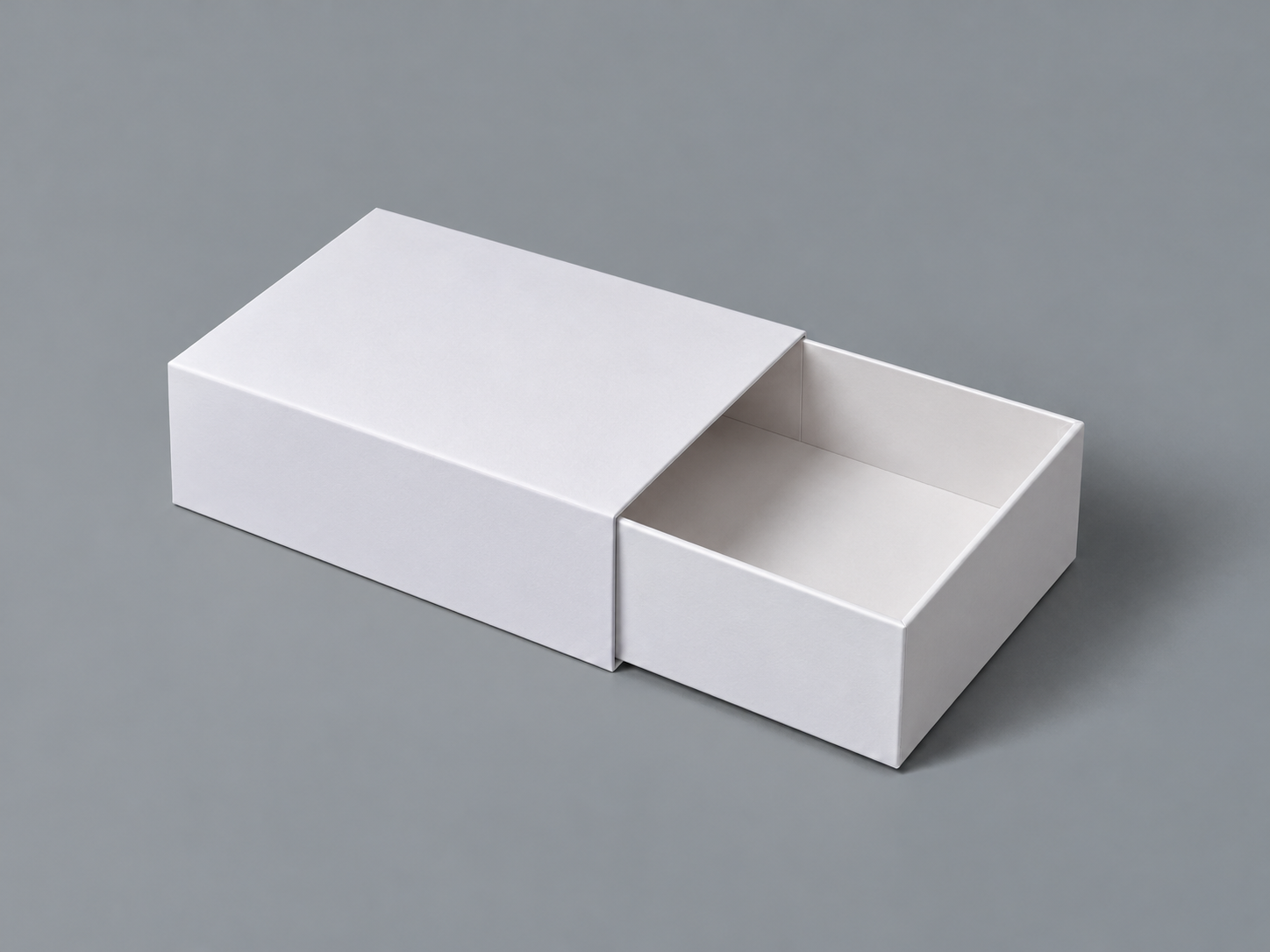
Sliding-lid rigid boxes use a movable cover that slides along the base to reveal the contents.
The product remains inside the stationary base while the lid moves. Depending on the construction, the cover may slide horizontally, vertically, or along a fitted track.
Luxury pens, precision instruments, and compact accessories can be displayed this way.
In a drawer box, the tray and its contents move. In a sliding-lid box, the lid moves while the product stays in place.
This affects the way the product is revealed and handled. A delicate item that should remain stationary may be more convenient in a sliding-lid arrangement, provided the cover does not come into contact with the item beneath it.
13. Telescopic Rigid Boxes
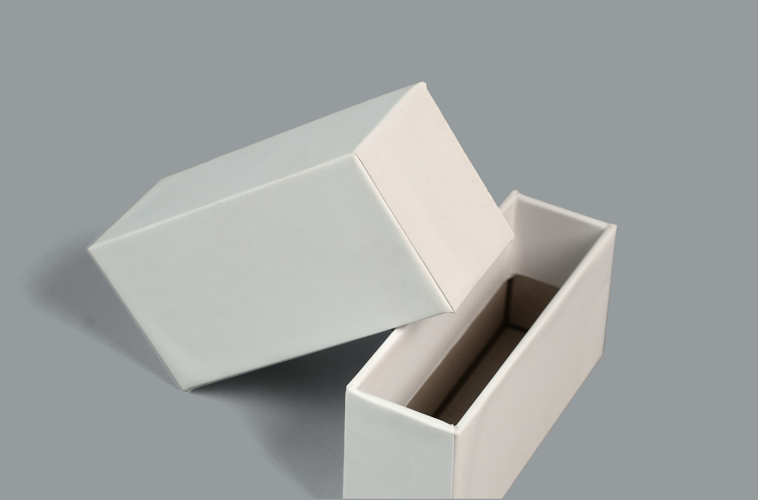
Telescopic rigid boxes are part of the two-piece lid-and-base family. Their defining feature is the depth to which the lid extends over the base.
A full-telescopic rigid box has a lid that covers the full or nearly full height of the base. A partial-telescopic rigid box has a shallower lid that covers only part of the base.
These variations can create noticeably different appearances even when the boxes have identical external dimensions.
Full-telescopic construction can be seen in premium apparel and gift packaging, where the closed box presents a largely uninterrupted lid surface. Partial-telescopic designs leave more of the base visible, allowing a contrasting material or color to contribute to the exterior.
With a full-telescopic lid, the base may be difficult to grasp until the lid begins to lift. Thumb cutouts or carefully designed clearance can help.
A partial-telescopic lid generally leaves more of the base exposed, making it easier to hold while removing the cover.
Telescopic boxes are not fundamentally separate from two-piece boxes. The distinction lies in the amount of lid coverage, which affects both appearance and handling.
How to Choose Between Different Rigid Box Styles
The strongest packaging design for you is one that accommodates the product and allows customers to interact with it comfortably.
A watch intended for regular storage may need a different opening arrangement from a fragrance discovery collection that is unpacked occasionally. Likewise, a designer scarf presented in a large gift box introduces different storage considerations from a compact jewelry item.
The table below compares the rigid box styles according to their practical characteristics.
Consider How the Product Will Be Removed
A visually attractive box can become inconvenient if customers struggle to lift the product from its insert.
A tightly fitted perfume bottle may require a finger recess or pull ribbon. A watch cushion should allow the watch to be lifted without excessive pressure on the strap. Small jewelry pieces may be easier to access from a stationary compartment than from a moving tray.
These details are often revealed only when the actual product is placed inside a physical sample.
Compare the Box in Its Open and Closed Positions
Closed-box photographs show surface finishes and overall proportions, but they reveal little about how the structure behaves.
A book-style cover needs space beside the box. A drawer extends beyond its sleeve, while a hinged lid requires sufficient clearance to open fully.
For packaging intended to remain on a retail display or dressing table, the open configuration deserves as much attention as the closed exterior.
Separate Box Structure From Decorative Features
Features such as transparent windows, foil stamping, embossed logos, and specialty wrapping papers can be incorporated into different rigid box types.
A window, for example, may be added to a two-piece or hinged-lid box to reveal part of the product without opening it. It does not automatically create a separate structural category.
Interior finishing also deserves consideration. A full-finish rigid box generally has wrapping or lining covering the relevant interior surfaces, while a partial-finish box leaves some inner board surfaces unfinished.
These choices influence the appearance of the open box, particularly if customers can see its interior walls or corners.
The same distinction applies to inserts. A velvet-covered cushion may complement a luxury watch presentation, while a precisely cut paperboard insert may be more appropriate for an organized fragrance set.
The box type determines how the packaging opens and is constructed. Finishes and inserts determine how the product is presented within that structure.
Conclusion
The 13 types of rigid boxes offer different opening mechanisms, structural arrangements, and presentation possibilities.
Two-piece and telescopic designs use removable lids, while book-style, hinged-lid, and clamshell boxes keep their covers attached. Drawer and sliding-lid boxes introduce a gradual reveal, and foldable constructions can reduce the storage space required before assembly.
Shoulder-neck, octagonal, and cylindrical designs offer further options when the packaging requires a particular lid arrangement or shape.
The right choice becomes clearer when the product is considered alongside the opening movement, internal arrangement, and intended presentation.
GUKA Packaging works with brands developing custom rigid boxes in different structures, sizes, and finishes. If you're comparing box styles for a new collection or refining an existing design, contact GUKA Packaging with your product dimensions, preferred structure, estimated quantity, and delivery destination to discuss manufacturing options.
Frequently Asked Questions
What are the different types of rigid boxes?
The main types include two-piece, magnetic closure, drawer-style, book-style, hinged-lid, shoulder-neck, clamshell, collapsible, telescopic, cylindrical, octagonal, and sliding-lid boxes.
Some names describe opening mechanisms, while others refer to shapes, construction methods, or closure features. A single box can combine several characteristics.
What is the most common type of rigid box?
Two-piece lid-and-base boxes are among the most familiar rigid box constructions. They feature a removable lid and a separate base and are widely used for premium gifts, cosmetics, apparel, and accessories.
Other common styles include magnetic closure, drawer, book-style, and hinged-lid boxes.
What is the difference between a two-piece box and a telescopic box?
A telescopic box is a variation of the two-piece rigid box.
The term describes how far the lid extends over the base. Full-telescopic lids cover the entire or nearly entire base height, while partial-telescopic lids cover less of it.
Are magnetic closure boxes different from book-style rigid boxes?
Magnetic closure describes the method used to hold a box shut, while book-style describes how its cover opens along a spine.
A book-style rigid box can use magnets, so the same packaging design may belong to both descriptions.
Which rigid box types can be shipped flat?
One-piece foldable and collapsible rigid boxes can be designed for flat-packed storage and transportation.
Traditional set-up boxes generally retain their assembled form. The exact folding method and assembly requirements depend on the construction.
Which rigid box styles are suitable for luxury jewelry?
Jewelry can be presented in drawer-style, hinged-lid, shoulder-neck, two-piece, and clamshell boxes, depending on the item.
A necklace may require a fitted tray to keep the chain arranged, while a ring or watch could use a cushion inside a hinged-lid presentation box.
The insert and ease of product removal are as important as the exterior structure.
Are full-finish and partial-finish boxes separate rigid box styles?
Full-finish and partial-finish describe how the box's surfaces are wrapped or lined, rather than its opening structure.
Both approaches can be used with different rigid box designs. The distinction concerns which internal board surfaces remain visible in the finished packaging.
Can luxury rigid boxes combine more than one style?
Yes. A book-style box can include magnetic closure, a cylindrical box can use a telescopic lid, and a shoulder-neck design can incorporate a custom-shaped insert.
Combining features is common, but the final structure should be tested to confirm that the lid, closure, and interior arrangement work together.
Recommended for you






You Might Enjoy



Are we right for each other?
We work best with brands that treat packaging as part of the product, not as the last thing on the list. To save us both time, here is who we work with best.
We're probably not the right fit if:
- Orders under $1,000.
- A few boxes, one time.
- Lowest quote wins.
- No conversation, just add-to-cart.
- Brand direction still up in the air. Our FAQ covers the basics first: process, scale, sampling, finishing, production. Worth reading before submitting anything.
We're a strong fit if:
- Projects starting around $1,000 and up.
- Sampling before production makes sense to you. It runs from $300, though complete artwork and locked specs can sometimes skip straight to the line.
- There's real budget behind the packaging, and an expectation that production standards get defined properly.
- What's needed is a manufacturing partner across structure, material, process and delivery. Not a print shop taking a file.
- The box has a job: retail shelf, gifting, unboxing. It has to carry the brand.
- Getting it right matters more than getting it cheapest.
Sound like your project? Let's talk

What happens after you submit
1. A specialist reviews your project, usually within 1 business day.
2. We follow up with questions, options, and indicative pricing.
3. Once the spec is confirmed, we move to sampling.