How Many Cigarettes Are in a Pack? Global Pack Sizes, Carton Counts & Packaging Insights
Discover how many cigarettes are in a pack and carton worldwide, pack size regulations, packaging dimensions, and expert guidance for tobacco brands.

Table of content

Cigarette consumption, packaging, and pricing are intricately connected to the number of cigarettes in a pack. While it might seem like a simple question—“how many cigarettes are in a pack?”—the answer varies widely around the globe. Understanding these differences is essential not only for smokers planning purchases but also for businesses, manufacturers, and packaging designers working in the tobacco industry.
For tobacco brands, pack sizes dictate everything from pricing strategies to regulatory compliance and marketing opportunities. Meanwhile, carton counts impact logistics, inventory management, and retail distribution. With global regulations evolving and health guidelines becoming stricter, packaging must be designed to meet legal standards while appealing to consumers.
This guide provides an in-depth look at cigarette pack sizes, carton counts, packaging dimensions, pricing, regulations, and expert insights for creating compliant and premium tobacco packaging.

Understanding Cigarette Pack Sizes
Cigarette pack sizes are influenced by regional regulations, market demand, consumer habits, and branding strategies. While the most common pack contains 20 cigarettes, various markets feature smaller or larger packs to meet local requirements or consumer preferences.
Standard Pack Sizes Around the World
- United States: Federal regulations mandate a minimum of 20 cigarettes per pack, which is the standard across all states.
- European Union: The Tobacco Products Directive (TPD) enforces a minimum of 20 sticks per pack to discourage affordability and reduce consumption. Variations like 19 or 21 cigarettes exist for pricing strategies.
- United Kingdom: Packs with fewer than 20 cigarettes have been prohibited since 2017.
- Canada: Packs often range from 20 to 25 cigarettes, catering to convenience and pricing needs.
- Australia: Known for diverse pack sizes, including 20, 21, 22, 23, 25, 26, 30, 35, 40, 43, and even 50 cigarettes.
- Japan & China: While 20-cigarette packs are standard, 10-cigarette packs are also available for casual or trial smokers.
- India: Pack sizes vary widely (10, 12, 16, 20) due to government-mandated minimum sizes and health regulations.
Why Pack Sizes Vary
Pack sizes are not arbitrary; they are shaped by several factors:
- Regulations: Governments often set minimum or maximum pack sizes to control consumption, especially among young or price-sensitive consumers.
- Consumer Preferences: Regular smokers may prefer larger packs for convenience, while occasional smokers may favor smaller packs.
- Economic Considerations: Larger packs often reduce per-cigarette costs, offering a bulk purchase incentive, while smaller packs allow smokers to try new brands without spending much.
- Marketing Strategies: Companies sometimes use unusual pack counts (e.g., 21 or 23 cigarettes) to create perceived added value or differentiate pricing points.
How Many Packs of Cigarettes Are in a Carton?
A carton is a bulk packaging unit for cigarettes, commonly used for wholesale, retail, and storage purposes.
Standard Carton Counts
- A standard carton typically contains 10 packs, amounting to 200 cigarettes.
- Some cartons, depending on the market, may contain 20 packs, totaling 400 cigarettes.
- Bulk packaging allows retailers and consumers to purchase at lower per-unit costs, making cartons ideal for high-volume use.
Why Cartons Matter
Carton packaging is essential for:
- Logistics: Easier stacking, transport, and storage for distributors and retailers.
- Cost Efficiency: Buying cartons reduces per-pack costs. For example, in the United States, a single pack may cost between $6–$12, while buying a carton reduces the per-pack price by roughly $1–$2.
- Inventory Management: Retailers can efficiently monitor stock levels and reduce packaging waste with cartonized shipments.
Carton Variations by Market
- USA: 10-pack cartons are standard; larger 20-pack cartons exist in some promotional contexts.
- Australia: Multi-pack cartons often reflect diverse pack sizes, such as 20, 25, 30, or 50 cigarettes per pack.
- Europe: The standard 10-pack carton is widely used, but bulk promotions may offer larger quantities.
Tip for Tobacco Brands: When designing cartons, consider regional preferences and compliance with local regulations for pack size and labeling.
Cigarette Pack and Carton Dimensions
Understanding pack and carton dimensions is crucial for packaging design, manufacturing, and regulatory compliance.
Standard Pack Dimensions
Cigarette packs differ in size depending on cigarette type:
- Regular unfiltered cigarette pack: Typically holds sticks of 68–70 mm in length.
- King-size filtered: 79–88 mm, standard in most modern markets.
- Filtered long cigarettes: 94–101 mm.
- Extra-long cigarettes: 110–121 mm.
Diameters also vary: standard 7.5–8 mm, slim cigarettes 5–6 mm. These factors influence the height, width, and depth of the pack.
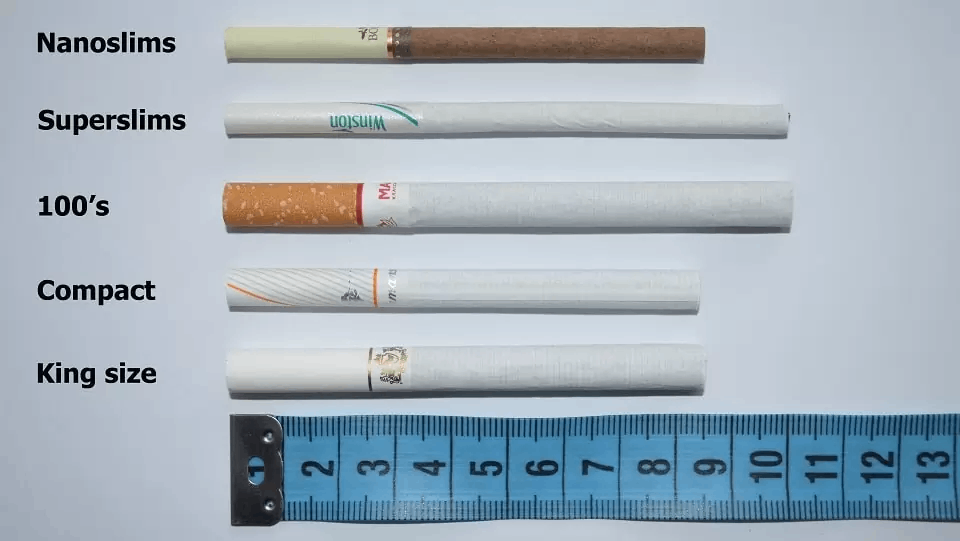
Common pack dimensions (inches):
- Hard pack, full-size: 3.5 × 2.2 × 0.9 in
- Soft pack: slightly smaller, variable depending on stick length
- Slim packs: narrower, more elongated
Carton Dimensions
Cartons are typically designed to hold 10 or 20 packs:
- 10-pack carton: Approximately 7.8 × 4.8 × 4.7 in
- 20-pack carton: Double the width or depth to accommodate more packs
- Materials often include sturdy folding carton boards or corrugated boards to ensure protection during storage and transport.
Packaging Materials & Finishes
Modern cigarette packaging uses a combination of:
- Folding carton board: Lightweight, printable, and cost-effective
- Rigid boxes: Durable, premium feel for high-end brands
- Corrugated boxes: Ideal for cartons and bulk distribution
- Laminations and coatings: Matte, gloss, or UV spot for branding and durability
- Foil linings: Preserve freshness, moisture resistance
GUKA Packaging Advantage: Our factory offers custom rigid boxes and folding cartons tailored for tobacco products. Whether it’s compliance with local regulations or premium branding, we design boxes that balance durability, visual appeal, and functionality.
Pricing and Consumption Insights
Average Cost per Pack and Carton
The cost of cigarettes varies globally, influenced by taxation, regulation, and market dynamics.
Example: USA (2024–2025):
Average Savings by Buying Cartons:
- Buying cartons instead of single packs reduces per-pack cost by 5–20%
- Bulk purchase incentives appeal to budget-conscious consumers
Impact of Pack Size on Consumption
Research has shown a direct link between pack size and smoking behavior:
- Larger packs increase consumption: Smokers often underestimate how many cigarettes they consume. Studies in Canada and Australia show that users of 25–30 cigarette packs smoke 10–15% more per month.
- Smaller packs help control consumption: 10–20 cigarette packs are preferred by smokers aiming to limit intake. Studies in Japan indicate smaller packs can reduce daily smoking by 10%.
- Regulatory measures: Minimum pack sizes combined with taxation and plain packaging laws (UK, Brazil, Thailand) have shown a decrease in overall smoking rates by 3–5% within two years.
Regulatory Considerations and Health Guidelines
Governments around the world regulate cigarette pack sizes to protect public health:
- European Union: TPD mandates a minimum of 20 cigarettes per pack; requires specific health warnings and graphic labeling.
- USA: FDA mandates warning labels, restricts deceptive packaging, and enforces consistent pack sizes.
- Australia & UK: Plain packaging laws remove branding elements to reduce appeal, influencing pack dimensions and design options.
- India: Regulatory mandates dictate minimum pack sizes and require prominent health warnings.
Tobacco brands must adhere to these regulations to avoid fines, product seizures, or marketing restrictions.
Special Market Notes
India
- Pack sizes vary (10, 12, 16, 20) due to health and pricing regulations.
- Graphic health warnings are mandatory.
Australia
- Known for the widest variety of pack sizes (20–50 cigarettes).
- Plain packaging and tax policies influence both design and consumption patterns.
Canada
- Larger packs (25 cigarettes) dominate due to convenience and reduced purchase frequency.
Expert Packaging Tips for Tobacco Brands
- Regulatory Compliance First: Ensure all pack dimensions, materials, and labels meet legal standards.
- Internal Tray Design: Protect cigarettes in cartons to prevent damage and maintain presentation.
- Premium Finishes: Embossing, matte coatings, or foil highlights enhance brand appeal while remaining compliant.
- Sustainability: Use recyclable and biodegradable materials to align with environmental expectations.
- Prototyping & Testing: Validate dimensions and regulatory adherence before mass production.
GUKA Packaging specializes in creating custom rigid boxes, folding cartons, and sturdy corrugated cartons tailored to tobacco brands worldwide. Our solutions combine compliance, durability, and premium aesthetics, perfect for the U.S., European, and Australian markets.
Contact us today to explore how we can create bespoke cigarette packaging solutions that meet your brand’s needs and compliance requirements.
Frequently Asked Questions (FAQs)
Q1: How many cigarettes are in a pack?
A: Most cigarette packs contain 20 cigarettes, which is standard in the U.S., Europe, and many other countries. Some regions offer smaller packs with 10 cigarettes or larger packs with 25, 30, or even 50 cigarettes.
Q2: How many packs of cigarettes are in a carton?
A: Typically, a standard carton contains 10 packs, totaling 200 cigarettes. In some cases, cartons may contain 20 packs, amounting to 400 cigarettes, depending on market regulations and brand preferences.
Q3: How many cigarettes are in a pack in India?
A: In India, cigarette packs commonly contain 10, 12, 16, or 20 cigarettes. The variations are influenced by local regulations, pricing strategies, and consumer demand.
Q4: What are the dimensions of a cigarette pack?
A: Dimensions vary by pack type and cigarette size. Standard hard packs are usually around 85 mm x 55 mm x 22 mm, while slim packs or soft packs may differ. Carton dimensions are also driven by the number of packs included and the size of individual cigarettes.
Q5: How many cigarettes come in a carton?
A: A standard carton contains 200 cigarettes (10 packs of 20), but larger cartons can hold up to 400 cigarettes (20 packs of 20).
Q6: Why do people buy cartons instead of single packs?
A: Buying cartons can save money per cigarette, reduce frequent trips to purchase packs, and ensure a steady supply. Retailers and wholesalers also benefit from bulk packaging.
Q7: How do you pack cigarettes?
A: Cigarettes are typically packed into soft or hard packs, which are then placed in cartons. For premium or custom products, brands can use rigid boxes, folding cartons, or specialty packaging to protect the product and enhance branding.
Q8: What is the difference between a pack and a carton of cigarettes?
A: A pack is a single unit of cigarettes (usually 20), while a carton is a larger package containing multiple packs. This distinction helps consumers and businesses plan purchases and manage costs.
Q9: How many cigs are in a pack for promotional or trial purposes?
A: Smaller packs containing 5 to 10 cigarettes are often used for promotions or to allow new consumers to try the product without committing to a full pack.
Q10: Can cigarette pack sizes affect consumption?
A: Yes, larger packs may encourage increased smoking due to convenience, while smaller packs can help occasional smokers control intake. Regulations often dictate minimum pack sizes to influence consumption.
Q11: Can GUKA Packaging create custom cigarette packaging?
A: Absolutely. GUKA Packaging specializes in custom rigid boxes, folding cartons, and sturdy corrugated cartons for tobacco products. We ensure packaging meets global standards while enhancing brand appeal and protecting products. Explore more Cigarette Box Design and Vape/E-cigarette packaging design.
Recommended for you


.avif)
.avif)


.avif)
.avif)




.avif)
.avif)
You Might Enjoy



Are we right for each other?
We work best with brands that treat packaging as part of the product, not as the last thing on the list. To save us both time, here is who we work with best.
We're probably not the right fit if:
- Orders under $1,000.
- A few boxes, one time.
- Lowest quote wins.
- No conversation, just add-to-cart.
- Brand direction still up in the air. Our FAQ covers the basics first: process, scale, sampling, finishing, production. Worth reading before submitting anything.
We're a strong fit if:
- Projects starting around $1,000 and up.
- Sampling before production makes sense to you. It runs from $300, though complete artwork and locked specs can sometimes skip straight to the line.
- There's real budget behind the packaging, and an expectation that production standards get defined properly.
- What's needed is a manufacturing partner across structure, material, process and delivery. Not a print shop taking a file.
- The box has a job: retail shelf, gifting, unboxing. It has to carry the brand.
- Getting it right matters more than getting it cheapest.
Sound like your project? Let's talk

What happens after you submit
1. A specialist reviews your project, usually within 1 business day.
2. We follow up with questions, options, and indicative pricing.
3. Once the spec is confirmed, we move to sampling.