Board Game Packaging Explained: Box Types, Sizes & Design Tips
Standard board game box sizes in mm and inches, box types compared, back-of-box essentials, and what each construction takes to produce.
Table of content
A well-designed board game box not only protects the game components but also enhances the player's anticipation, communicates the brand story, and influences purchasing decisions. In a competitive market, packaging can make the difference between a game that sits on the shelf and one that flies off it.
Whether you're designing a classic strategy game, a card game, or a family-friendly board game, understanding the principles of board game packaging design is essential. This guide explores everything from board game box sizes and templates to materials, printing options, and creative add-ons, providing actionable insights for designers, publishers, and brands seeking to create impactful packaging.
1. Understanding Board Game Packaging
The Role of Packaging in Board Games
Board game packaging serves multiple purposes:
- Protection: Safeguards game components like cards, boards, dice, and tokens during shipping and storage.
- Marketing: Attractive packaging draws attention on store shelves and online marketplaces.
- Branding: Packaging conveys the game's identity, theme, and quality.
- User Experience: Enhances the unboxing experience, encouraging players to engage with the game immediately.
In today’s e-commerce-driven world, packaging can also determine whether a customer clicks “Add to Cart” online. Research shows that high-quality, visually appealing packaging significantly increases consumer trust and willingness to pay a premium.

Common Types of Board Game Packaging
Board game packaging has evolved far beyond simple cardboard boxes. Popular styles include:
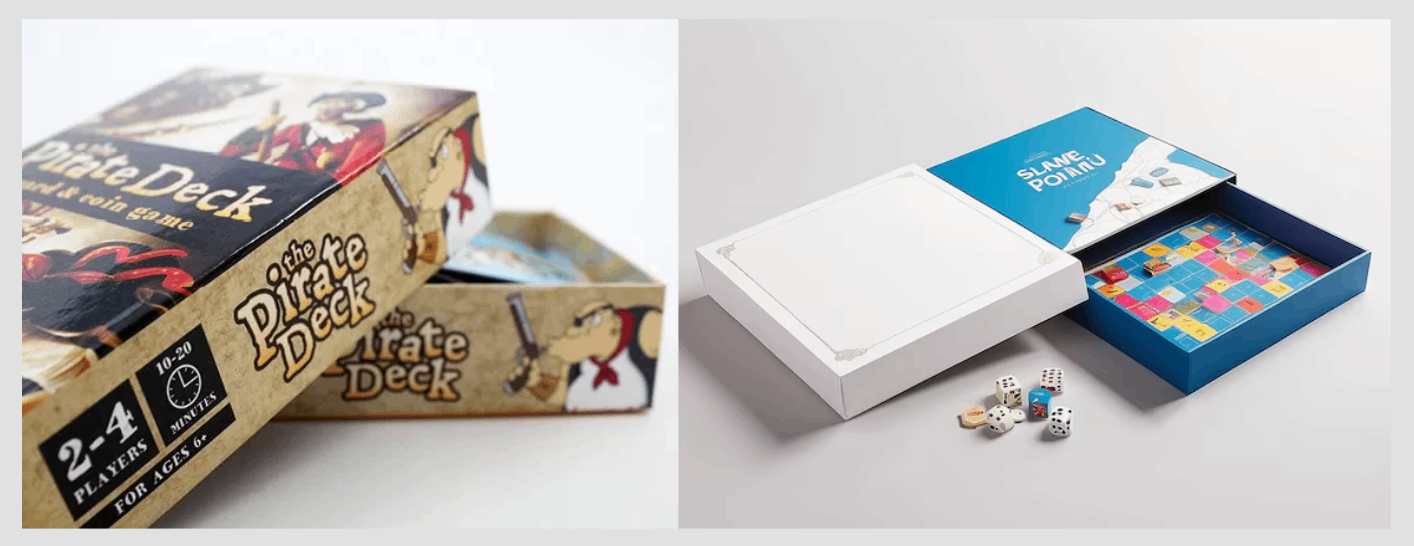
1. Two-Piece Rigid Boxes
- Luxurious design with a separate lid and base.
- Excellent for premium board games, collector editions, or limited releases.
- Provides ample space for intricate board game box art and graphics.
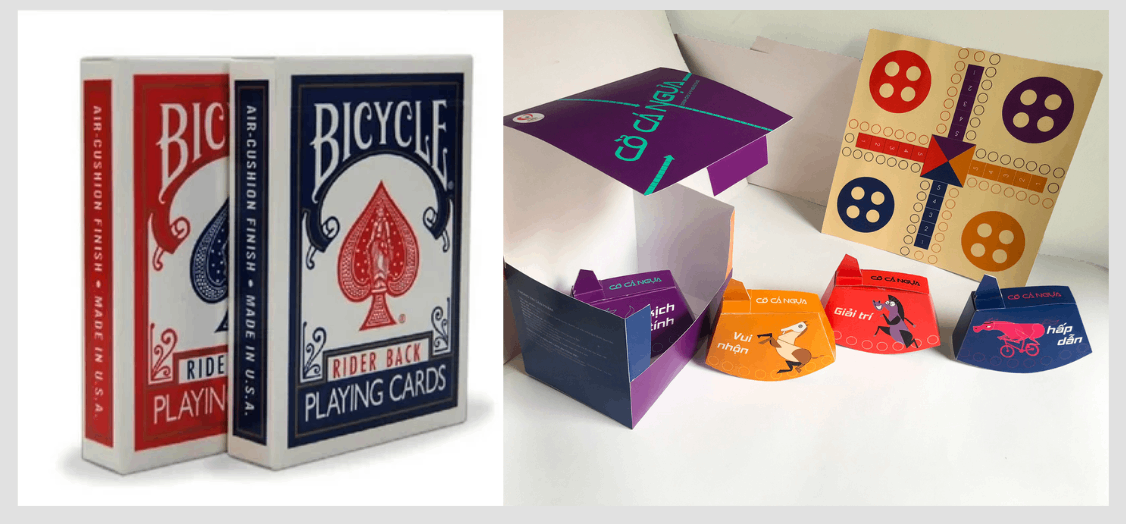
2. Folding Carton Boxes
- Cost-effective, lightweight, and suitable for mass-market games.
- Ideal for medium-sized board games and card games.
- Supports custom printing and finish options like embossing or foil stamping.
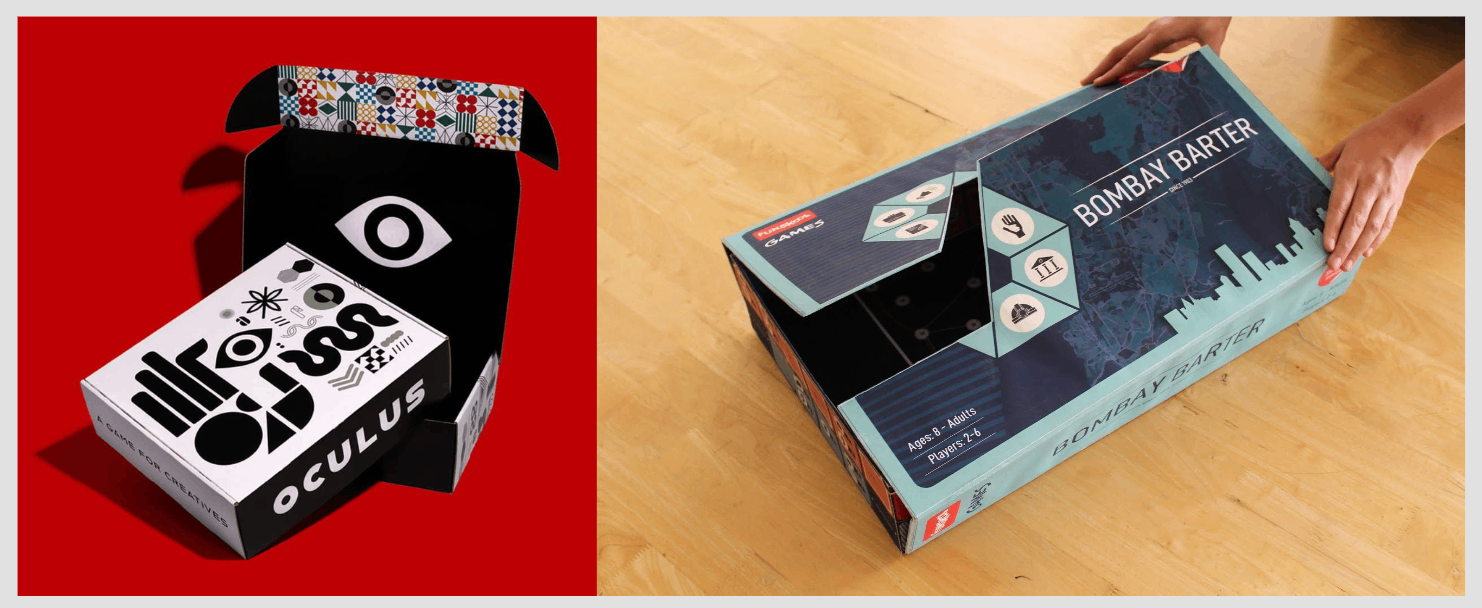
3. Mailer Boxes
- Perfect for shipping games directly to consumers.
- Durable and cost-efficient for e-commerce brands.
- Can be customized with branded graphics and interactive unboxing elements.
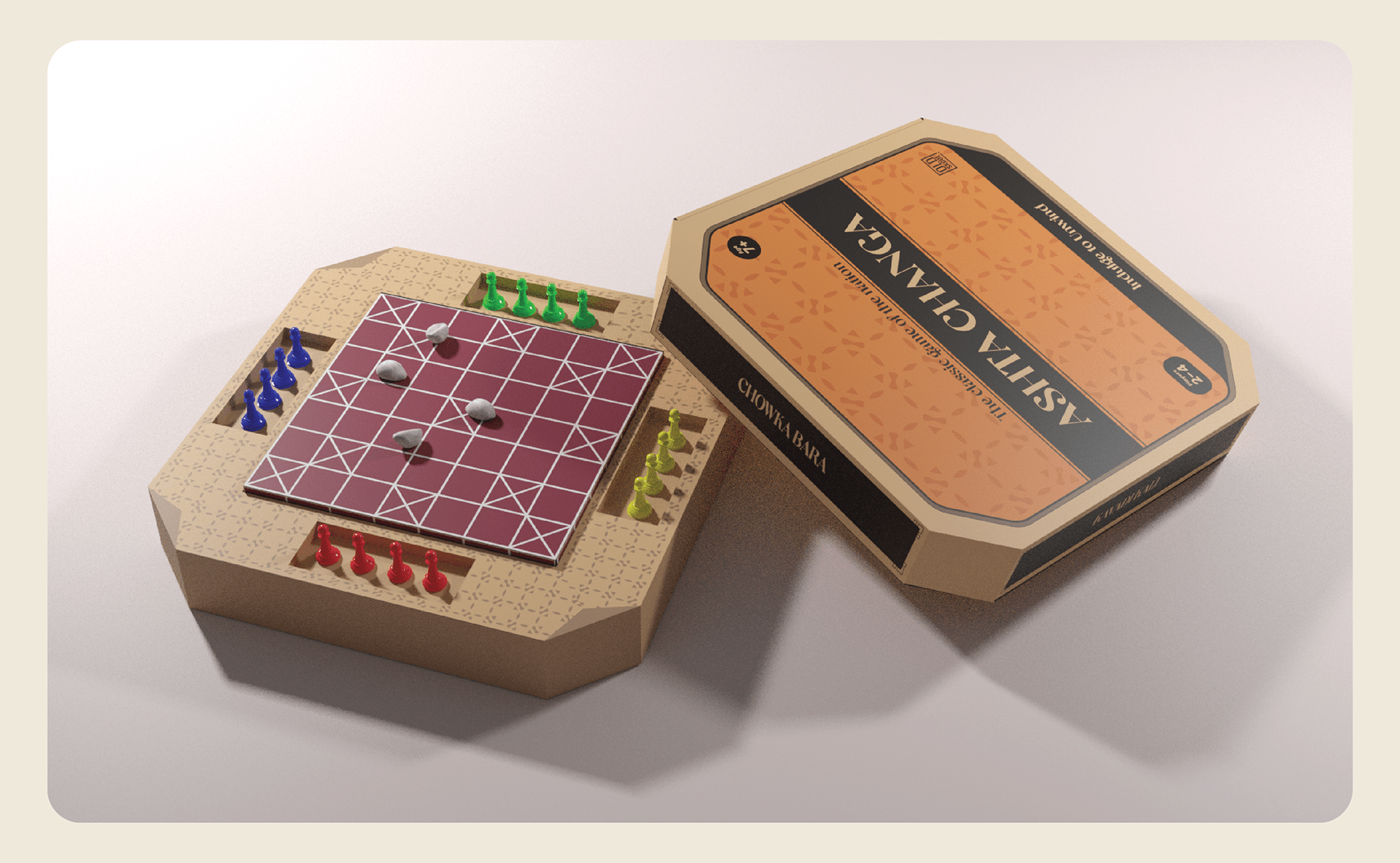
4. Customized Shapes
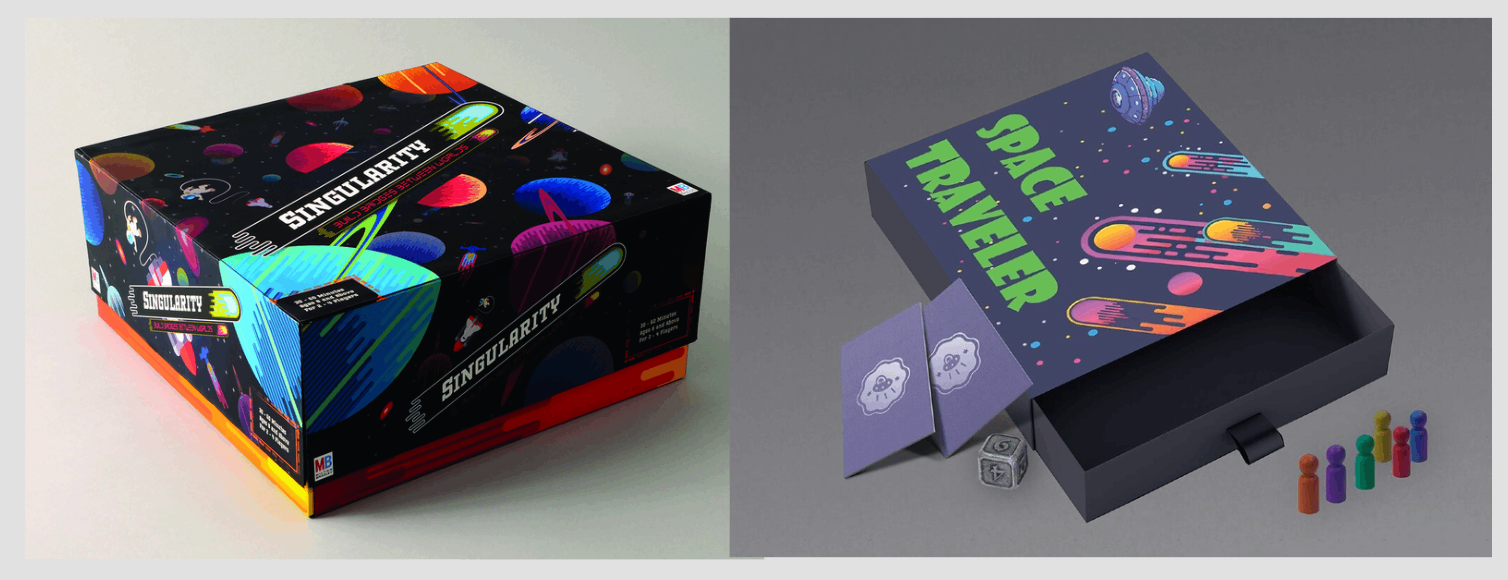
- Unconventional shapes that align with the game's theme (e.g., hexagonal, triangular, or thematic silhouettes).
- Eye-catching on shelves, but require precise design planning.
Components of a Board Game Box
A typical board game box contains:
- Game board
- Cards
- Tokens/dice
- Rulebook
- Optional add-ons like posters, stickers, or miniatures
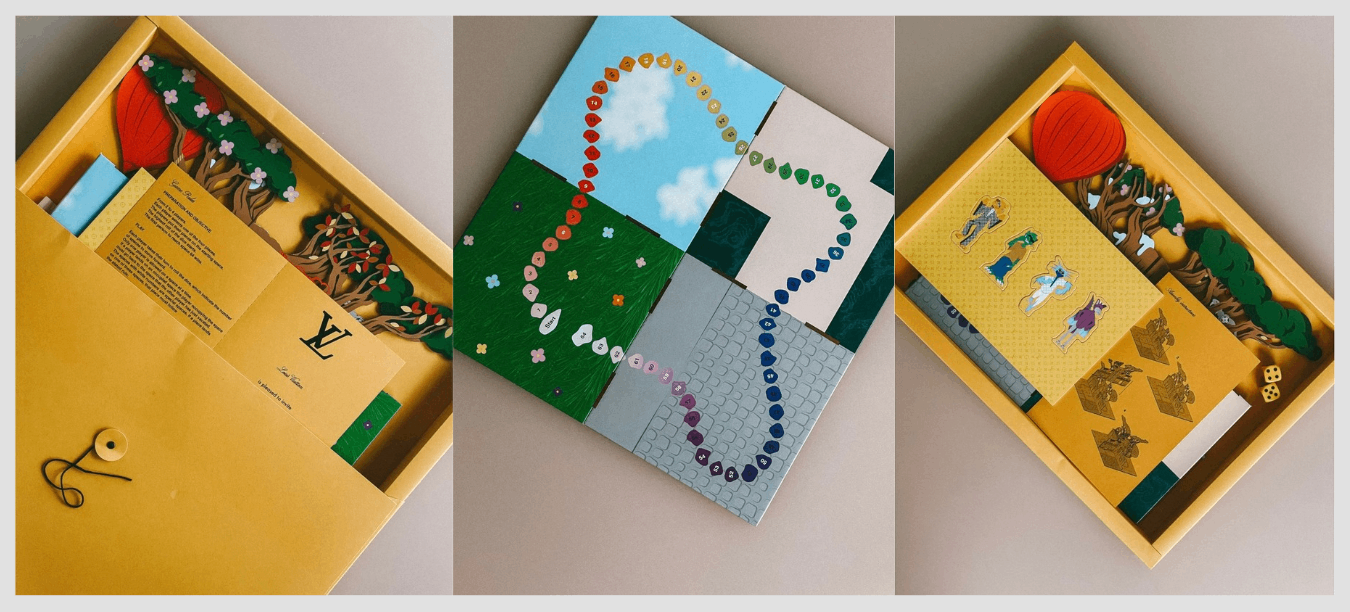
The packaging must accommodate these components securely while remaining visually appealing. Designers often use insert trays, dividers, or compartments to organize components neatly.
2. Board Game Box Design Principles
Understanding Your Target Audience
Before diving into aesthetics, identify your players:
- Family Games: Bright colors, simple typography, and approachable illustrations.
- Strategy Games: Detailed graphics, minimalist elegance, and premium materials.
- Collector Games: Luxurious finishes, two-piece rigid boxes, and exclusive inserts.
Understanding the audience informs every design decision, from box size to illustration style.
Key Elements of Board Game Packaging Design
1. Artwork and Illustration
- Eye-catching illustrations communicate the game's theme instantly.
- Consider hiring professional illustrators for high-quality board game box art.
- Ensure consistency with in-game artwork to maintain immersion.
2. Typography
- Fonts should be readable and align with the game's personality.
- Use hierarchy to emphasize the game title, subtitle, and tagline.
3. Color Palette
- Colors evoke emotions and convey the mood of the game.
- Consistent color usage across packaging and components reinforces branding.
4. Icons and Symbols
- Quick-reference icons indicate player count, duration, and age suitability.
- Icons enhance the back of board game box usability and clarity.
5. Finish and Texture
- Options include matte, gloss, soft-touch, foil stamping, embossing, and spot UV.
- Adds tactile and visual appeal, elevating perceived quality.
Standard board game box sizes
There is no official standard. Every publisher runs its own set, which is why box sizes look inconsistent on a retail shelf. What exists instead is a group of sizes that recur because they fit shelves, pallets and folded boards efficiently.
The most common full-size format in the industry is 300 × 300 × 80 mm (11.8 × 11.8 × 3.15 in). It is close to the largest square box you can run before pallet efficiency starts working against you.
Three constraints that decide the size for you
Board fold. A quad-fold board costs more to produce than a single fold, but it lets you use a square box instead of a long rectangular one. Square boxes cost less to make, stack better and ship cheaper, so the quad fold usually pays for itself. A 20 in board quad-folds into roughly a 10 in square footprint.
Carton and pallet limits. Freight quotes are built on cartons and pallets, not on single boxes. A standard pallet is 40 × 48 in and loads to roughly 72 in including the pallet. Individual cartons need to stay under 50 lb and typically under 150 units. A box that is 5 mm too tall can drop a full layer off the pallet, and that shows up as a per-unit freight cost you cannot design out later.
Direct shipping. If you fulfil crowdfunding orders yourself, the USPS Medium Flat Rate box has an interior of 13⅝ × 11⅞ × 3⅜ in. A 300 × 300 × 80 mm box fits. An 85 mm box does not.Lock the box size before the board fold and the insert are finalised. Changing box dimensions after tooling means new dielines and a new sample round.
3. How to Make a Board Game Box
Step-by-Step Process
- Choose Box Type
- Rigid box, folding carton, or mailer box based on target market and budget.
- Rigid box, folding carton, or mailer box based on target market and budget.
- Select Materials
- Common options: SBS paperboard, corrugated cardboard, recycled paperboard.
- Consider durability, print quality, and environmental impact.
- Create a Box Template
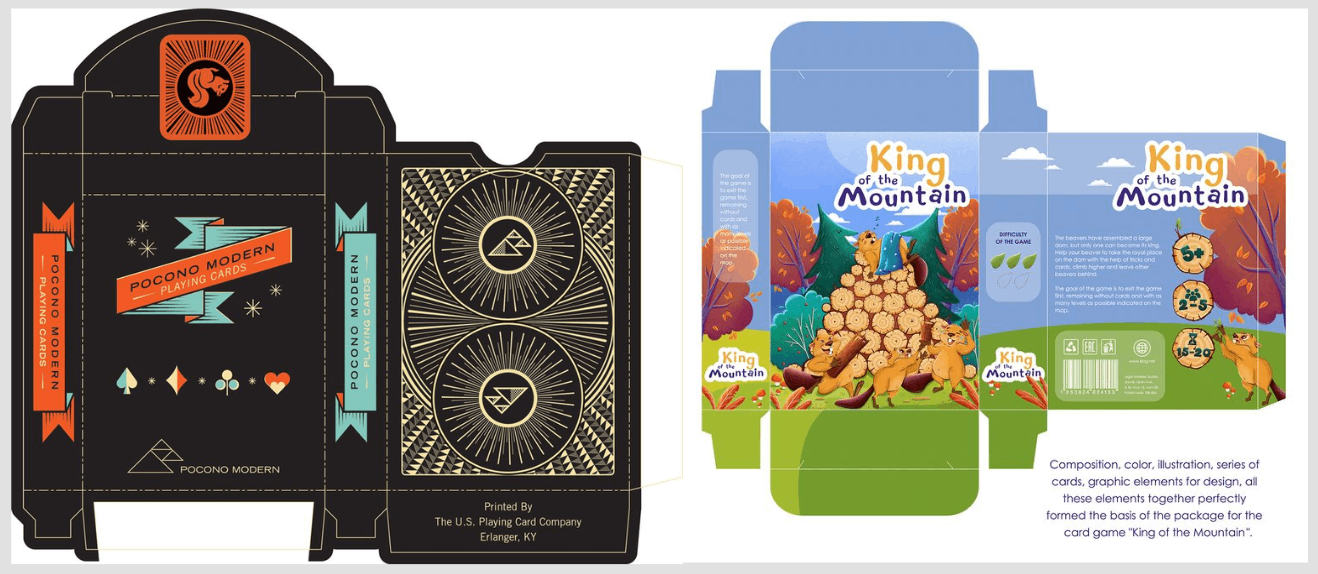
- Use a board game box template or custom dieline for cutting and folding.
- Ensure accurate dimensions for all components.
- Design Artwork
- Apply your illustrations, typography, and branding to the template.
- Include back-of-box details like rules, icons, and game info.
- Select Printing Technique
- Offset Printing: High-volume, full-color designs.
- Digital Printing: Low-volume runs, prototypes.
- Screen Printing: Adds accents like metallic ink or spot colors.
- Gravure/Flexography: For premium finishes and large-scale production.
- Apply Finishes & Add-Ons
- Foil stamping, embossing, spot UV, or window cutouts for premium effects.
- Foil stamping, embossing, spot UV, or window cutouts for premium effects.
- Produce Sample
- Verify fit, finish, and functionality.
- Gather feedback for adjustments before full-scale production.
Tips for Card Game Box Design
- Keep boxes compact and easy to carry.
- Use inserts to hold cards securely.
- Consider tuck boxes or magnetic closure rigid boxes for premium editions.
- Design box art that reflects game mechanics and theme clearly.
4. Printing and Materials for Board Game Boxes
Material Considerations
- Rigid Paperboard: Premium, sturdy, supports embossing/foiling.
- Folding Carton: Lightweight, economical, suitable for large volumes.
- Corrugated Boxes: Durable for shipping and protection.
Sustainability Tip: Using recycled materials or eco-friendly inks can appeal to environmentally conscious consumers.
Printing Methods:
5. Back of Board Game Box Essentials
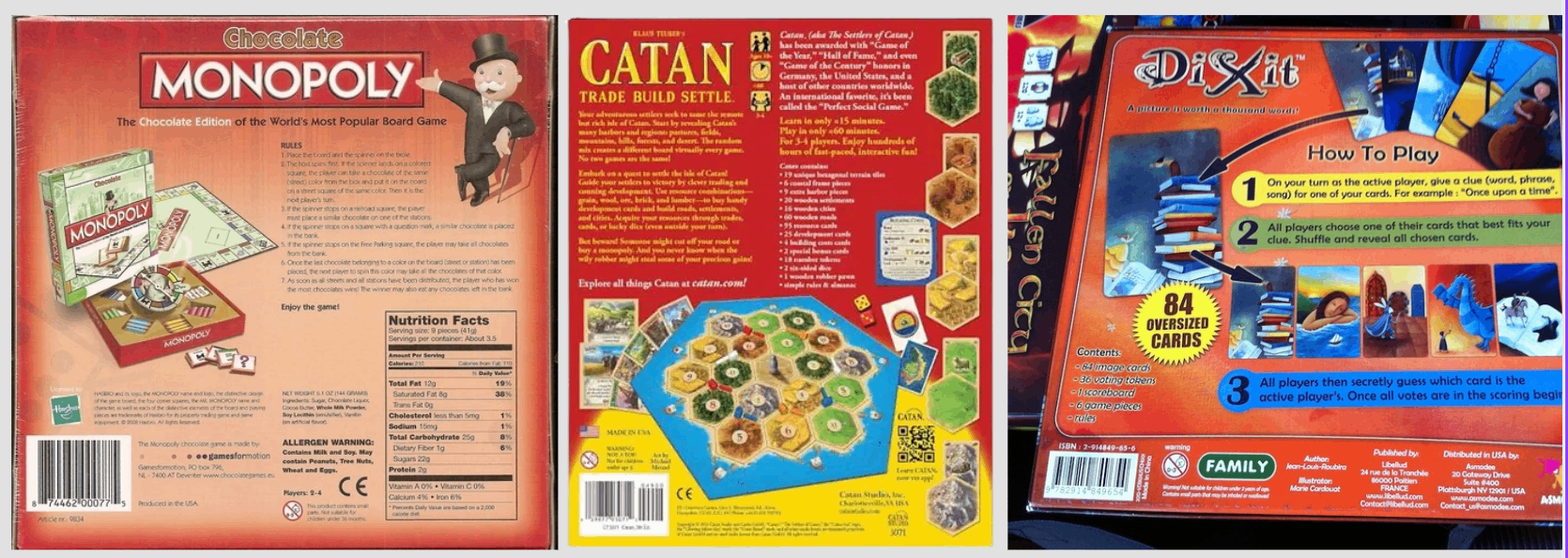
The back panel does two jobs. It sells the game to someone holding it in a shop, and it carries the information retail and distribution require. Get the second part wrong and the box gets rejected at the retailer, not at the printer.
The commercial half
Player count, age range and play time as icons rather than text, because they are read in about two seconds. A short game overview, not the rulebook. Component photography or a shot of the game in play. Awards and review quotes if you have them.
The compliance half
Barcode. You need a UPC or EAN for retail. GS1 placement guidance puts it in the lower right of the back panel with clear quiet zones around it. Print it 100% black (C0 M0 Y0 K100), not rich black, or scanners struggle with it. Never run a barcode across a seam, a fold, a curve or a closure flap. That is the single most common reason a back panel has to be redrawn.
Hang tab, if you need one. A euro slot lets a retailer peg the box on a wall. The standard slot is 32 × 6.5 × 9 mm under DIN EN 13010, normally placed 5 to 10 mm below the top edge. It has to be die-cut, so it belongs in the dieline from the start.
Safety marking. Games aimed at children under 14 sold in the US fall under CPSIA and need to meet ASTM F963. Choking hazard warnings, age grading and the manufacturer identity all sit on the back or base panel. Check the equivalent requirement for every market you sell into, since EN 71 applies in the EU.
Identity block. Publisher name and address, copyright line, country of origin, and the SKU.
Artwork notes for the panel
Keep 3 mm bleed on every edge and hold text at least 5 mm inside the trim. On a wrapped rigid box the wrap turns in at the edges, so anything close to a corner will distort. Leave the barcode zone and the hang tab clear of artwork rather than designing around them afterwards.
6. Card Game Boxes: Sizing from the Deck Up
A card game box is sized backwards from the cards, not chosen from a catalogue. Get the stack thickness right and everything else follows.
Work out your stack
Card stock thickness is roughly 0.32 mm at 300 gsm and 0.35 mm at 350 gsm. Multiply by your card count.
130 cards at 350 gsm is 130 × 0.35 = 45.5 mm of stack. Add 1 to 2 mm of clearance so cards do not bind when the box is full, and that is your internal depth.
Do this before artwork. A deck that grows by 20 cards in playtesting changes the box, the dieline and the sample.### Card sizesAround seven card sizes are in common production use. The three you will meet most often are poker (63 × 88 mm), bridge (56 × 88 mm) and tarot (70 × 120 mm). Bridge cards fit more per printing sheet than poker, which can reduce cost on large runs, so it is worth checking sheet yield before locking the size.
Choosing the format
Tuck box. The standard card game format. A folded carton with a flap top, typically holding up to 110 cards in one deck or around 220 in two decks side by side. Most printers set a practical minimum around 26 cards; below that the deck moves inside the box and needs a card insert to sit properly. Cheapest per unit and the right choice for a card-only game.
Two-piece box. Once you pass roughly 100 to 120 cards, or once you are packing cards plus tokens, a rigid or folding two-piece box holds shape better than a tuck. It also gives you a lid panel to design on.
Magnetic flip box. Rigid construction with a magnetic closure. This is the deluxe and collector format. It costs more per unit and needs a higher run to make sense, but it survives repeated opening in a way a tuck box does not.
What drives cost
Card count and card stock, sheet yield, box construction, and finish. A tuck box in folding carton and a magnetic rigid box holding the same deck are different orders of magnitude. Decide the retail price point first and work back.
7. Branding and Market Alignment
Linking Packaging to Your Brand
- Include logos, brand colors, and consistent typography.
- Packaging should communicate the same identity across physical and digital platforms.
- Align packaging with target markets (U.S., Europe, Australia) by considering regional design preferences:
- U.S./Europe: Premium finishes, bold illustrations, eco-conscious messaging.
- Australia: Functional designs, focus on sustainability and transport efficiency.
Explore more: How to Choose the Best Typography for Your Business
Marketing Benefits of Packaging
- Eye-catching packaging increases shelf visibility.
- Memorable unboxing experiences foster social media sharing and word-of-mouth.
- Branded packaging encourages loyalty for expansions or future releases.
8. Practical Considerations for Board Game Packaging Design
1. Cost vs. Quality
- Balance production cost with premium appearance.
- For smaller publishers, focus on digital printing and folding cartons.
- For high-end or collector editions, invest in rigid boxes with luxury finishes.
2. Component Protection
- Ensure inserts and compartments prevent damage.
- Consider shipping vibrations, stacking, and storage conditions.
3. Standardization and Compatibility
- Adhere to standard board game box sizes for retail shelves.
- Ensure your box design fits expansion packs or companion games if applicable.
9. Staying Ahead: Trends in Board Game Packaging
1. Sustainability
- Eco-friendly materials, biodegradable coatings, and reduced packaging volume.
- Appeals to environmentally conscious consumers in Europe, U.S., and Australia.
2. Digital Integration
- QR codes linking to tutorials, apps, or augmented reality experiences.
- Interactive packaging that extends gameplay digitally.
3. Premium Collectible Editions
- Two-piece rigid boxes, embossed artwork, and custom inserts.
- Attracts collectors and enthusiasts, increasing revenue per unit.
10. Tools and Resources for Designers
- Board Game Box Design Templates: Available on platforms like Adobe Illustrator or online template libraries.
- GUKA Packaging Services: Offers custom rigid boxes, folding cartons, and corrugated boxes for board games, card games, and other industries.
- Printing Partners: Work with reliable manufacturers to ensure color accuracy, material quality, and production timelines.
- The "Trends in Board Games Industry" list on BoardGameGeek highlights several key developments shaping the future of board game design and production.
Start Your Board Game Packaging Now!
Creating exceptional board game packaging is a blend of creativity, strategic marketing, and functional design. From selecting the right materials and box types to designing engaging board game box art and integrating add-ons, every decision impacts the player’s first impression and overall experience.
For businesses aiming to capture global markets in the U.S., Europe, and Australia, GUKA Packaging manufactures—from custom rigid boxes for luxury editions to folding carton boxes for cost-effective mass production. With GUKA Packaging, your board game can stand out on shelves, impress players, and achieve commercial success.
Talk to us about your board game box and elevate your game with packaging that captivates, protects, and sells.
Recommended for you
.avif)
.avif)
.avif)
.avif)
.avif)
.avif)
.avif)
.avif)


You Might Enjoy




Are we right for each other?
We work best with brands that treat packaging as part of the product, not as the last thing on the list. To save us both time, here is who we work with best.
We're probably not the right fit if:
- Orders under $1,000.
- A few boxes, one time.
- Lowest quote wins.
- No conversation, just add-to-cart.
- Brand direction still up in the air. Our FAQ covers the basics first: process, scale, sampling, finishing, production. Worth reading before submitting anything.
We're a strong fit if:
- Projects starting around $1,000 and up.
- Sampling before production makes sense to you. It runs from $300, though complete artwork and locked specs can sometimes skip straight to the line.
- There's real budget behind the packaging, and an expectation that production standards get defined properly.
- What's needed is a manufacturing partner across structure, material, process and delivery. Not a print shop taking a file.
- The box has a job: retail shelf, gifting, unboxing. It has to carry the brand.
- Getting it right matters more than getting it cheapest.
Sound like your project? Let's talk
What happens after you submit
1. A specialist reviews your project, usually within 1 business day.
2. We follow up with questions, options, and indicative pricing.
3. Once the spec is confirmed, we move to sampling.